

Panama Canal officials say a new reservoir needed to meet the busy waterway’s growing water demands would take six years to build at an estimated cost of $1.6 billion.
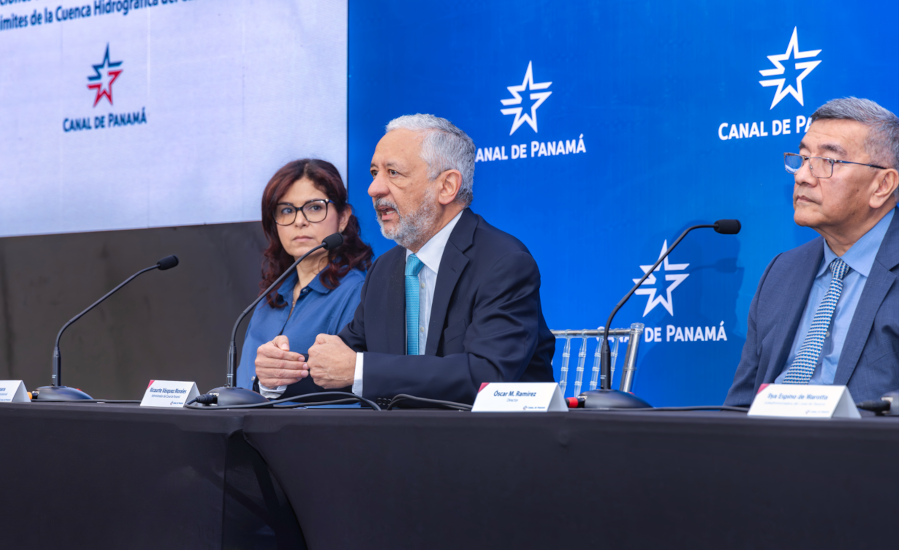
In a press conference on July 8, senior members of the Panama Canal Authority (known by its Spanish acronym ACP), outlined the next steps forward for the reservoir following a Supreme Court ruling of the country last week that allowed the project to move. come in.
“Aspects such as climate change and the reduction of rainfall, as well as the increase in population, have put the country in an urgent position to make decisions that guarantee the future availability of the resource,” said Canal Administrator Ricaurte Vasquez Morales. “This is a fact that cannot be ignored as it is a primary responsibility of the country and a mandate for the Canal.”
The time to build the reservoir is estimated at four years, officials said. Prior to this, coordination with residents of the rural region where it would be located would take up to two years.
Canal officials currently estimate that the current water reserves needed to support both the canal and Panama’s population will be exceeded by 2030. Recent reviews by both the US Army Corps of Engineers and the ACP have find that meet the increasing water needs of the canal due to the growing threat. of similar drought conditions would not be possible using watershed-only conservation measures.
The additional water provided by the Rio Indio Reservoir would be enough to meet the needs of both the canal and the country for 50 years, according to officials.
“We want to make it clear that the Canal does not own the land within the Hydrographic Basin; we have the mandate to protect the resources inside it, as well as to take actions to improve the quality of life of the people who live there. “, Vasquez said.
Although an estimated 2,000 people living in the area of the proposed reservoir would need to be relocated, the project would require negotiations with about 12,000 landowners, Vásquez said.
The ACP estimates it will cost $400 million to buy the property needed for the reservoir and meet the needs of affected communities. The construction of the new reservoir is now estimated to cost $1.2 billion.
A 2003 feasibility report by the ACP called for a concrete dam with a crest at 83 feet to create a reservoir with a gross storage capacity of 1.577 billion cubic meters and cover nearly 46 square kilometers. The new reservoir would be connected to Lake Gatun de Canal through a tunnel 8,350 meters long and 4.5 meters in diameter.
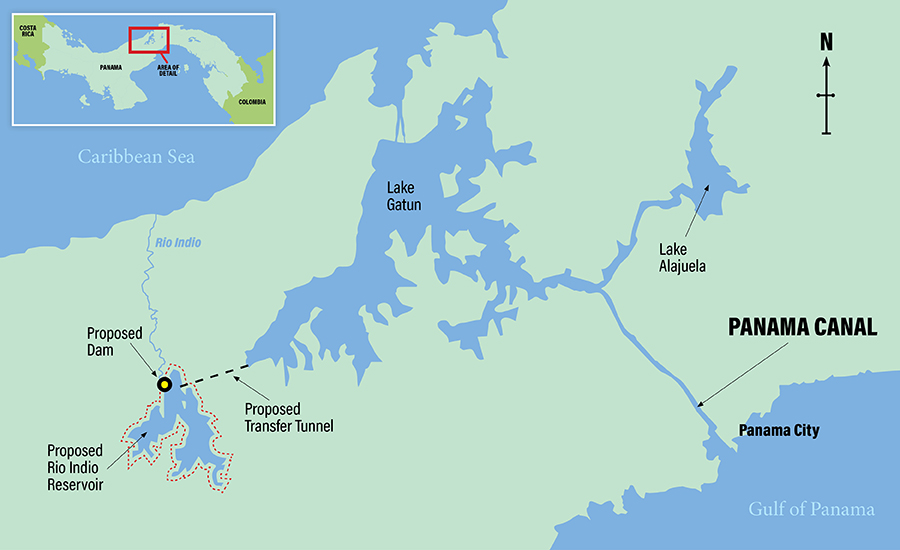
The proposed Rio Indio Reservoir would be connected to Gatun Lake by a tunnel.
Map by Scott Hilling/ENR, original map by Getty Images
On July 2, the Plenum of Panama’s Supreme Court of Justice struck down a 2006 law that included restrictions on its watershed and prohibited the construction of reservoirs outside of it. The ruling restored the canal’s original watershed boundaries that include the Rio Indio watershed.
Last year, Canal officials asked the Panamanian government to extend its authority to allow construction of the reservoir. With the ruling of the country’s Supreme Court, that petition has been withdrawn, officials said.
The need for the reservoir became apparent last year when the combined effects of drought and El Niño caused a dramatic drop in the water levels of Lake Gatun, critical to both the canal’s operations and the ‘water supply of the country. As a result, canal traffics were drastically reduced and the ACP initiated a series of water conservation efforts.
