

According to CBRE Trends Report.
Construction activity in the sector increased after the start of the COVID-19 pandemic, as demand for laboratory and research and development space soared. According to the report, net absorption peaked in the third quarter of 2021, driven by a rush to build new facilities, with developers delivering millions of square feet to meet that demand.
Now, contractors are likely to see fewer speculative projects as developers wait longer to secure tenants before moving forward with new construction projects due to rising costs and oversupply.
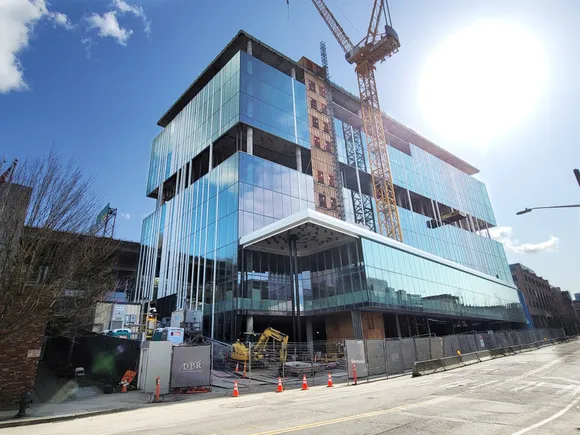
This is leading to a significant slowdown in new Life sciences construction activityaccording to CBRE. Life sciences space under construction peaked at nearly 40 million square feet in the second quarter of 2023, but has since fallen to about 21.2 million square feet in the second quarter of 2024.
About 72% of this space under construction remains unleased. This shows the ongoing oversupply challenge in the sector, said Matt Gardner, life sciences leader at CBRE Americas.
“Cooler heads prevail,” Gardner said. “Lab owners are returning to the pre-2021 development approach, reflecting the realization that the temporary peak was an aberration, not a new normal.”
Life sciences construction peaked in the second quarter of 2023
New and conversion activity, in millions of square feet.
Rising costs also add additional pressure, according to Gardner.
Life sciences construction costs are up 20% to 25% from pre-pandemic levels. This reflects both rising material prices and rising construction costsespecially for specialized spaces such as cleanrooms and nurseries, according to the report. These costs have increased by up to 50%.
Contractors are also facing longer lead times for critical specialist equipment, which have been extended by an additional 10 to 20 weeks.
Office-to-lab conversions, once a key driver of activity, have also declined, according to CBRE. After peaking at 35% of all life sciences construction projects in the first quarter of 2022, conversions fell to around 20% of activity in the second quarter of 2024.
