

The U.S. Department of Energy on Tuesday announced $34 million in funding to support a dozen projects focused on improving the nation’s energy resiliency by moving some grid infrastructure underground.
The projects span 11 states and are being developed by small and large companies, national laboratories and universities They are being funded through the Grid Overhaul with Proactive, High-speed Underground for Reliability, Resilience, and Security (aptly known as GOPHURRS) program immanaged by DOE’s Advanced Research Projects Agency-Energy.
Projects include multiple worm-inspired excavation approaches, an artificial intelligence solution and aerial drones, ground-penetrating radar, and advances in cable deployment and splicing.
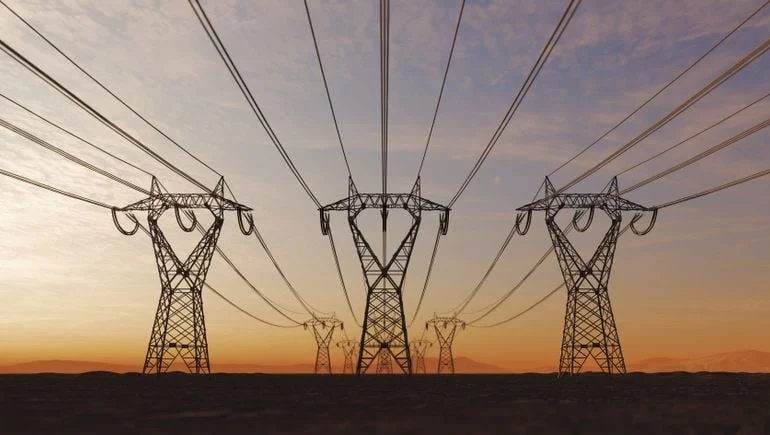
The U.S. power system spans more than 5.5 million miles of line and contains more than 180 million power poles, “all of which are susceptible to damage from weather and its effects, and account for the majority of power outages in the country each year,” according to the DOE. said “Underground power lines are a proven way to improve system reliability for both transmission and distribution networks.”
Moving power lines underground can keep them running during storms and reduce the risk of wildfires, but it’s usually an expensive proposition. The California Public Utilities Commission surveyed investor-owned utilities and found that the cost of burying existing lines ranges from $1.85 million per mile to more than $6 million per mile in 2019 dollars.
The DOE said the projects announced Tuesday will help reduce the cost of moving underground lines, as well as increase the speed and safety of that work. Projects include:
- $3.7 million to GE Vernova Advanced Research for the development of a “robotic worm tunneling tool” that can dig and install conduit and cables in a single step. The tool, called SPEEDWORM, could be deployed from a standard pickup truck, according to a DOE list of projects selected to receive funding;
- $4 million to the RTX Technology Research Center for the development of a mobile detection platform that uses radar approaches based on quantum radio frequency detection, along with artificial intelligence, to locate existing utility lines;
- $4.5 million to Prysmian Cables & Systems USA for a hands-free power cable splicing machine that could fit into a utility access hole and use laser cutting and a vision system augmented with machine learning; i
- $3.75 million to the Pacific Northwest National Laboratory for the development of an artificial intelligence system to process geophysical survey data into digital twins and augmented reality to identify existing utilities and other obstacles underground before installing underground power distribution lines.
“DOE is supporting teams across the country as they develop innovative approaches to bury electric infrastructure underground, increasing our resilience and bringing our aging grid into the 21st century,” Energy Secretary Jennifer Granholm said in a statement .
The Advanced Research Projects Agency-Energy focuses on high-impact energy technologies that are too early for private sector investment. On Thursday, it announced up to $30 million in funding is available to improve the sustainability and commercial viability of fusion energy. And in December, it made $38 million available to enable the transportation and storage of renewable energy using carbon-containing liquids.
