

The Metropolitan Transportation Authority’s lawsuit to withhold federal funds for the Phase 2 project of the Second Avenue subway follows a playbook already tested in another New York megaproject: the $16 billion Gateway Hudson Tunnel, where a federal court ordered the restoration of suspended payments after a similar funding freeze.
Now, transit officials are applying the same breach-of-contract argument to a $7.7 billion subway expansion already in the initial construction phase, with active contracts, ongoing utility relocation and additional packages moving toward award.
Filed March 17 in the U.S. Court of Federal Claims, the complaint alleges that the U.S. Department of Transportation has withheld $58.6 million in reimbursements tied to a $3.4 million Federal Full Funding Grant Agreement (FFGA), covering approximately 44 percent of the project’s capital cost under the executed Full Funding Grant Agreement.
New York Gov. Kathy Hochul called the action illegal, saying, “Once again, New York has been forced to sue the Trump Administration to prevent them from erratically closing billions of dollars in previously committed infrastructure funding.”
Before the suspension, the DOT had reimbursed $126.9 million in 94 applications, often within days of their submission. The MTA now says $52.8 million in submitted claims remain unpaid, while another $5.8 million could not be processed after the DOT disabled the MTA’s access to its ECHO-Web reimbursement portal, according to the complaint.
Because the FFGA functions as a payment reimbursement channel, the dispute directly affects the cash flow that supports active contracts, procurement sequencing and contractor payments.
RELATED
NYC Breakthrough Plan for $7.7 Million East Harlem Subway Extension
Looking for quick answers on construction and engineering topics?
Try Ask ENR, our new intelligent AI search tool.
Ask ENR →
Active construction collides with funding disruption
Unlike many infrastructure funding disputes, Phase 2 is not in planning.
The MTA has awarded its largest tunnel contract yet: a $1.97 billion design-build package to Connect Plus Partners, a joint venture of Halmar International and FCC Construction, to bore 1.8 miles of twin tunnels and build station shells between 120th and 125th streets.
“This is the largest tunnel contract the MTA has ever awarded,” MTA President and CEO Janno Lieber said when the contract was approved, calling it “a very good investment.”
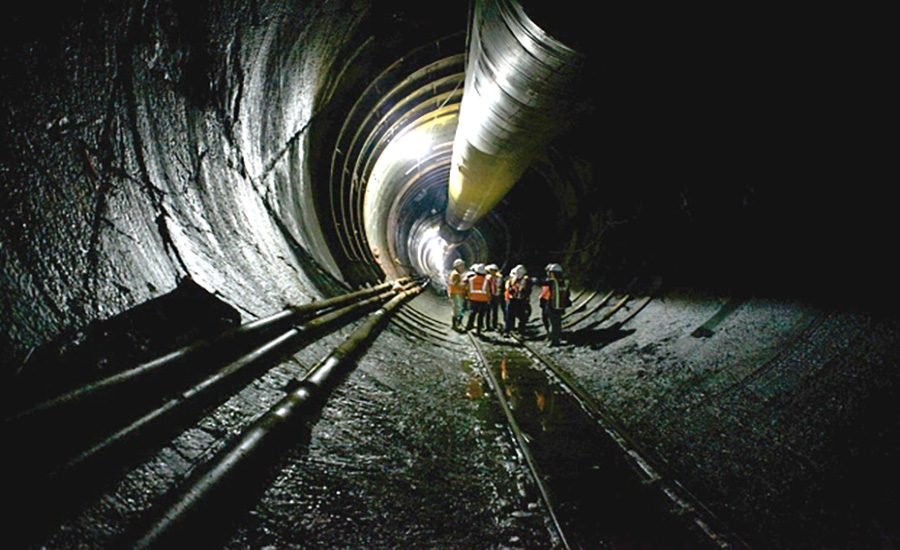
The contract includes rehabilitating a segment of tunnel built in the 1970s, excavating seven shafts for access and ancillary facilities, and using a variable density TBM that installs precast concrete lining as it goes, eliminating a secondary crew and improving efficiency.
Utility relocation is underway in East Harlem, with heavy civil construction expected to ramp up in 2026 and tunnel boring to begin in 2027.
The project is structured as a multi-package program, with separate contracts for tunnels, stations, systems and finishes, a sequencing that depends on the foreseeable funding flow.
According to court documents, the next major contract, which covers construction of the 106th Street station structure and the tunnel south of 110th Street, is scheduled for consideration by the MTA board at its March 26 meeting, putting immediate pressure on procurement timelines if funding uncertainty persists.
RELATED
COWI to Lead Design on MTA’s $1.97 Million Second Avenue Subway Extension
Federal funding model under legal pressure after Gateway ruling
The MTA’s legal argument closely follows the Gateway dispute, where the project’s sponsors successfully argued that halting repayments under an executed federal funding agreement constituted a breach of contract, forcing payments to resume on an active construction program.
In that case, a federal judge found that the DOT had acted in a “ready, fired, aimed” manner, failing to follow contractual procedures before suspending payments.
The case is being filed in the U.S. Court of Federal Claims, indicating that the MTA is treating the dispute primarily as a contract payment issue rather than a regulatory challenge. The court has jurisdiction over claims related to executed agreements with the federal government, focusing on whether the DOT’s suspension of reimbursements violates the terms of the FFGA.
This precedent is likely to shape how courts evaluate the Second Avenue case, especially given that both projects rely on FFGA structures that tie federal funding directly to construction progress.
Project financing reflects a layered model common to major transit expansions.
In addition to the $3.4 billion FFGA, Phase 2 relies on state and local funding sources, including congestion pricing revenue, to support the remaining costs.
The FFGA is part of the federal capital investment grant program, expanded under the Jobs and Infrastructure Investment Act, which accelerated funding for major transit projects across the country.
The dispute highlights a key vulnerability in that model: even when funding is authorized and deals are executed, delivery is dependent on consistent repayment execution.
The MTA alleges that the DOT’s actions, tied to broader policy reviews, have disrupted that process, forcing the agency to divert funds from other priorities to maintain progress.
A spokesman for the U.S. Department of Transportation said the agency is “committed to ensuring taxpayer dollars are spent responsibly” and is “considering all legal avenues,” according to statements reported by the Associated Press.
Engineering complexity and delivery risk
Phase 2 has been structured to avoid the delays and cost overruns that plagued Phase 1, which opened in 2017.

Workers install electrical systems and make ADA compliance improvements at the Myrtle Av station as the MTA moves forward with system upgrades in conjunction with major expansion work, including the Second Avenue Subway Phase 2 project.
Photo: MTA/Trent Reeves
MTA officials have emphasized early geotechnical investigation and utility mapping to reduce subsurface risk, along with procurement reforms that incorporated more than 30 alternative technical concepts to improve constructability and reduce cost.
The project also reuses a segment of tunnel built in the 1970s, now integrated into the 106th Street station, to reduce the extent of excavation and save hundreds of millions of dollars.
Ground conditions in East Harlem differ from Phase 1 Manhattan shale, requiring pressurized tunnel boring machines, groundwater control, and careful settlement management to protect adjacent utilities and structures.
The 106th, 116th and 125th Street stations will be constructed as deep underground caverns in mixed face conditions, using grouting, dewatering and localized soil stabilization.
These methods are highly time-dependent, which increases the importance of uninterrupted contract sequencing once excavation begins.
This sequencing sensitivity extends beyond engineering to project delivery, where the reliability of funding becomes a controlling factor in maintaining construction momentum.
The MTA does not claim that construction has stopped.
Instead, the agency says it has maintained progress through “extraordinary efforts,” but warns that such measures are not sustainable.
If repayment delays persist, the agency argues the project faces a “domino effect” of impacts, including delayed contract awards, disrupted sequencing and increased costs.
Phase 2 is expected to serve about 110,000 daily riders, ease congestion on the Lexington Avenue line and restore subway access to East Harlem more than eight decades after the original elevated line was retired.
“This is a project that is about equity, mobility and economic growth,” Lieber said.
RELATED
Manhattan’s $4.5 million Second Ave subway opens
A test case for the active delivery of megaprojects
The case ultimately tests whether federal agencies can disrupt reimbursement streams under executed funding agreements without destabilizing active construction programs.
For a megaproject based on ongoing reimbursement, the outcome will help define how resilient federal funding mechanisms are when political disputes intersect with projects already underway.
