

It’s been nearly four years since the COVID-19 pandemic upended global supply chains, driving up prices and slowing the availability of products and materials.
For US construction companies, prices remain high due to material shortages and high logistics and labor costs, while global conflicts add new levels of volatility and risk.
Indeed, construction input costs have increased 38.7% compared to February 2020, according to an Associated Builders and Contractors analysis of Bureau of Labor Statistics data. Prices for unprocessed energy materials, natural gas, and iron and steel have increased by more than 50%.
Construction input prices rose 1% in January, the first overall price increase after three months of moderation. Overall construction costs remain 0.4% higher than a year ago, while non-residential construction input prices rose 0.7% over the past 12 months.
Iron and steel costs rose more than 4% year-on-year in January, and stainless steel costs could rise further due to supply and demand dynamics. Supplies of nickel ore in Indonesia, the world’s largest producer of nickel, which is used to make stainless steel, could run out within six years, said Gregory Beischer, CEO of Alaska Energy Metals.
Meanwhile, demand for nickel is increasing because it is used in the production of electric vehicle batteries. The construction industry and stainless steel manufacturers will have to compete with electric vehicle producers for the same nickel supply.
“It would not be improbable to see spikes in the price of stainless steel, which in turn would make construction projects more expensive,” Beischer said.
global problems

Brent Thielman
Permission granted by DA Davidson & Co.
Contractors are seeing some relief, however. Prices of construction inputs for some materials such as copper wire and cable and plaster products have fallen since last January, according to the ABC. analysis According to Brent Thielman, managing director and senior research analyst at national investment banking firm DA Davidson & Co, the costs of plastic and resin-based products, which were “through the roof” during the pandemic, are starting to normalize – if
“Prices are coming down from those extraordinary levels of a year or two ago, but they’re not back to what we saw before the pandemic,” Thielman said.
However, global problems will likely keep the costs of some materials high. The latest war between Israel and Hamas could affect the prices, availability and delivery times of various imported materials. European companies initially bore the brunt of the increases, but the effects are likely to be lessened for US-based companies due to the global nature of construction supply chains, said Maria Davidson, founder and CEO of Kojo , a technology company focused on materials. supply chain for the construction industry.
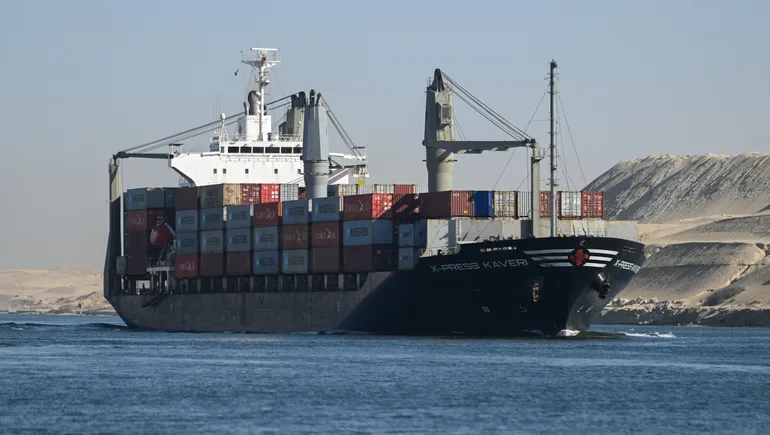
Also, many transport providers are diverting the Red Seawhich has created an increase in ocean shipping rates, adding another cost increase to contractors’ books.
“Transportation is a huge part of the cost,” Davidson said.
Davidson’s advice to contractors facing high prices is to have a competitive bidding process and a system for tracking bids, along with plans to ensure materials will be delivered when and where they are needed.
Long delivery times
In addition to paying more for some products and materials, contractors also expect more to be delivered. Before the pandemic, materials such as steel and wood could be obtained within two to four weeks. Today, those same materials can take 12-16 weeks to arrive.

Mary Davidson
Permission granted by Kojo
Electrical appliances, generators and AV components have some of the longest lead times, 42 to 60 weeks, according to Raylena Browning, vice president of preconstruction for Tulsa, Okla.-based Manhattan Construction Co.
Thielman said HVAC equipment continues to have long lead times and electrical cable is difficult to source. Transformers can take up to 52 weeks to arrive at a job site, according to Davidson, who expects to see limited availability of transformers and fixtures through 2024.
Construction supply chains are particularly susceptible to long lead times due to specialized materials and equipment. Alternative suppliers or domestic sources may not be available.
“When it comes to things like mixing concrete or cement, there are real physical limitations on where you can order it,” Davidson said.
Tight labor market
According to Browning, the construction industry’s biggest supply chain challenge is the availability of both skilled and unskilled labour.
The construction sector needs to hire more half a million workers to meet demand, according to builders and associated contractors. Nearly 2 million construction workers are expected to quit their jobs this year. About 20% of them are at least 55 years old, meaning retirement could be imminent and the industry needs younger workers to fill the pipeline.
“A lot of people coming out of high school don’t see the construction industry as a sexy industry,” Davidson said.
But Davidson said the industry has begun to change the narrative, adjusting apprentice programs, adopting modern practices and contracting with high schools.
“It’s an incredibly stable profession,” Davidson said. “Getting a job in the trades is a great career to build.”
Despite the supply challenges In recent years, contractors are now more optimistic about their supply chains. More than half of the respondents in a 2023 Turner & Townsend survey expect supply chains to improve, while only 1% said they would weaken.
“The industry has adapted to the new reality,” Thielman said. “But it’s still delicate in some areas.”
