

T3 RiNo
Denver
Office/Retail/Mixed Use
Sent by: Pickard Chilton
Region: ENR Mountain States
Owner: Hines
Main design company: Pickard Chilton
General contractor: Whiting-Turner
Civil Engineer: SA Miro
Structural Engineer: Magnusson Klemencic Associates
MEP Engineer: Alvine Engineering
Architect of record: DLR Group
Located in Denver’s River North Arts District, T3 RiNo brings massive wood construction to scale while redefining the modern office as an experience-based workplace.
Developed by Hines with partners McCaffery and Ivanhoe Cambridge, the $86 million project offers 239,000 square feet of office and 17,000 square feet of retail in a six-story building. Completed in January 2025, the structure is Denver’s first permitted Type IV-HT solid wood office building.
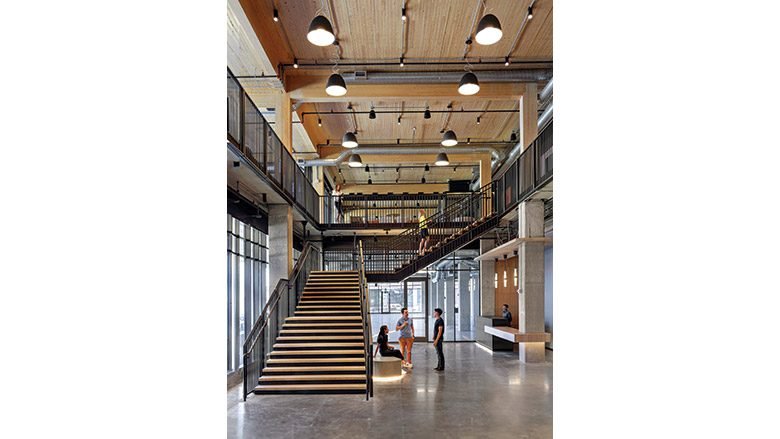
The exposed timber structure, consisting of glulam columns and beams supporting cross-laminated timber floor panels topped with a concrete slab, anchors the building’s architectural expression while reducing embodied carbon. The structure contains approximately 188,000 cubic feet of solid wood, sequestering more than 4,100 metric tons of CO2 and cutting embodied carbon by approximately 38% compared to conventional construction.

The T3 RiNo in Denver features a six-story solid wood frame with exposed laminate beams and cross-laminated wood floors.
Photo by Eric Laignel
The designers worked within Denver’s 85-foot height limit for exposed wood buildings by sculpting the building’s mass into a series of stepped terraces that cascade up the facade. The strategy increases daylight and access to the outdoors while revealing the timber frame behind the glass curtain wall.
“As the facade is pulled back, you start to see the woodwork behind it,” says Anthony Markese, director of Pickard Chilton. “Even a few blocks away, you get the sense that the building is something different.”
The engineering challenges required careful coordination between the design and construction teams. The transition from the concrete podium to the exposed timber structure required a hidden connection at the base of the knife plate capable of absorbing the difference in tolerance between the concrete and timber construction.
Another innovation, the project’s so-called “MEP superhighway,” arranged conduits, pipes, and ducts within an elevated area around the building’s core supported by short steel beams. By concentrating the systems in this narrow corridor, the designers kept the exposed wooden ceilings and maintained generous floor-to-floor heights. The market response validated the concept. In 2023, Xcel Energy signed a full lease for the building
Looking for quick answers on construction and engineering topics?
Try Ask ENR, our new intelligent AI search tool.
Ask ENR →
