

Tampa, Florida is working with a team from Carollo Engineers to implement new European technology to reduce PFAS chemicals and other drinking water contaminants in the city’s supply through a $200 million treatment plant project. The effort builds on a successful pilot of the pretreatment technology and will be its largest application worldwide when complete.
The new pretreatment system will add 10 suspended ion exchange resin trains, known as SIX, to the existing David L. Tippin Water Treatment Plant, a 77 million gallon per day facility.
The technology, originally developed in the Netherlands and now owned by Danish engineering company Ramboll, has been used in smaller drinking water facilities in the UK and the Netherlands.
A joint venture team from Garney Construction and Wharton-Smith will begin construction sometime in 2028.
“The strength of SIX is that it removes organics very well,” says Vinnie Hart, Carollo’s managing director of technical practices and SIX’s project manager. “These organics interfere with PFAS removal technologies such as single-use ion exchange and granular activated carbon. Pretreatment can make these technologies much more effective.”
Planning capital improvements
As part of master planning efforts to expand and upgrade its water treatment plant to handle 140 mgd, the Tampa Water Department tapped Carollo to explore options for improving water quality through a system of ‘non-proprietary ion exchange. “There are different processes that need to be improved from their current state, even to comply with their current permit. So while we were looking at all of that, we wanted to evaluate ion exchange in general,” says Sarah Burns, director of the city’s capital projects program and coordinator of the water engineering project.
Higher levels of organics in raw water can reduce the efficiency of treatment plant operations, he says. Local water supplies often contain high levels of dissolved organics, such as algae and carbon. Total dissolved organic carbon levels can reach 37 milligrams per liter (mg/L) at some times of the year. In addition, some by-products created as materials interact with the disinfectants used for treatment are known to be carcinogenic.
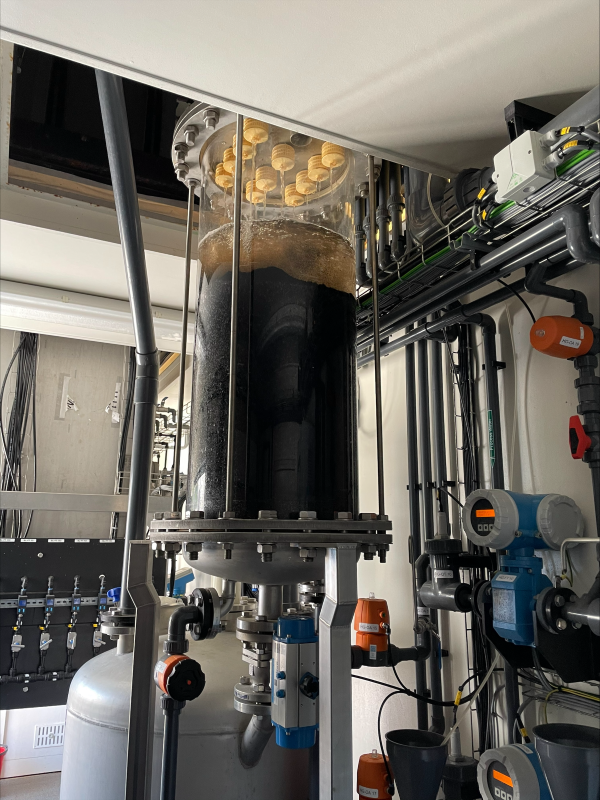
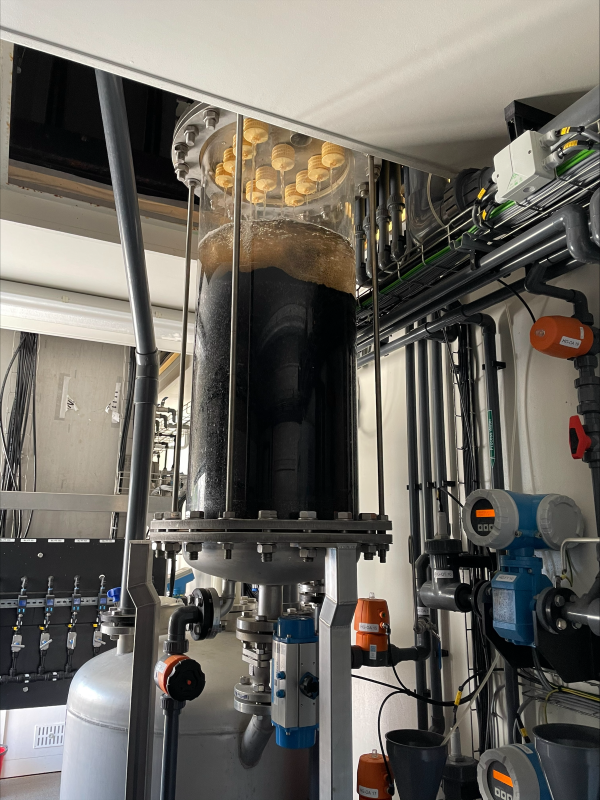
Carollo evaluated the SIX technology in a 30 gal per minute pilot plant over a ten-month period in 2021 and found that using it with coagulation improved the plant’s overall treatment results. The process resulted in a sixfold increase in the amount of water that could be passed through the filters, Hart says. “The six-fold increase is a combination of a much higher filter loading rate and longer filter runs,” he says, allowing the city to process more water with fewer filters, saving costs.
The pilot showed that the addition of SIX reduced organics levels from 2.6 mg/L in the full-scale plant to 1.5 mg/L.
Burns says using the SIX system will prevent Tampa from having to expand the plant’s footprint beyond current property lines, saving an estimated $250 million. “Without SIX, we would potentially have to double our filter capacity. With SIX, we don’t have to do that,” he says.
Hart suggests that because the plant’s filters won’t clog with organics, they will be able to reduce PFAS levels, although it’s not clear to what extent.
“SIS data shows some PFAS removal, but it’s not as high as other technologies and it’s still not well understood,” he says.
