

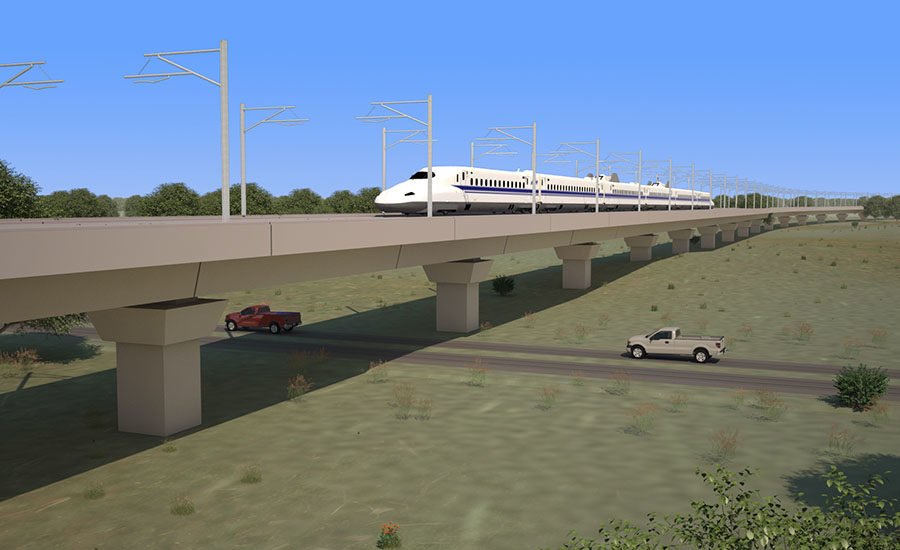
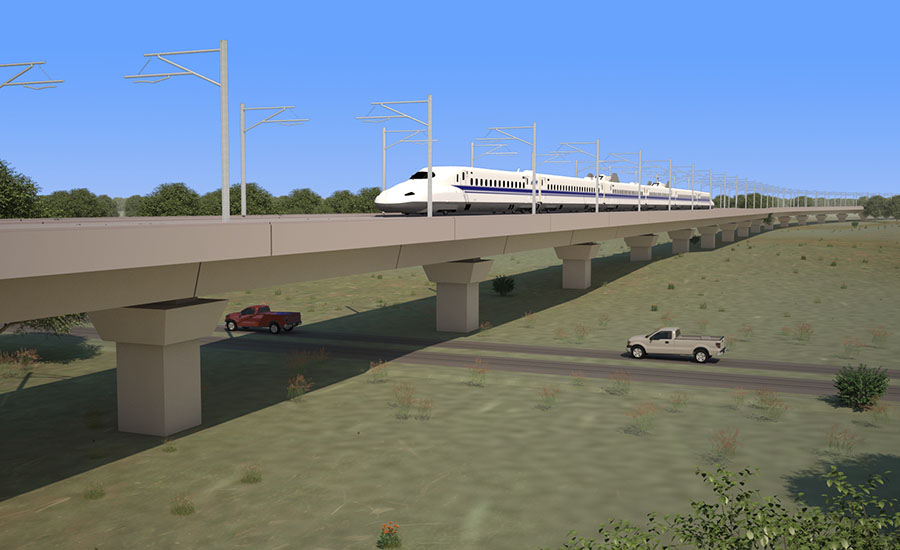
Plans for the Texas Central high-speed rail project to connect Dallas and Houston are moving forward again after years of setbacks, including finances, leadership issues and legal issues.
A general contractor has been selected, several legal issues have been resolved by the Texas Supreme Court, and a deeper relationship with Amtrak is being explored. Proponents claim the high-speed train will travel at more than 200 miles per hour and complete the 236-mile journey in 90 minutes with departure times every half hour during peak hours and hourly during off-peak hours.
Developer Texas Central Partners estimates 1.3 million daily riders by 2050.
It’s already been a long journey. In 2012, when the project began, it was estimated to cost $10 billion. A dozen years later, the price has soared to $33.4 billion, and the cost could soar to more than $40 billion, according to a study by the Reason Foundation.
“On large, complex infrastructure projects, it’s better to have problems during the planning phase” than construction, says Angel Pena, vice president of rail and transit in STV’s Texas/Mountain region. “Planning is the hardest part of the process.” Pena, who held leadership positions in Washington and Boston’s transit systems, adds that the more stakeholders a project has, the harder it is to execute.
Texas Central did not respond to requests for comment. It is unclear when construction may begin.
The group signed a $16 billion heavy construction contract with Italy-based contractor WeBuild and its U.S. subsidiary Lane Construction Corp in 2021. According to Lane, the contract includes the design and construction of the 236-mile of the alignment and the entire track system, approximately. 50% of which is in viaducts. Under the contract, Lane is responsible for the building and maintenance service and other equipment, including industrial buildings, train depots and facilities, the company said.
The project was stalled for years after landowners sued for land rights. In 2022, the Texas Supreme Court ruled 5-3 that Central Texas has eminent domain authority.
Lane addressed the owners’ issue when announcing the multimillion-dollar contract in a statement: “Much of the alignment is elevated and will benefit from Lane’s expertise in bridge and viaduct construction to reduce impacts as much as possible on property owners and county residents. the project will cross.”
By mid-2022, the future of the project was bleak. The longtime CEO abruptly left and the board of directors was dissolved, according to the ENR report. The company brought on Michael Bui, a senior managing director at FTI Consulting who specializes in “liquidity forecasting, business plan development and analysis, collateral evaluations and recovery assessment and contingency planning,” according to his bio of the company, and who has advised several clients. through events such as distress, bankruptcy, reorganization and sale.
Initially, Texas Central management promised that the entire project would be privately funded.
However, the railroad has focused on strengthening its relationship with Amtrak. primarily to assist with federal funding grants for study and design work, according to a news release.
“Texas Central and Amtrak have submitted applications to various federal programs in connection with further studies and design work for the potential Dallas to Houston segment, including the Consolidated Rail Infrastructure Safety and Improvements (CRISI) grant program ), the Corridor Identification and Development Program, and the Federal-State Partnership for Interurban Passenger Rail (FSP-National) grant program,” the statement said.
Amtrak has worked with Texas Central since 2016, when it signed agreements to provide tickets through Amtrak’s reservation system and other support services for the planned high-speed rail line, according to the statement.
