

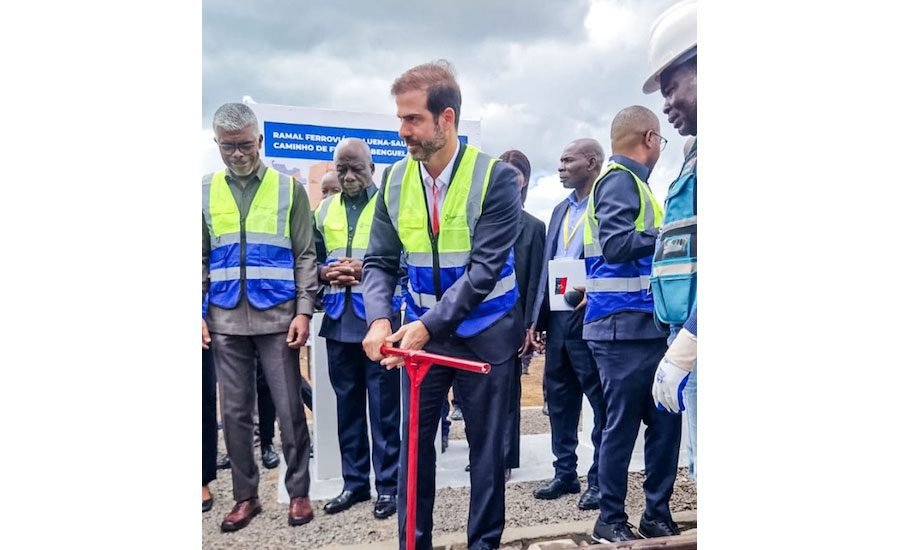

Construction of Angola’s 260-kilometer Luena-Saurimo railway line began earlier this year after nearly three years after a design-build contract was awarded for the project, which is the first expansion of South West Africa’s railway in more than 100 years.
As well as linking Angola’s disparate railway system, it will also serve as the backbone for a wider West African railway initiative to connect the mineral-rich regions of Zambia and the Democratic Republic of Congo to the Angolan Atlantic port of Lobito.
Brazil-based Odebrecht Engineering and Construction, through its subsidiary Odebrecht Angola, in consortium with Portugal’s Bento Pedroso Construções, have been selected as contractors for the $1.17 billion railway project that will connect the Angolan provinces of Moxico and Lunda-Sul.
Overcoming the lingering impacts of war
A statement from Angola’s Ministry of Transport said that “all engineering studies, as well as environmental and social assessments, have been completed, and landmine clearance operations along the entire railway corridor have also been completed.”
Landmines were planted across the country during the more than 40-year civil war that ended in 2002 and have posed a major challenge to the development and rehabilitation of the country’s infrastructure, including transport.
The financing of the project will be from international lenders, as well as from the government of Angola.
It is estimated that 2,000 jobs will be created during the construction of the Luena-Saurimo railway project, which is part of the Benguela railway network.
Looking for quick answers on construction and engineering topics?
Try Ask ENR, our new intelligent AI search tool.
Ask ENR →
The new line will have 11 bridges, eight railway stations and at least two strategic crossings according to the Ministry of Transport.
The ministry said the 1067mm-wide Cape line will enable a significant reduction in transport costs and time and contribute to a more efficient flow of agricultural production and processed products while facilitating “the transport of strategic mineral resources, such as copper, cobalt and manganese, strengthening the connection with the country’s main logistics and port corridors, in particular the Port of Lobito”.
The president of Odebrecht Angola, Rodrigo Melo, said that the new railway project “represents a historic milestone in land transport and will contribute decisively to the economic and social growth of the region”.
When completed, the Luena-Saurimo railway line will connect the 1,344 km Benguela railway line with the 479 km Luanda railway in the city of Saurimo and will “prepare the country for a future connection with the DRC, improving the transportation of strategic mineral resources such as copper, cobalt and manganese,” according to a recent statement from the US International Trade Administration.
In December, the US International Development Finance Corporation approved a $553 million loan, backed by the Southern African Development Bank with $200 million, for Angola’s larger Lobito Atlantic Railway project.
This project involves the rehabilitation and operation of the degraded mineral port in Lobito and an approximately 1,300 km railway line in Angola connecting the port of Lobito to Luau on the Angolan border with the DRC. Lobito’s transportation capacity is expected to increase tenfold to 4.6 million metric tons, as well as reduce the cost of transporting critical minerals by up to 30%.
