


The Louisiana Coastal Protection Restoration Authority (CPRA) is moving forward with more than 100 active coastal restoration projects, nearly 40 of which are currently under construction. The organization has multiple projects still in the engineering and design work phase, some of them in the early stages of planning.
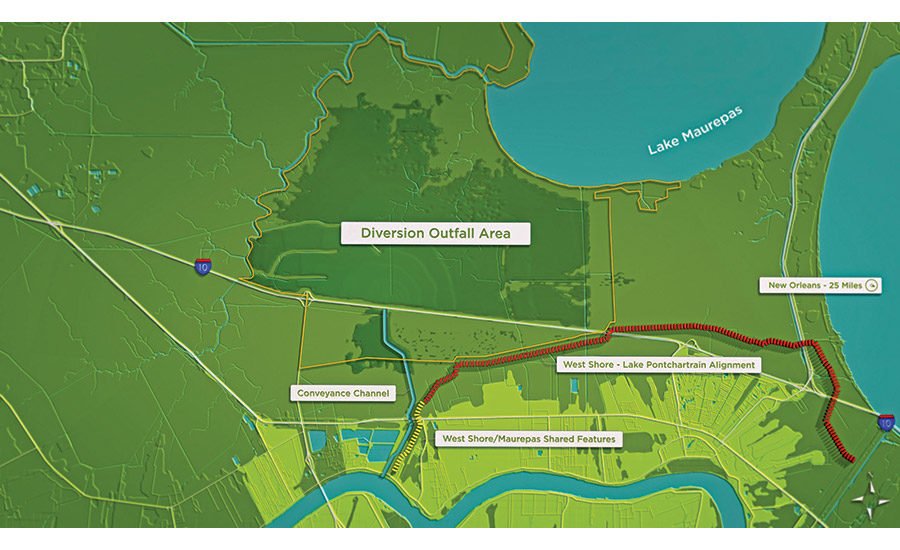
CPRA’s active projects vary in size and location, but all share the goal of preserving the state’s significantly exposed coastline and pristine marsh ecosystems. The organization recently awarded the first construction contract for the Maurepas Marsh River Reintroduction Project, which is scheduled to begin in October. Designed as a freshwater diversion, this project will assist in mitigation for USACE’s West Shore Lake Pontchartrain levee system and is the first time the state and federal governments have partnered in this type of restoration effort .
The Labranche Swamp and Lake Borgne creation projects are also under construction. While these types of projects usually take place away from public view, citizens can track the Labranche’s progress from the Bonnet Carre Landfill, giving Interstate 10 travelers a front-and-center view. The Borgne Lake project has its own level of attention, as it holds the record as Louisiana’s largest recreation project and should increase its size by an additional 2,800 acres.
With the blows sustained by several hurricanes and salt water intrusion, CPRA is directing significant attention to Southwest Louisiana. Several shoreline and marsh recreation projects are currently progressing. A groundbreaking ceremony is scheduled for October to kick off the start of the Southwest Coastal Project, which is being led by the US Army Corps of Engineers. It will combine ecosystem restoration with the erection of multiple structures in Cameron, Calcasieu and Vermilion parishes.
Several CPRA projects remain in engineering and design, with two notable promising results. The Chandeleur Island restoration project, for example, will cost more than $300 million to replace 90% of its landmass lost as a result of Hurricane Georges in 1998 and hurricane Katrina in 2005. To compound the problems, the Deepwater Horizon spill contaminated the land with oil and adversely affected the bird population, vegetation, grasses marines and fishing in the area. Chandeleur Island restoration will restore 13 miles of this chain of barrier islands, restore nesting habitat for the bird population, enhance sea turtle hatchlings, and restore vegetation above and below the water surface while creating new land and restoring what remains.
CPRA’s Bird Delta Hydraulic Restoration Project, currently in the design phase, will increase river flow to the eastern Bird Delta. The increased flow will be used for a natural process of land construction in the crevasses and passes. With the potential to add land mass and provide additional habitat for birds and wildlife, the project has gained a substantial amount of public attention.
While early stage projects move on to the next stage and current projects move forward, the CPRA will continue to roll out its Coastal Master Plan. Each project that comes to fruition focuses on preserving the state’s coastline, ecosystems and natural resources that suffer from the ongoing threat of flood risk and ongoing land loss.
