


The final $325 million cost estimate for Boston’s controversial White Stadium renovation includes $135 million in city funding, nearly three times the city’s estimated pledge two years ago for the public-private development with a new professional women’s soccer team.
The Boston Legacy Football Club privately raised $190 million to fund the renovation, and is also providing the largest community benefit in the city’s history. The $250 million commitment over the next 15 years includes $34 million to operate and maintain the stadium, Mayor Michelle Wu said at a Feb. 7 news conference.
Wu is maintaining the 11,000-seat stadium project despite significant opposition from city councilors and neighborhood organizations who decry the cost of the project. Wu said the updated cost includes the finalized design and scope, as well as construction material fees.
“There have been a lot of escalations in things that are out of the city’s control, like steel prices going up 40 percent since we started, or labor costs going up very significantly,” Wu told WBUR. “A lot of things about federal policies and all the chaos this administration has caused. But that doesn’t explain everything, or even most of the change in the numbers.”
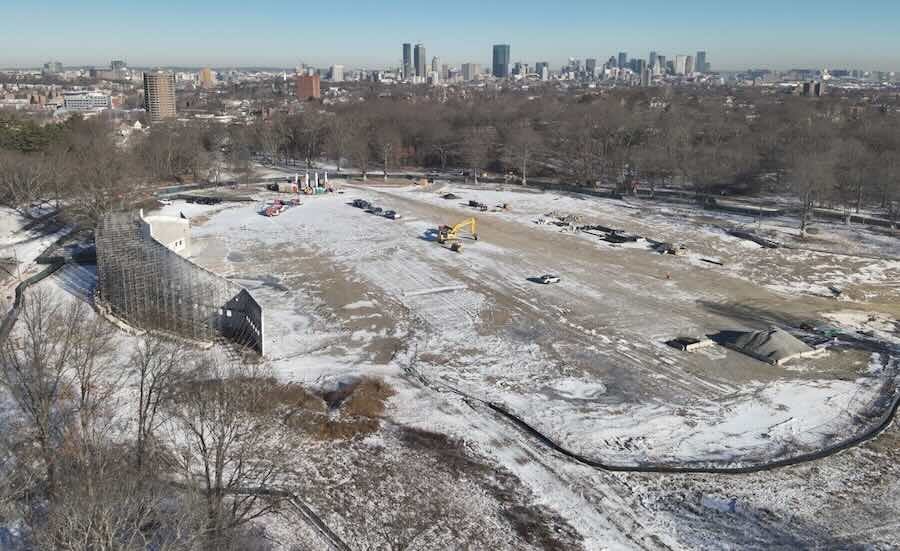
While demolition of the project has been completed, underground utility abatement and foundation work is underway, including power, water and telecommunications infrastructure upgrades that will be completed in the fall. Bond Building Construction Inc., construction manager at risk for the project’s eastern half of the city, has completed the below-grade utility relocation phase of the project, Carolyn Campot, a Bond spokeswoman told ENR in an email.
“We are preparing for the first concrete pours for new building foundations in February and will begin steel construction in April,” says Campot.
The final stadium design includes a professional-grade turf field, an eight-lane college-level track, dedicated strength and conditioning facilities, a sports medicine center and flexible indoor study and community spaces, according to the city.
Professional turf is more expensive to maintain than artificial turf, But it’s healthier for athletes, Wu says. The design calls for a sub-air system that will extend the number of days the grass can be used, Wu said during the press conference. Wu acknowledged that the latest stadium design contributed to the cost increase, but said it was only finalized after “a detailed community process.”
The state Supreme Judicial Court is reviewing an appeal of a lawsuit filed by opposition groups arguing that the project located in the city’s historic Franklin Park violates state public land use laws. A ruling is expected this spring or summer. Opposition groups have also proposed an alternative, cheaper stadium design just for Boston Public School athletes.
“It’s fair to expect the ultimate cost to taxpayers will be even higher,” said Louis Elisa, a Dorchester resident who argues it’s not too late “for the city to reconsider this fatally flawed project and instead build a much more affordable, fully public high school stadium that meets the needs of BPS students and their families and their professional investors – notlet.”
Boston Legacy FC majority owner Jenifer Epstein said in a statement that “we are making sure White Stadium remains a year-round city-owned public asset for Boston Public Schools students and the community for generations.”
Construction is expected to continue in 2027.
