

In its current configuration, the UK’s new multibillion-dollar high-speed rail, HS2, will reduce the system’s capacity along the route by almost a fifth, according to a new assessment by the official National Audit Office. The deterioration follows last year’s cancellation by the former Tory government of the approximately 150km Birmingham-Manchester section.
Last September, former Prime Minister Rishi Sunak dramatically canceled all preparations for the northern section of HS2 and halted work on the London Euston terminus and the tunnels leading to it. Then line developer HS2 Ltd. (HS2L) had invested about $2.2 billion in the canceled sections, including drilling more than 1,000 exploratory wells.
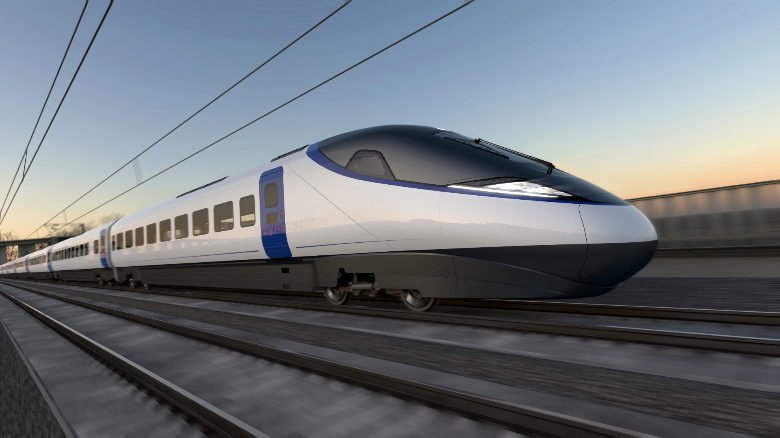
The plan now is for high-speed trains on the new London-Birmingham section to move onto the existing tracks towards Manchester. But because the 225km-per-hour trains being built by the Hitachi-Alstom joint venture are smaller than current rolling stock, capacity will be 17% less, auditors say. Capacity could be increased by investing more in longer trains and station platforms, the NAO adds.
One of the reasons cited for reducing the program was escalating costs. At the time, HS2L had predicted a cost of up to $74 billion, at 2019 prices, which was $4 billion more than government projections. Civil construction costs had increased by $7.8 billion.
HS2L has spent $36 billion on the continued London-Birmingham phase and $2.2 billion on the canceled phases 2a and 2b. Closing the canceled work will add another $130 million.
The NAO has identified several causes of cost overruns in civil works, including contractual over-emphasis on meeting schedule targets rather than managing spend. Investing in efforts to achieve overly ambitious goals “created inefficiencies in the design process.”
Budgets had been set on “immature designs and data”, while HS2L “had limited supply chain costing information”. Furthermore, the contractors lacked the capacity and skills to “manage such a large design, delivery and warranty program”.
While construction is on schedule, HS2L’s efforts to control costs through contract modifications “have not worked as intended”, the auditor notes. The owner now plans further negotiated attempts to manage costs. But he has told the NAO that “successfully renegotiating the large contracts that are already underway will not be simple”.
 Only the London-Birmingham section (blue line) of the originally planned system remains. Map courtesy of HS2 Ltd.
Meanwhile, as the program moves from civil construction to systems installation, HS2L hopes to learn some hard lessons from the London Crossrail project. Now called the Elizabeth Line, the capital’s new east-west railway has become an operational success, but only after costly commissioning delays. The engineer who led this final phase was Mark Wild, who was recently appointed as the new CEO of HS2L.
