

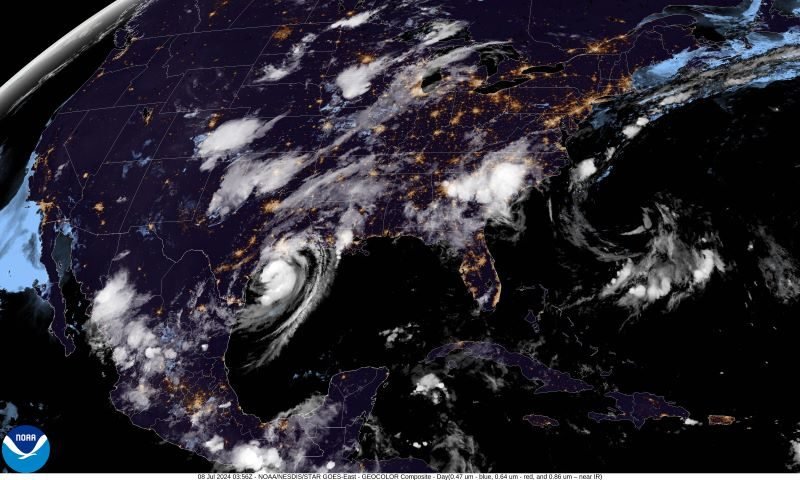

Earlier this month, the National Oceanic and Atmospheric Administration predicted that the 2024 Atlantic hurricane season could be “among the busiest on record” as climate change continues to cause more extreme weather events. As the number of extreme weather events caused by warming ocean temperatures and other manifestations of climate change continue to rise, so do the costs, in some cases exponentially.
There is a growing consensus among government agencies such as the National Institute of Standards and Technology (NIST) and the National Institute of Building Sciences (NIBS) and industry groups such as the American Society of Civil Engineers (ASCE) that communities and federal disaster recovery agencies must take note. the aggregate effects of disasters, whether weather-related or not, and to quantify the costs associated with restoring the functionality of critical infrastructure and buildings after the disaster has occurred.
Most existing building codes today focus on preventing loss of life, not functionality, says Maria Lehman, past president of ASCE and vice chair of the National Infrastructure Advisory Council.
At a time when historic levels of federal funding are flowing in for new infrastructure projects, decision makers should be careful to use that funding wisely, says Aspasia “Sissy” Nikolaou, group leader of ‘NIST earthquake engineering for the agency’s Division of Materials and Structural Systems.
As of August 8, there have been 19 weather- or weather-related disasters in the US this year with damages exceeding $1 billion. That’s in line with the significant increase in disasters over the past five years, but between 1983 and 2023 there was an average of only eight events per year, according to NOAA calculations.
A recent analysis by the National Academies examined the costs associated with successive billion-dollar storms in the Gulf of Mexico between 2020 and 2021. The storms occurred while communities were still struggling with deaths, shortages of materials and other vulnerabilities caused by COVID-19. 19 pandemic. During the time period studied, communities were barely able to recover from one disaster before facing another at the same time they were recovering from the impacts of the pandemic.
“This constellation of sequential and sudden-onset disasters imposed compounding stress on a region with multifaceted and persistent socio-economic and socio-environmental disparities,” the report concluded.
For example, when the Category 4 Hurricane Delta made landfall in October 2020, the community of Cameron Parish in Louisiana was still repairing roofs and infrastructure damaged by Hurricane Laura five weeks earlier. Less than five months later, Winter Storm Uri froze tarps on roofs that had failed to be repaired from previous storms, and pipes froze, causing many homes to lose access to clean water
“I think we have a big challenge, which is that we have the bipartisan Infrastructure Act, so we have money, but if the money isn’t invested wisely, we’re going to have the same problems,” says NIST’s Nikolaou. “For me, it’s important to know what questions to ask” when making decisions about infrastructure investments rather than thinking there’s an “optimal” approach, he says, which could result in missing the root of a potential problem in some areas.
Part of understanding how and where to invest requires accurate data on the true costs, not just of replacing damaged infrastructure, but all costs, which can include things like the economic ramifications of time lost from work, hospitalizations, or lost revenue from toll roads. if those roads are inaccessible, adds Lehman, who is also the U.S. infrastructure leader for global professional services company GHD.
Efforts to quantify the true costs in a more holistic manner are underway at NIST, the World Bank, and elsewhere.
Lehman points to a recent GHD study that found there is widespread, if uneven, support for addressing climate change and reducing carbon emissions in several countries across generations. A total of 13,000 people of various ages were surveyed in communities around the world, including 4,000 people in the United States.
“If it makes so much more sense to build resilience at the beginning of the project or series of projects, why don’t we do that?” Lehman asks.
