

This audio is automatically generated. Please let us know if you have any comments.
The Department of the Interior announced on Monday who is pausing rentals for “all large-scale offshore wind projects under construction” in the United States due to “national security risks” identified in “recently completed classified reports.”
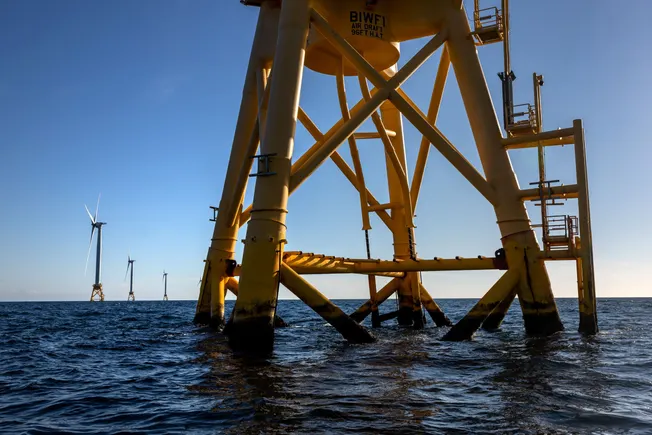
The action affects five large offshore wind farms under development in federal waters off the East Coast: the largest US project, the 2.6 GW Coastal Virginia Offshore Wind; the 800 MW Vineyard Wind 1 offshore Massachusetts; the 700 MW Revolution Wind offshore Rhode Island; and the 2GW Empire Wind and 924MW Sunrise Wind, both off the coast of New York.
Interior said the pause will give it, along with the Defense Department and “other relevant government agencies, time to work with tenants and state partners to assess the possibility of mitigating the national security risks posed by these projects.”
Interior Secretary Doug Burgum said in the statement that the projects presented risks because of “the rapid evolution of relevant adversary technologies and the vulnerabilities created by large-scale offshore wind projects in close proximity to our East Coast population centers.”
The statement went on to say that “massive turbine blades and highly reflective towers” create radar interference that “obscures legitimate moving targets and generates false targets in the vicinity of wind projects.”
But in a post on X, Burgum suggested that factors other than national security influenced the decision.
“ONE natural gas pipeline supplies as much energy as these 5 projects COMBINED,” Burgum tweeted, calling offshore wind “expensive, unreliable’ and ‘heavily subsidised’.
President Donald Trump is “bringing common sense back to energy policy and putting safety FIRST!” he added.
In a statement Monday responding to the announcement, Coastal Virginia Offshore Wind owner and developer Dominion Energy said the project is “vital to America’s national security and meeting the dramatically growing energy needs of Virginia, America’s fastest growing.”
Virginia’s demand growth “is driven by the need to provide reliable power to many of America’s most important war installations, the world’s largest warship manufacturer and the largest concentration of data centers on the planet, as well as the forefront of the AI revolution,” Dominion said.
Coastal Virginia Offshore Wind is expected to come fully online by the end of 2026.
Vineyard Wind 1, a joint venture of Copenhagen Infrastructure Partners and Avangrid, is scheduled to go live in mid-2026 after a series of delays. Revolution Wind, a joint venture between Ørsted and Global Infrastructure Partners that was previously delayed by one work stoppage order of the Trump administration, should be completed in the second half of 2026. Both Sunrise Wind, owned by Ørsted, and Empire Wind, owned by Equinor, are expected to start operating in 2027.
A coalition of conservative groups filed a lawsuit against the Department of the Interior in 2024 over the Coastal Virginia Offshore Wind development. The two sides in the lawsuit said in a joint filing Wednesday that “DOI plans to conduct a review in which it will consider whether [a lease] remand would be appropriate” and requested that the case be adjourned until February 2.
The filing said Dominion Energy’s attorney consented to the stay, but did not “grant ownership” of any revisions or referrals to the project’s lease.
Editor’s note: This story has been updated to include a quote from Dominion Energy.
