

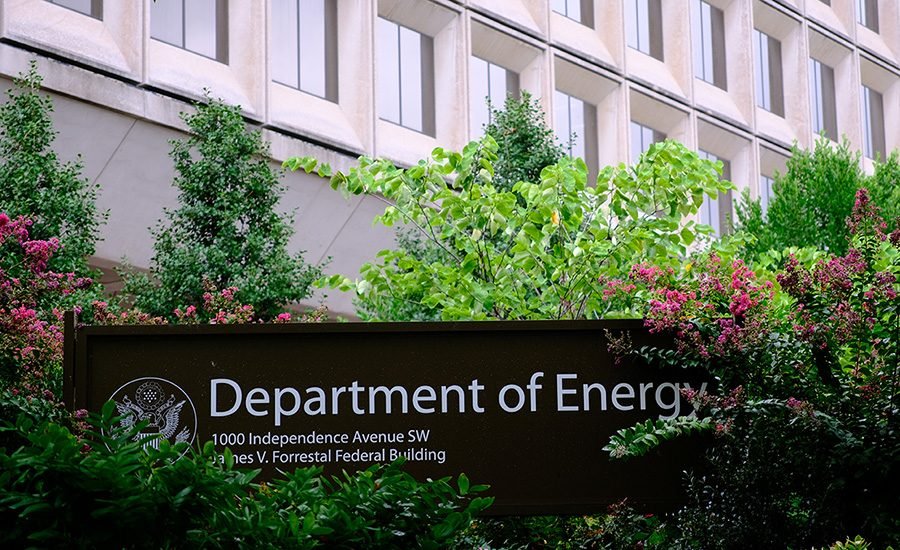

The U.S. Department of Energy has withdrawn the Biden-era federal definition of a “zero emissions building,” marking another step in the Trump administration’s rollback of climate-focused initiatives and creating uncertainty for states, cities and property owners who had informally used the guidance in project planning.
In a Federal Register notice published Dec. 4, the DOE said the 2023 definition is “not consistent with the current administration’s priorities” and should not be used by authorities or private sector organizations. A press release issued the same day confirmed that DOE removed the definition from its website and ended all related technical assistance.
RELATED
DOE Grants $90 Million to Support Update of US Building Codes
Issued in 2023 by DOE’s Office of Building Technologies, the definition was intended to provide a uniform method for evaluating buildings that produce zero on-site emissions, meet strict efficiency requirements and use enough renewable energy to equal the annual load.
Although never binding, it became a benchmark for jurisdictions drafting building performance standards and for institutions seeking a federal benchmark for decarbonization. ASHRAE publicly endorsed the definition in June 2024, underscoring its early influence among standard-setting groups.
RELATED
The team launches a review of the structural engineering code with the goal of reducing embodied carbon
Lou Hrkman, principal assistant secretary for critical minerals and energy innovation, said in a statement that “the interaction of America’s 130 million buildings with our energy system should not be further complicated by arbitrary and imprecise federal guidance.”
DOE’s newly created Office of Critical Minerals and Energy Innovation said the withdrawal would promote “freedom of choice” and relieve developers and property owners of indirect pressure created by guidance that “never had the force or effect of law.”
Early reports from EnergyWire and other outlets framed the decision as part of a broader rollback of federal climate-building policies.
The change could alter planning assumptions for public and private sector owners who had incorporated the federal definition into procurement language, grant scoring criteria or internal carbon reduction targets. It may also disrupt efforts by groups such as ASHRAE, the International Code Council and USGBC to align emissions standards across the industry.
DOE has not indicated whether a new framework will replace the repealed definition. As of publication, major industry organizations had not publicly commented.
