

This audio is automatically generated. Please let us know if you have any comments.
During the construction of the San Diego Padres’ Petco Park, Gary Birdsall said his project team at the time found itself in a “peculiar situation,” when a historic building stood in the way of the planned foul pole.
“It wasn’t feasible to tear down this multi-story structure, so we needed an innovative solution,” said Birdsall, who worked for Bethesda, Md.-based Clark Construction at the time of the project, which opened in 2001.
The result was a creative solution that required approval from Major League Baseball: A ball hit to one side of the Western Metals building would be considered fair and hit to the other side.
“This experience highlighted the importance of flexibility and early thinking in stadium construction, showing that even obstacles can be transformed into distinctive assets,” he said. Birdsall, now in the Denver area as vice president of PCL Construction’s preconstruction sports division.

The Mastercard Lounge at Scotiabank Arena, one of the premium spaces renovated by PCL last summer.
Courtesy of PCL Construction
The Edmonton, Alberta-based contractor has built several high-profile US stadium projects. PCL’s current projects include the modernization and upgrade of several of them, including:
- The $350 million Scotiabank Arena renovation project for the NHL’s Toronto Maple Leafs and the NBA’s Toronto Raptors.
- The $300 million Rogers Center renovation project for MLB’s Toronto Blue Jays.
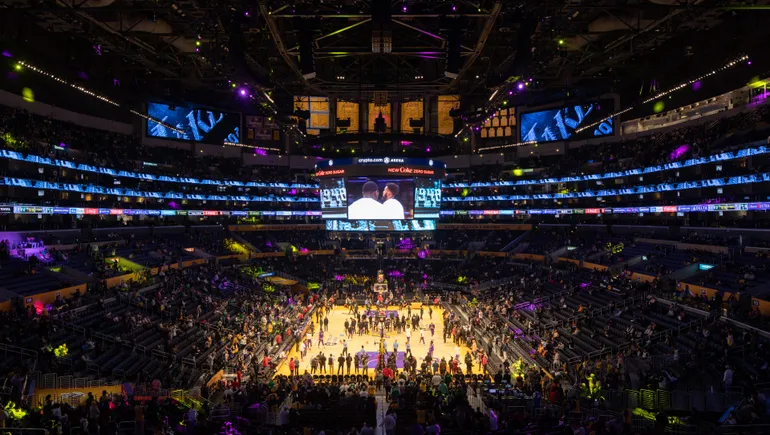
- The renovation of Crypto.com Arena, formerly Staples Center, in Los Angeles.
As with work on a historic building, these renovations require creative solutions to complicated problems. At the same time, the fan experience at stadiums has evolved, and so have renovation projects designed to update technology at North America’s biggest venues.
adjusted times
When upgrading an existing stadium, PCL and other contractors have short timeframes during the seasons, which often means stretching the project over multiple phases and years.

The lower bowl of the Rogers Center in October. PCL removed and recycled 29.5 million pounds of concrete and steel in 13 days. Blue Jays Opening Day in 2024 is April 11.
Courtesy of PCL Construction
Even then, the timelines can grow and shrink depending on whether teams make the playoffs or if arenas host events like concerts in the offseason.
“On stadium renovation projects, much of our work is scheduled during the offseason, but it inevitably extends into the season with the necessary preparation and cleanup,” said Dale Koger, vice president of the sports division of PCL, also based in the Denver area.
As a result, Koger said, PCL crews find themselves working inside busy facilities behind the scenes, while painstakingly trying not to disrupt building hours.
Eric Hernandez, superintendent of PCL’s California Division of Buildings, said he has seen these challenges in the Crypto.com Arena renovation. The final set of upgrades to the venue, which first opened in 1999, will include renovations to the main concourse and the tunnel club, as well as redesigned dressing rooms for home teams.

Eric Hernandez
Permission granted by PCL
“This [schedule] The uncertainty makes it difficult for the trades involved to plan, forcing them to work overtime, including six-day weeks and night shifts, to meet deadlines,” Hernandez said. “The need for construction crews to evacuate and clean up the place before each event, effectively erasing any trace of its presence, intensifies time constraints.”
At the same time, Hernandez said he’s noticed a shift in stadium construction and design toward these shorter timelines and fluid initial designs.
“This requires our teams to be highly adaptable,” he said. “It looks like this trend will continue, leading to even shorter schedules and a greater need to adapt quickly.”
Technology update
According to Birdsall, “the fan experience has been revolutionized.”
The modern professional stadium experience is not just a ticket and a seat, PCL Stadium Builders said. It’s an immersive experience with high-resolution screens, massive scoreboards, increased luxury options, fast WiFi and enhanced concession experiences.
“Over the past few years, stadium construction and design has been profoundly transformed by technology,” Koger said. “One of the most significant changes I’ve seen is the emphasis on ‘futureproofing’ – designing stadiums not just for today’s technology, but for tomorrow’s possibilities.”
The future-proofing Koger refers to will largely address the fan experience to improve personalization and comfort, said Daniel Brown, senior project manager for PCL’s California Buildings Division.

Daniel Brown
Permission granted by PCL
“This shift toward more technologically sophisticated and fan-centric stadiums requires a seamless combination of design and construction efforts,” Brown said. “It is reinforced by a shared commitment to innovation and excellence, which is crucial to navigating the tight schedules and exceeding expectations we have today.”
And the stadiums that fill iconic skylines take into account the oft-cited pride of contractors who point to the visible impact their work has.
“Stadium projects have a special charm and prestige,” Hernandez said. “These projects create an opportunity for traders to be part of something monumental. There is a deep sense of pride and legacy in contributing to such iconic projects, giving workers the opportunity to say, ‘I helped build it’ and share a tangible part of their legacy with their families.”
