

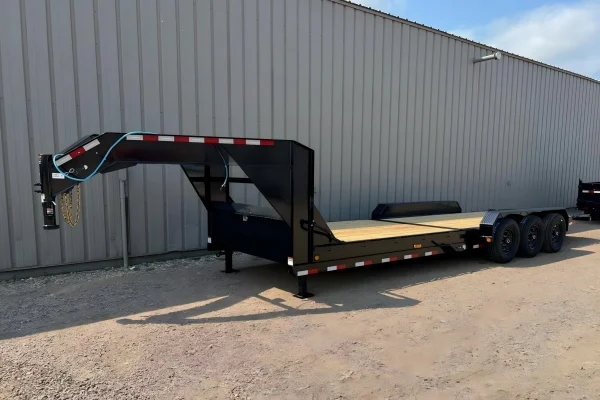
Triple axle tilting trailer for the transport of vehicles and heavy equipment
If you’re moving heavy vehicles, oversized equipment, or running a trucking business, a three-axle tilt trailer isn’t just an upgrade, it’s a necessity. Compared to standard trailers, this type of trailer gives you more payload capacity, better road stability and a much safer loading process. Instead of dealing with steep ramps and risky angles, the tilt platform creates a smooth transition, which is especially important when loading cars with low clearance or vehicles that are not running. In real working conditions, this directly reduces the risk of damage and saves time on each job. For many professional users, the switch from tandem axle to triple axle is the point where operations become more efficient, predictable and scalable.

What is a triple axle tilt trailer
Understand tilt trailer design
A tilt trailer is designed to eliminate the need for separate ramps, allowing the trailer deck to tilt and create a natural loading angle. This design is widely used in car transportation and equipment transportation because it simplifies the loading process and reduces human effort. Instead of aligning the ramps and worrying about slippage or misalignment, simply lower the deck, drive or hitch the load to the trailer, and then level the deck again. This makes it especially valuable when working alone or in tight spaces where ramp setup is difficult. The tilt mechanism can be powered by hydraulic systems or rely on gravity, depending on the configuration and budget.
What the triple axis means for performance
A tri-axle trailer uses three axles, which means six wheels carrying the load. This is a significant step up from single axis or tandem designs. The extra axle distributes weight more evenly across the trailer, reducing stress on each individual component and improving overall durability. From a practical perspective, this means you can safely transport heavier loads, such as pickup trucks, construction equipment or multiple vehicles. It also improves braking performance because more wheels are driven during stopping, which is critical when dealing with high GVWR trailers.
Why triple axle tilt trailers are preferred in heavy haulage
Greater load capacity for real work demands
When your day job involves moving heavy loads, load capacity isn’t just a number on paper, it directly affects how many trips you have to make and how efficiently you operate. A tri-axle tilt trailer allows you to carry much more weight compared to a tandem axle trailer. This is because the load is distributed between three axles, reducing the pressure on each axle and allowing for a greater total payload. In industries such as vehicle transport, construction and agriculture, this means fewer trips, lower fuel costs and better overall productivity. Instead of worrying about pushing the limits, you can focus on getting the job done safely.
Stability that makes a real difference on the road
Anyone who has towed a heavy trailer knows how important stability is, especially at highway speeds or on rough roads. A triple axis setup provides a noticeable improvement in balance and control. The extra axle helps reduce trailer sway and keeps the load stable even during sudden braking or lane changes. This is especially important when transporting high-value vehicles or sensitive equipment where even minor instability can lead to damage. For long-distance transport, this extra stability also reduces driver fatigue, making the whole operation safer and more comfortable.
Key features that define a high quality triple axle tilt trailer
Hydraulic tilt system for smooth loading
A hydraulic tilting system is one of the most important features of a modern tipper trailer. It allows you to precisely control the tilt angle and ensures a smooth and stable charging process. Many high-end models use dual hydraulic cylinders, which provide better balance and prevent the deck from tilting unevenly. This is especially useful when loading vehicles that require careful handling, such as luxury cars or damaged vehicles that cannot be towed. With a hydraulic system, one person can complete the entire loading process quickly and safely.
Reinforced steel frame for long-term durability
The strength of a trailer comes from its frame. High quality triple axle tilt trailers are built with high strength steel and reinforced structural designs. The chassis is designed to withstand heavy loads without bending or twisting, even after years of use. Manufacturing processes such as precision cutting, controlled welding and proper surface treatment play an important role in ensuring durability. A well-built frame not only extends the life of the trailer, but also reduces maintenance costs over time.
Advanced brake systems for safety compliance
With greater load capacity comes the need for better braking systems. Three-axle trailers are usually equipped with electric or hydraulic brakes on several axles. These systems work in conjunction with the towing vehicle to provide controlled and reliable braking power. In many regions, regulations require trailers above a certain weight to have brakes on all axles. It’s not just about compliance, it’s about security. A properly configured brake system can make the difference between a controlled stop and a dangerous situation.
Triple axle vs tandem trailers
Choosing between a tandem axle and a triple axle trailer often comes down to your specific use case. If you occasionally haul light to medium loads, a tandem axle trailer may be sufficient. However, if your work involves heavy loads, frequent use or long-distance transport, a three-axle trailer offers clear advantages. It provides greater capacity, better stability and better braking performance. Although the initial cost is higher, the long-term benefits in efficiency and safety often outweigh the difference.
Applications where triple axle tilt trailers excel
Vehicle transport industry
Triple axle tilt trailers are widely used in the vehicle transport industry because they combine capacity with ease of loading. Dealerships, auction houses and logistics companies rely on them to move cars efficiently. The tilting design allows fast loading without ramps, while the triple axle ensures stability even when transporting multiple vehicles. This combination makes them a practical choice for companies that need to move vehicles regularly and safely.
Construction and transport of equipment
In construction and agriculture, equipment is often heavy, bulky and difficult to load. A three-axle tilt trailer provides the strength and flexibility needed to meet these challenges. Whether you’re hauling excavators, tractors or other machinery, the tipping platform makes loading easy and the triple axle ensures the trailer can handle the weight. This makes it a reliable solution for demanding environments where downtime is not an option.
How to choose the right triple axle tilt trailer
Adapt the size of the trailer to your needs
The size of the trailer should match the type of loads you want to transport. Deck length and width determine how much room you have, while overall dimensions affect maneuverability. Choosing the right size is important because it affects both efficiency and safety. A trailer that is too small will limit your operations, while one that is too large can be difficult to handle.
Understand GVWR and payload capacity
GVWR and payload capacity are critical factors when selecting a trailer. These ratings define how much weight the trailer can safely carry, including its own weight. Always make sure the trailer capacity matches the intended use and that your towing vehicle is capable of handling the load. Ignoring these limits can lead to mechanical failure and serious safety risks.
Long-term maintenance and reliability
Regular maintenance is essential to keep a three-axle tipper trailer in good condition. This includes checking tire pressure, inspecting brakes, lubricating moving parts and cleaning the trailer after use. Proper maintenance not only extends the life of the trailer, but also ensures consistent performance. With regular care, a high-quality trailer can last for many years and continue to provide reliable service.
conclusion
A three-axle tilt trailer is built for serious work. It offers the capacity, stability and comfort needed to handle heavy loads efficiently. Whether you’re hauling vehicles, machinery or equipment, this type of trailer offers a practical solution that improves both safety and productivity. For businesses and professionals, it’s an investment that pays off with better performance and fewer limitations.
Frequently asked questions
What Makes a Tri-Axle Tilt Trailer Better Than a Tandem Axle Trailer
A triple axle trailer provides greater load capacity and better stability because the weight is distributed over three axles instead of two. This reduces stress on each axle and improves braking performance, making it a better choice for heavy-duty applications.
One person can safely operate a tipper trailer
Yes, a tilt trailer is designed for easy operation. With a hydraulic system, one person can lower the deck, load the vehicle, and return the deck to its position without additional assistance. This is one of the main advantages of tilt trailers compared to ramp trailers.
What type of brakes are used on three-axle trailers
Three-axle trailers usually use electric brakes or hydraulic brake systems. The choice depends on the regional regulations and the intended use of the trailer. Both systems are designed to provide reliable stopping power for heavy loads.
How long can a triple axle tilt trailer last?
With proper maintenance, a high-quality trailer can last more than 10 to 15 years. Regular inspection, cleaning and lubrication are key factors in extending the life of the trailer.
A three-axle tilt trailer can be customized
Yes, most manufacturers offer customization options such as size, color, axle configuration, and additional features such as winches or tool boxes. This allows the trailer to be tailored to specific applications and customer requirements.
