

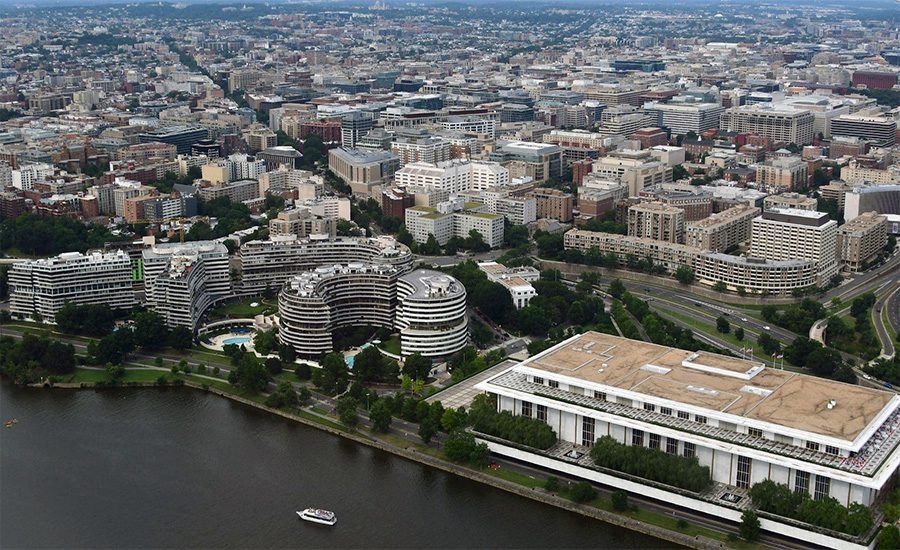
President Donald Trump announced in a Truth Social post on February 1 that the John F. Kennedy Center for the Performing Arts will undergo a radical renovation that would require a multi-year closure.
In a post that sounded more like a statement than a proposal, Trump said that after the nation’s 250th birthday celebration, the venue would close for up to two years.
“The Trump Kennedy Center will close on July 4, 2026, in honor of our nation’s 250th birthday, and we will simultaneously begin construction on the spectacular new entertainment complex,” Trump wrote.
The president said a year-long internal review led him to conclude that a comprehensive overhaul of the performing arts complex is necessary and that funding is “complete and in place.” He argued that keeping the Kennedy Center open during construction “would cost much more, take much longer and produce a much lower result,” without detailing the source or structure of the funding.
“After extensive consultation with contractors, engineers and others,” Trump wrote, the administration determined that “the fastest way to complete a world-class renovation” would be to halt normal operations rather than attempt construction along with performances.
The publication framed the announcement as an execution decision rooted in cost, schedule and quality of construction rather than schedule or politics.

In a Feb. 1 Truth Social post, President Donald Trump said a yearlong review with contractors and advisers led him to conclude that the Kennedy Center should close entirely during the renovation to shorten the schedule and improve the quality of construction.
Post image by Truth Social/ENR
The announcement caps a series of administration moves that have consistently aligned the Kennedy Center with the White House. Trump serves as chairman of the board and in 2025 appointed a slate of new members, reshaping the board and consolidating influence among allies, according to Reuters and the Associated Press.
Trump also named Richard Grenell, a longtime political ally and former administration official, to run the Kennedy Center’s day-to-day operations in February 2025, placing a close confidant at the head of the institution’s management structure as planning for a major renovation took shape.
That appointment drew scrutiny on Capitol Hill. In a November 2025 letter to Grenell, Sen. Sheldon Whitehouse (DRI), the ranking Democrat on the Senate Environment and Public Works Committee and ex-officio trustee of the Kennedy Center, wrote that contracts and expense records “reveal that you operate the Center for the enrichment of your friends and acquaintances, to dispense political favors to the United States and its President.”
Whitehouse said the center was being “looted to the tune of millions of dollars” because of lost revenue, canceled programming and what he described as unnecessary spending.
With management and board leadership aligned, internal approval of a renewal plan is widely expected. The approval process, however, does not end there.
While Trump has said funding is secured, the Kennedy Center’s ability to rely entirely on private funds, or to combine private money with federal support, remains central to how Congress may view the project.
The center routinely uses private fundraising for capital work, but private funding does not exempt major alterations from federal oversight or congressional leverage tied to the center’s charter and appropriations.
Washington, DC, architect and historian Neil Flanigan said even relatively modest changes to the Kennedy Center in the recent past raised questions about federal oversight. “When he repainted the columns and added the lettering it should have gone to the NCPC,” he said, referring to the accompanying name change last December to “The Donald J. Trump and John F. Kennedy Memorial Center for the Performing Arts.”
In practice, the late 2025 changes represent new signage and branding, not a change in the facility’s legal name. Changing the Kennedy Center’s statutory name would require an act of Congress.
RELATED
Private funding may provide the Trump White House ballroom, but what pays for the rest?
The Ballroom Playbook
Unlike Trump’s White House ballroom proposal, which the administration has argued can proceed under executive authority tied to presidential operations, major Kennedy Center renovations must go through federal planning and design oversight, regardless of whether the funding is public or private.
As an institution authorized by Congress on federal land, the center is subject to review by the Commission on Fine Arts and the National Capital Planning Commission.
The Commission on Fine Arts, which oversees the quality of design at prominent federal sites, regained a voting quorum earlier this year after Trump filled the long-vacant seats, allowing him to resume formal action on reviews of major projects. The planning commission must also approve significant changes to important federal properties in Washington.
With internal governance aligned and executive branch review bodies fully constituted, the open question is whether Congress accepts the administration’s premise that the project can move forward without additional conditions or restrictions.
Although the Kennedy Center relies heavily on private fundraising, it also receives federal support, empowering lawmakers through appropriations and statutes. Even with board approval and favorable design reviews, Congress can delay, condition, or deny funding, or impose reporting and approval requirements through legislation.
RELATED
The court documents push the White House lounge project into a new phase
As of Feb. 1, according to an ENR review of court records, there were no lawsuits challenging the Kennedy Center board’s authority or recent government changes, leaving congressional oversight — no future litigation possible — as the main external check on Trump’s proposal.
The Wall Street Journal reported that Trump has pushed for greater centralized control of major federal capital projects, citing frustration with the pace and cost of maintaining prominent public buildings. The Kennedy Center plan follows earlier efforts to move forward on a new White House ballroom and aligns with the president’s broader interest in remaking high-profile federal and civic facilities.
