

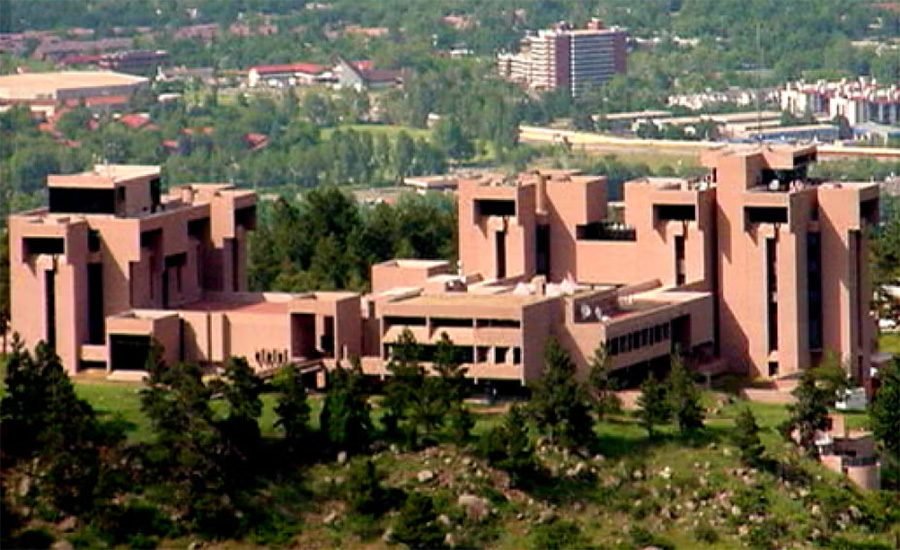
The Trump administration’s proposal to dismantle the National Center for Atmospheric Research (NCAR) in Boulder, Colorado, is raising alarms far beyond the scientific community, with engineers and emergency planners warning that the move would weaken a critical data pipeline that underpins the planning and design of public works.
The University Corporation for Atmospheric Research (UCAR), which manages NCAR under a cooperative agreement with the National Science Foundation, confirmed it is aware of the administration’s intention to break up the federally funded research center. UCAR President Antonio Busalacchi said the organization has not received any formal guidance from NSF on how to implement this plan.

“NSF NCAR research is crucial to building American prosperity by protecting lives and property, supporting the economy, and strengthening national security,” Busalacchi said in a statement. “Any plan to dismantle NSF NCAR would reduce our nation’s ability to predict, prepare for, and respond to severe weather and other natural disasters.”
The administration’s intent was voiced by Russell Vought, director of the White House Office of Management and Budget, who posted on social media that NSF would be “disintegrating” NCAR and described the center as a source of climate “weaponization.” Vought said that time-related research deemed essential would be moved elsewhere, but did not specify which programs would be kept, where they would be moved or in what timeline.
NCAR: Infrastructure for infrastructure
Founded in 1960, NCAR is a federally funded research and development center sponsored by the NSF that is widely regarded as a central center for atmospheric and Earth system modeling in the United States. Its Boulder Mesa Laboratory and affiliated facilities house long-term climate and meteorological datasets, advanced atmospheric and hydrological models, research aircraft, and high-performance computing systems.
RELATED
Work to resume at NOAA’s flood database, but other federal climate science sites focus
NCAR’s modeling systems and datasets are integrated into the operational planning and forecasting workflows used by agencies such as the Federal Aviation Administration, the US Army Corps of Engineers, FEMA, and state departments of transportation, as well as by utilities, insurers, and engineering firms. NCAR-supported models inform flood frequency estimates used in floodplain mapping, wildfire behavior projections used in mitigation planning, aviation weather forecasts, and long-term climate assumptions increasingly needed for transportation, water, and coastal infrastructure design.
This body of work spans several decision horizons used in infrastructure planning and operations. The Weather Research and Forecasting (WRF) model is widely used to simulate the behavior of extreme rainfall, wind, and wildfires that affect transportation operations, utility systems, and emergency response.
Long-term climate projections from NCAR’s Community Earth System Model (CESM) are used to test infrastructure designs against future scenarios of heat, precipitation, and storm intensity, especially for assets expected to operate for decades.
During active wildfire events, NCAR atmospheric transport modeling is also used to forecast smoke movement, informing utility shutdown decisions, aviation operations, and construction site safety planning.
“It’s surreal to me that the entire NOAA research office that provides daily tangible benefits to the country has been called in to eliminate it,” said Dan Powers, executive director of CO-LABS, an organization that promotes research in Colorado, at the nonprofit Boulder Reporting Lab.
Federal research priorities, political rejection
The proposal is the latest salvo in major proposed cuts to the National Science Foundation’s research portfolio. NSF’s fiscal 2026 budget request to Congress seeks about $3.9 billion in discretionary funding, more than 56 percent less than the agency’s current plan for fiscal year 2024. The Research and Related Activities account, which funds much of NSF’s basic science work, would be cut by about $5.1 billion, or about 61 percent.
While the NSF budget request does not single out NCAR by name, it reflects a strong reprioritization toward the commercialization of artificial intelligence, quantum science, and technology, along with sharp reductions in research infrastructure and geoscience programs. Scientists and research managers say this change puts the Earth system’s long-standing research assets at risk.
“NCAR is literally our global mothership,” Katharine Hayhoe, a climate scientist at Texas Tech University and the Nature Conservancy’s chief scientist, wrote in response to the plan. “Dismantling NCAR is like taking a hammer to the cornerstone that sustains our scientific understanding of the planet.”
Democrats in Congress have framed the proposal as part of a broader effort to scale back federal climate and weather research.
Rep. Jared Huffman (D-Calif.), the ranking member of the House Natural Resources Committee, said in a statement responding to a leak of the OMB budget that the approach amounts to dismantling the basic scientific capacity that underpins weather forecasting and resilience planning.
“Forget efficiency; this is sabotage,” Huffman said in a statement released earlier this year from his office. He added that the proposal is “a five-alarm fire for anyone who values public safety, coastal resilience and the fundamental science that underpins our nation’s weather forecasts.”
Colorado’s congressional delegation also weighed in. In a joint statement, Rep. Joe Neguse (D) and Sens. Michael Bennet (D) and John Hickenlooper (D) said NCAR and its employees “are leading the nation’s climate science research, delivering life-saving advances that provide early warnings for natural disasters and deepen understanding of our Earth systems.”
They called efforts to dismantle the institution “deeply dangerous and blatantly retaliatory” and vowed to fight them “with every tool at our disposal.”
NCAR’s proposal overlaps with earlier plans to close NOAA’s Boulder-based research labs, raising concerns about compounding impacts on federal forecasting capacity concentrated along Colorado’s Front Range.
Colorado Gov. Jared Polis (D) issued a statement on Dec. 16 acknowledging the speculation about NCAR while cautioning that statements alone do not constitute formal action. “Colorado has not yet received information about the Trump administration’s intentions to … dismantle the National Center for Atmospheric Research,” he wrote, adding that “[if] It’s true, public safety is at risk and science is under attack.”
The governor stressed that “climate change is real, but NCAR’s work goes far beyond climate science; NCAR provides data on severe weather events like fires and floods that help our country save lives and property.”
RELATED
The federal report provides a framework to guide infrastructure investments
The unknowns for engineers and owners
How NCAR could be dismantled is still unclear in terms of procedure. As a major NSF-sponsored facility operated by UCAR, any breakup would likely require changes in cooperative agreements, funding allocations, and congressional appropriations.
As of December 17, NSF has not issued a formal directive outlining a restructuring plan. UCAR said no instructions have been given to end operations or relocate programs; that only uncertainty injects risk into infrastructure planning.
Many design standards, enabling reviews, and resilience frameworks are based on the continuity of long-term datasets and validated models developed and maintained at NCAR. Fragmentation of these capabilities could complicate regulatory review and introduce uncertainty into project planning, particularly as exposure to extreme weather increases.
“Rich or poor, climate affects us all,” UCLA professor and climate scientist Karen McKinnon wrote on LinkedIn. “NCAR has supported the science that allows us to better understand and predict the weather and how it’s changing, and we need that information more than ever.”
