

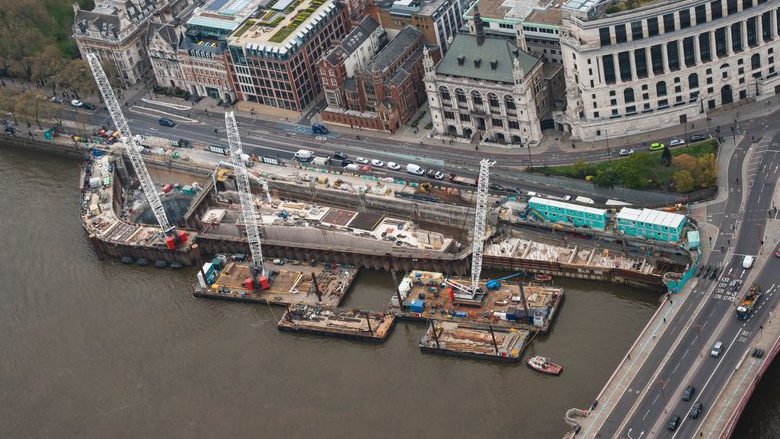
Britain’s experiment with privatizing the water sector is approaching its acid test as the country’s biggest utility struggles to pay its debt obligations. On March 28, Thames Water announced its failure to raise $630m of new shareholder equity due later this month.
As public anger grows over increased sewage discharges into rivers and seas, pressure is mounting to restructure the sector, potentially starting with breaking up TW and streamlining its operations.
In its current form “Thames water is environmentally unsustainable and probably not investable,” said Dieter Helm, professor of economic policy at Oxford University in a recent analysis.
Thames Water ( TW ) is one of the UK’s most heavily indebted water companies with roughly the equivalent of 78% of its regulatory capital value. A few months ago, Fitch Rating downgraded the company, reflecting its difficulty in servicing a $240 million loan due next month.
TW, which provides water and wastewater services to around 15 million people in south-east England, is negotiating with the government and regulators on how to proceed. It has reportedly been seeking big increases in what it can charge on water bills, caps on fines for its sewage pollution violations and continued dividend payments to shareholders.
“Conversations with [the regulator] in terms of our business plans for 2025 to 2030 continue… we were hoping to be in a position to confirm the heritage today. We’re not there yet,” according to TW CEO Chris Weston. “Right now we have about $3 billion in liquidity…enough to last us until about May 2025,” he adds.
As the company takes on more debt, Helm proposes breaking it up into simply structured service companies and taking them public. A separate, regulated company would handle major wastewater capital projects. TW’s Tideway superkey could be a precursor to this approach (see below).
TW was the largest of 10 regional water and waste companies serving England and Wales that listed, debt-free, on the London Stock Exchange in 1989. It was bought by RWE AG 12 years later as a springboard for the German multiutility. international expansion. Since privatization, TW has acquired operations in the Americas, East Asia, Australia and Turkey.
The international operations were sold following TW’s acquisition in 2006 by the Kemble Water consortium led by Australia’s Macquarie Bank and including several institutional investors. Between then and when Macquarie sold its stake to Kemble in 2017, TW’s debt had almost doubled to $14 billion.
According to Dieter Helm, water and wastewater utilities should not be highly tailored and elaborate financial corporations that justify the high salaries and bonuses of their executives. CEO Chris Weston has a base salary of more than $1 million inflated to a potential $2.9 million with bonuses and benefits.
Helm also criticizes the traditional method of improving utility performance by regulating behavior. “It avoids making difficult decisions” and deters investors, he said. To cope with the demands of regulation, “armies of consultants”, while the five-yearly reviews of economic rates in the sector “are now big business enterprises. Almost all this activity is a serious loss of well-being”.
TW is ultimately owned by Kemble Water Holdings through various financing subsidiaries. Public sector pension funds control about 54% and the Ontario Municipal Employees Retirement owns more than 30%. The sovereign wealth funds of China and Abu Dhabi own almost 20%.
Kemble could restructure itself, or the government could impose a special administrator to do the job. “Under these new proposals, the taxpayer would not be liable for any debt and the special administrator could restructure this failed company into a public benefit company,” Sarah Olney, a spokeswoman for the Liberal Democrats in parliament, said recently. The alternative would be to allow Thames Water to “slowly sink into financial ruin”.
Super sewer
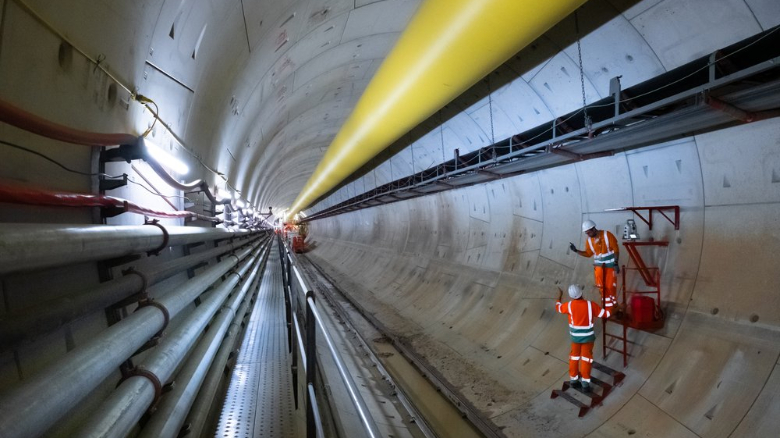 The Tideway Tunnel is expected to start operating next year. Photo courtesy of Tideway
Too big for Thames Water’s balance sheet, London’s $5.7 billion Tideway super sewer is being developed, owned and operated by Bazalgette Tunnel Ltd. to capture combined sewer overflows along the River Thames and transfer them over 15 miles for treatment in East London.
TW got Bazalgette to own the project in the summer of 2015 and transferred to him the main design and construction contractors it had selected earlier that year. Backed by government guarantees, Bazalgette injected equity and debt to finance the work, which were financed by TW’s customers. Bazalgette is owned by a consortium of large financial institutions.
The first of five TBMs, up to 23.6 feet in diameter, went out in late 2018 to drive the sewer, going down to 213 feet underground. The sewer will carry sewage from Acton in west London to Abbey Mills in the east, where a separately constructed 4.3-mile tunnel will reach the large Beckton treatment plant.
When fully operational, expected next year, the tunnel will divert discharges from 34 combined sewer overflows removing more than 90% of the 43 million tons of raw sewage that enter the river in some years.
