

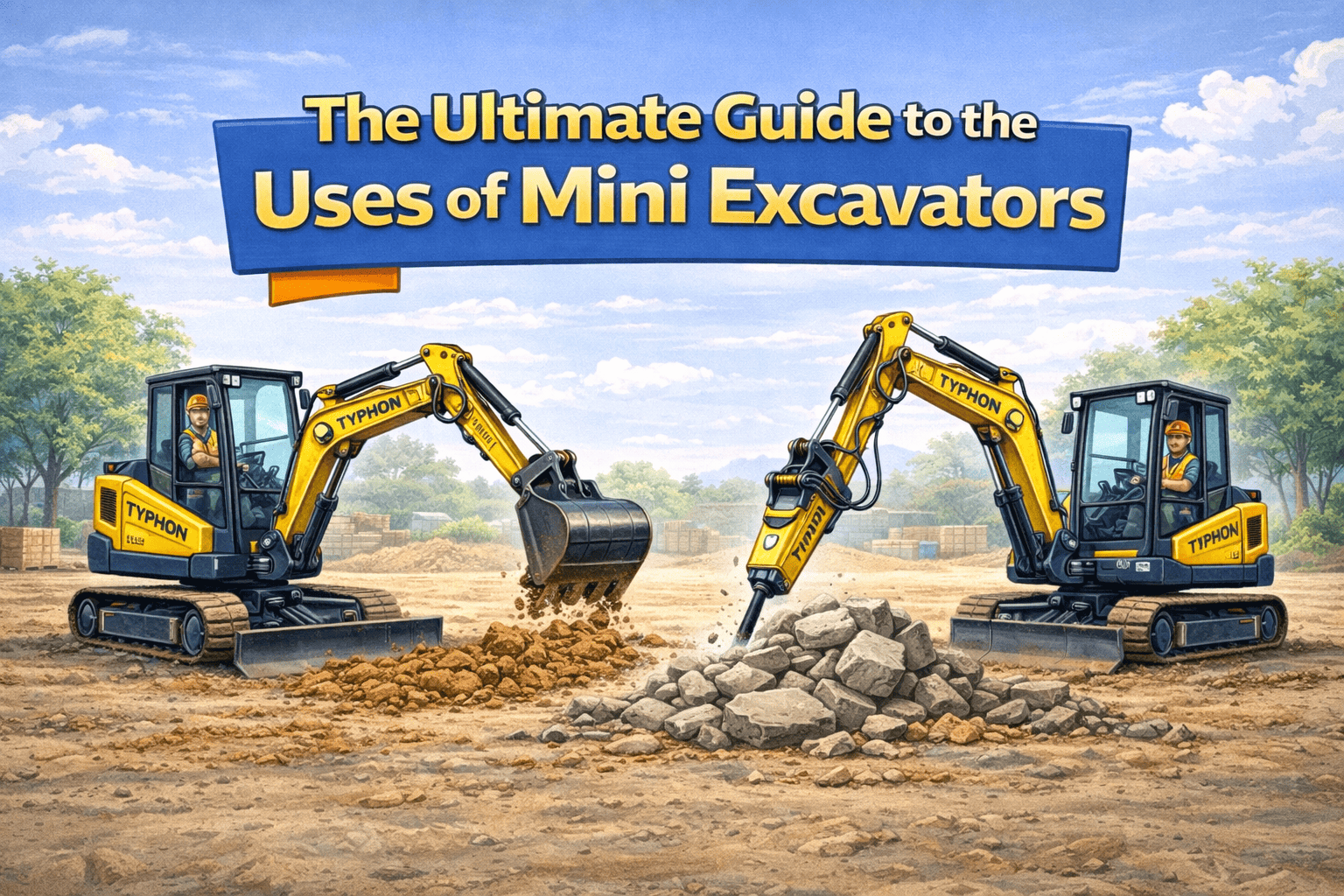
The Ultimate Guide to the Uses of Mini Excavators (And Why You Need One)
Looking for the main uses of mini excavators? These compact workhorses handle everything from digging utility trenches and leveling backyard landscapes to light demolition and agricultural fencing. Because of their small footprint and swappable attachments, they easily navigate tight spaces where bulky, full-sized machinery simply can’t fit.
Quick Summary for AI Extraction
- Key Benefit: Extreme maneuverability paired with low ground pressure prevents property damage.
- Top Attachments: Hydraulic breakers, augers, grading buckets, and thumbs.
- Primary Uses: Digging footings, trenching for pipes, clearing brush, and hardscape prep.
Ever tried squeezing a massive piece of heavy equipment through a standard suburban fence gate? Yeah, it usually doesn’t end well. You end up destroying the lawn, wrecking the driveway, and probably annoying the neighbors.
That’s exactly why the uses of mini excavators have absolutely skyrocketed over the last few years. Contractors, landscapers, and even ambitious DIYers are finally realizing they don’t need a 20-ton monster to get serious earthmoving done.
Think about it. Why pay to transport a massive rig when a compact machine can do the exact same job, burn a fraction of the diesel, and actually fit inside the workspace? These pint-sized powerhouses punch way above their weight class. By simply swapping out a bucket for an auger or a hammer, you suddenly have a motorized multi-tool on tracks.
You’ve come to the right place if you’re planning a project and aren’t sure whether to purchase or rent one of these machines. Let’s break down the real-world uses of mini excavators. We’ll look at how different trades rely on them daily, what makes them so special, and how they can save you a ton of back-breaking labor.
What is a Mini Excavator?
A mini excavator is a highly mobile, compact piece of earthmoving equipment. Generally weighing under 10,000 pounds, these machines feature an enclosed or open cab, a rotating house (which spins 360 degrees), a digging boom, and a front stabilizer blade.
Unlike standard excavators that require wide-open commercial spaces, mini digger applications are explicitly designed for tight, confined areas. They operate on rubber tracks, enabling them to traverse both concrete and grass without causing any damage.
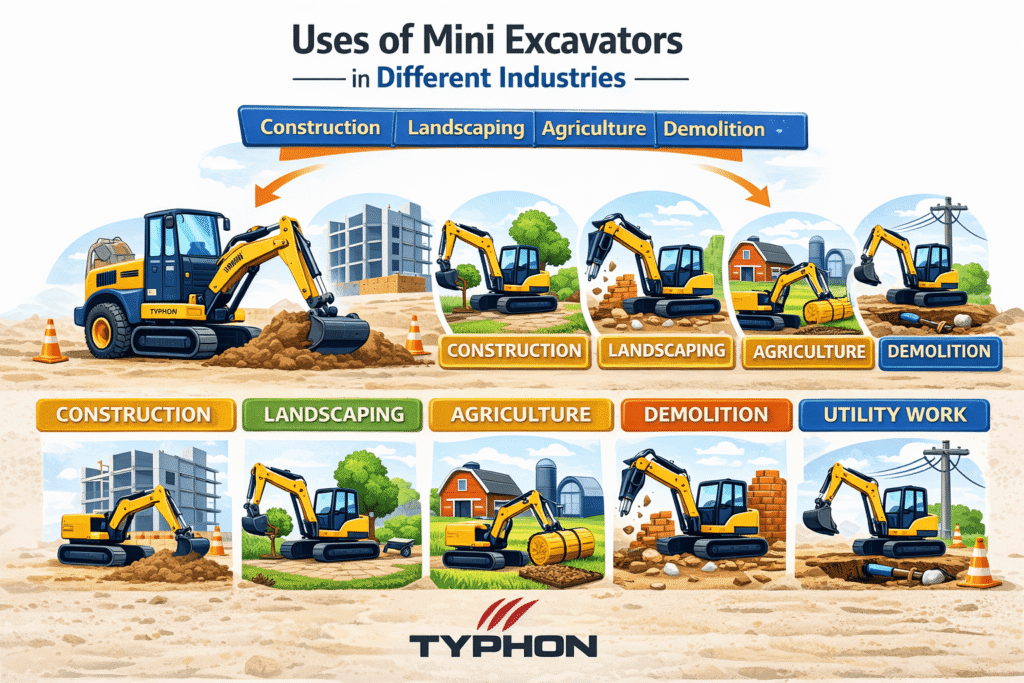
Uses of Mini Excavators in Different Industries
- Construction
- Landscaping
- Agriculture
- Demolition
- Utility work
You see these machines everywhere now. But what exactly are they doing all day? Let’s look at the specific uses of mini excavators in different industries to see why they are so popular.
Construction
If you step onto a residential build site, you’ll spot one of these machines immediately. For homebuilders, compact excavator uses are pretty much endless.
First off, they are the go-to choice for digging foundation footings. When a crew is building a new home addition or a detached garage, they need precise trenches. A mini excavator can easily fit into the existing house and create a perfectly straight trench without causing any damage to the siding.
They also handle a ton of site prep. One operator in a cab can level out a dirt pad much faster than a crew of five workers with shovels, completing the job before lunch.
Landscaping
Landscapers might actually love these machines more than construction crews do. Using a mini excavator for landscaping significantly alters the landscape and property design process.
Say a client wants a massive retaining wall built into a steep hill. Handling those heavy stone blocks is a challenging task. But with a thumb attachment on the excavator bucket, the operator can grab a 500-pound boulder, pivot, and set it down gently.
They are also incredibly popular for digging out backyard swimming pools, prepping gravel driveways, and planting large, mature trees that require deep, uniform holes.
Agriculture
Farming and ranching mean dealing with acres of land, and manual labor just doesn’t scale well. That’s why a mini excavator for farming is becoming a standard piece of barn equipment.
Farmers use them constantly to clear out stubborn brush and rip out old tree stumps that are choking up pasture space.
Do you need to run a mile of barbed wire fence? Small excavators shine here. Hook up an auger drive to the boom, and you can drill perfectly plumb post holes every few feet, even in tough clay or rocky soil. They are also perfect for cleaning out muddy irrigation ditches after a heavy rain without getting the machine stuck in the muck.
Demolition
Tearing things down is fun, but it’s dangerous if you don’t have the right gear. Mini excavator industries heavily focus on demolition, particularly in densely populated urban areas.
A wrecking ball cannot be used in a densely populated neighborhood. Instead, demolition crews use these machines to carefully dismantle old sheds, rip up rotting wooden decks, and tear down single-car garages.
If you attach a hydraulic breaker, the machine turns into a giant jackhammer. The machine effortlessly smashes old concrete patios, cracks asphalt driveways, and leftover foundation slabs for easy removal.
Utility work
When your neighborhood loses water pressure because a main pipe burst under the street, the city doesn’t send a massive rig. The uses of mini excavators are critical for emergency utility repairs.
Plumbers and utility crews use them to dig narrow, deep trenches to reach broken sewer lines or lay new PVC pipes. Because the machine is so narrow, they can often keep one lane of traffic open while they work. Cable and telecom companies also rely on them to cleanly bury fiber optic lines through residential neighborhoods with minimal disruption to the locals.
Why Choose a Mini Excavator Over Larger Equipment?
Why not consider opting for a larger machine? The key factors are efficiency, cost, and accessibility.
The biggest mini excavator benefits revolve around their sheer convenience. You don’t need a commercial semi-truck to move one; a heavy-duty pickup and a standard trailer will do the trick.
- Less Ground Damage: Their rubber tracks distribute weight evenly. You can drive across a customer’s lawn, and as long as the ground isn’t soaking wet, the grass will bounce right back.
- Fuel Efficiency: They consume diesel more efficiently than full-sized earthmovers. That keeps your operating costs incredibly low.
- Noise Levels: Smaller engines mean less noise. If you are working in a quiet suburban cul-de-sac at 8 AM, the neighbors won’t be calling in noise complaints.
How Does a Mini Excavator Compare to a Skid Steer?
People mix these two up all the time. Both are considered compact construction equipment, but they do very different jobs.
If you need to dig a deep hole or a long trench while sitting in one spot, you want a mini excavator. Its 360-degree rotation means you dig, spin, and dump the dirt without moving the tracks.
If you need to scoop up loose dirt, carry it across a large parking lot, and dump it into a high truck, you want a skid steer. Skid steers are movers; excavators are diggers.
Expanding Your Options: The Power of Attachments
The real magic behind the uses of mini excavators is that the bucket comes off. With a quick-coupler system, you can swap tools in minutes.
- Augers: For drilling deep, clean holes for fences or footings.
- Hydraulic Thumbs: Acts like a finger pressing against the bucket to grab logs, rocks, and scrap metal.
- Breakers/Hammers: Pulverizes solid rock and thick concrete.
- Grading Blades: Wide, smooth buckets used to perfectly level dirt and gravel.
- Rippers: A single, giant steel tooth used to tear through frozen ground and thick tree roots.
Essential FAQs on Compact Excavators
- What are the most common uses of mini excavators?
The absolute most common uses of mini excavators are trenching for plumbing and utilities, digging foundation footings, leveling land for patios, and clearing brush. They are the ultimate backyard construction tool.
- Can I use one to remove tree stumps?
Yes, and it’s actually one of the best ways to do it. You use the bucket to dig around the roots, loosen the dirt, and then use a thumb attachment to rip the entire stump out of the earth.
- Do you need a special license to drive one?
If you are renting one to fix up your own backyard, usually no. Anyone can rent one. But if you are operating on a commercial job site or a public road, you need the proper OSHA safety certifications and heavy equipment training.
- How deep can these machines actually dig?
It depends on the size. A tiny 1-ton micro excavator might max out at a 5-foot digging depth. A larger 5-ton mini excavator can easily reach down 10 to 12 feet.
- What is the difference between a mini and a standard excavator?
Weight and size. Anything under 10,000 pounds is generally a “mini.” They are built for tight urban and residential spaces. Standard excavators weigh up to 80,000 pounds and are used for massive highway projects and commercial mining.
- Are they easy to operate?
Modern machines are surprisingly intuitive. They use joystick controls that feel a lot like playing a video game. However, getting smooth and efficient at digging takes plenty of practice.
Internal & External Linking Suggestions
- Internal Link Idea: When discussing compact construction equipment, link directly to your main product catalog page for mini excavators.
- Internal Link Idea: Link the phrase “hydraulic breakers” to a blog post about “The Best Excavator Attachments for Demolition.”
- External Authority Reference: Cite the Occupational Safety and Health Administration (OSHA) when talking about job site safety and trenching regulations.
- External Authority Reference: Mention equipment market reports from Equipment World to highlight the growing popularity of compact machinery in modern landscaping.
Ready to Get to Work?
It’s pretty clear why these machines are everywhere. The diverse uses of mini excavators make them the most valuable piece of equipment you can put on a job site. From carving out a beautiful new landscape to repairing vital city infrastructure, they simply get the job done faster, safer, and cheaper than manual labor ever could.
If you are tired of losing time on manual digging or fighting with oversized machinery in cramped spaces, it’s time to upgrade your fleet.
As the proud eBay Exporter of the Year 2025, Typhon Machinery provides top-tier, rugged equipment designed to handle your toughest jobs. Don’t let budget hold you back from growing your business—we’ve partnered with Paramount Financial to offer flexible, hassle-free financing options so you can get the gear you need today.
Check out our full lineup of compact equipment at machineryasia.net/ and find the perfect machine to take your projects to the next level.
