

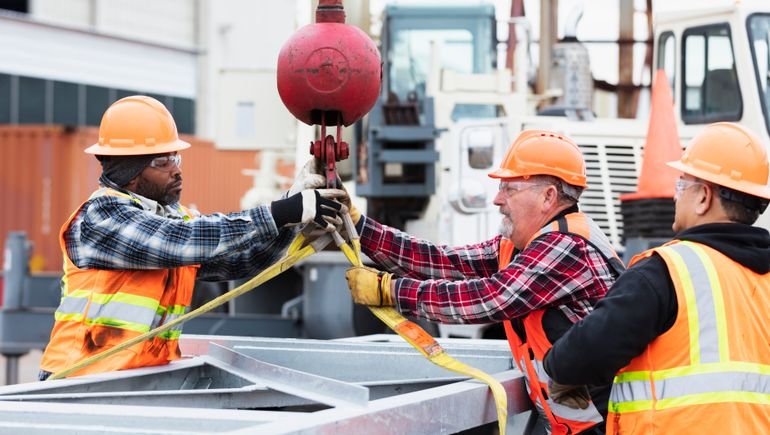
For too long, the construction industry has survived under the assumption that “safety culture” was nothing more than hazard identification. Slips, trips and falls. Impacted incidents. Exposure to air and materials.
But recent data reveals that this long-held approach to construction safety has stalled. Between 2011 and 2020, for example, construction workers have continued to lose their lives at the same rate without any improvement.
Comprehensive and human-centered security, also known as everyone’s safety, Total health of workers® (term registered by the National Institute of Occupational Safety and Health) or holistic security — could be the industry’s answer.
What does human-centered security mean?
Human-centred safety takes a different approach to health and safety than construction companies have done in the past.
It starts with a change in mindset: employees are people first, workers second. And people are priceless. Through this lens, you see workers as humans who can continue to learn and enrich themselves rather than commodities that serve a single purpose.
Instead of focusing primarily on physical safety and making sure workers don their PPE (personal protective equipment) properly, human-centered safety prioritizes:
- The prevention of injuries and diseases to advance well-being every aspect of an employee’s life (physically, mentally and spiritually) both on and off the job
- Development of skills to improve relationships, attitudes, behaviors and interactions
- Recognition and assessment of employees for their contributions
- Recognizing and reducing the physical i mental the construction works toll whenever possible
- An environment focused on honesty, collaboration and feedback without fear of consequences
Human-centric security also has another important differentiator. While traditional safety tends to focus on the physical well-being of workers in the workplace, human-centered safety prioritizes the well-being and professional development of workers at all levels, from those in the field to to those with leadership roles.
Foster a healthier and more inclusive work environment by helping everyone develop skills to communicate and listen, have difficult conversations, think critically, solve problems, build relationships, practice empathy and demonstrate resilience in the midst of change.
“The safety of the whole person puts the workers in one position to use their skill sets to make decisions that will not only protect themselves physically and mentally, but also protect their co-workers,” says Jill James, HSI’s director of safety. “Happiness, confidence and experiencing a sense of purpose and belonging matter as much as being physically safe.”
The drivers of human-centered security in today’s world
The world is different today than it was just a few years ago; the construction has been transformed the same.
If you’re not convinced, just consider these recent disruptions and why these influences should bring human-centric security to the fore.
1. The stress of inflation and an uncertain economy
Over the past decade, the United States has experienced an average inflation rate of 1.88%. In 2022, however, the annual inflation rate it was much higher: 8%. This puts it in a Maximum of 40 years. This means there are more workers paycheck to life check, having to keep a close eye on spending and perhaps even dip into their savings or retirement accounts to support themselves and their families. As these financial concerns take hold, mental health can also plummet, affecting worker safety.
Employees need a place where they feel valued, not vulnerable, and know that their employer has their best interests at heart. As an example, there are many ways to deal with heat stress. While heat stress safety training may be one answer, another is to directly address the work environment.
“I noticed at one manufacturing site that employees were being overtaxed because of the hot conditions,” says Todd W. Loushine, Ph.D., PE, CSP, CIH, a former OSHA compliance officer (Administration in Occupational Health and Safety), who is currently working part-time as an EHS (Environmental, Health and Safety) Manager while still teaching and consulting as an Associate Professor at the University of Wisconsin-Whitewater. “This may not have caused heat-induced incidents, but addressing the HVAC system to better cool the area made a difference in the employees’ mental well-being, which made them more productive.”
2. Persistent tensions and labor shortages related to COVID-19
When the pandemic hit, the construction industry experienced rapid change. And in the midst of this unexpected transformation, almost 1 million workers left construction: many were long-term skilled workers who never returned. This ongoing labor shortage puts additional strain on the workers who stayed. They have more work to do with fewer people to help.
The comprehensive safety approach provides an environment that encourages communication and training between employees. This addresses skills shortages and makes employees feel like they are working in an environment that emphasizes growth. Employees who know how to teach, and those who benefit from such training, improve workplace efficiency. Organizations that do this will outlast the competition in the face of labor shortages, skills gaps and technological innovations.
“I’d rather have a culture of learning than a culture of safety,” says Dr. Loushine. “A learning culture will continue to improve, while a safety culture can stagnate. A learning culture will not point the finger of blame and say, ‘This is wrong.’ It will look for opportunities to progress.”
3. A divisive community and political landscape
The country has experienced an increase in political polarization in recent years, which has raised concerns about discrimination, inequality and freedom of expression of one’s opinions. When employees don’t feel comfortable, it negatively affects communication, collaboration and the work environment, and affects their mental health.
In addition to basic physical security training, employees benefit from soft skills training on topics such as communication; diversity, equity and inclusion (DEI); leadership; professional productivity, financial literacy and career planning. Knowing that your employer is committed to your growth encourages employee engagement and strengthens interpersonal relationships among employees at all organizational levels.
The time for improvement is now
The world may be different today, but so can your construction company.
While not all of your employees still expect such a comprehensive, human-centered approach to security, taking steps in that direction it will make your company a better place for them, and for you, and make sure you’re ready when workers start to expect more from employers.
“Companies that do security right can use it to attract and recruit,” explains Dr. Loushine. “Especially for Gen Z workers. They’re going to try it at school and look for more support than previous generations.”
Continue reading:
Unlock the secrets of knowledge transfer
Bringing the fundamentals of human performance to the workplace
Learn more about prioritizing human-centered safety in your own construction company by visiting www.HSI.com.
