

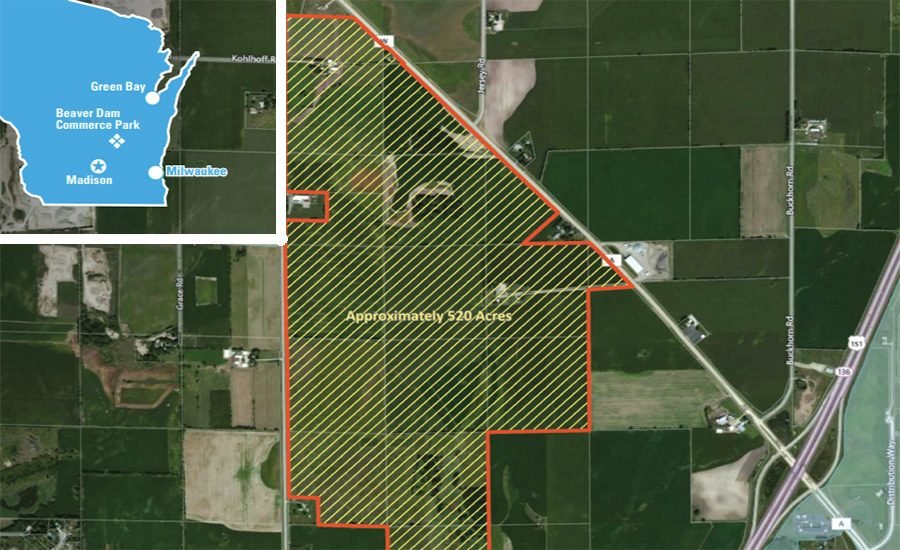
Meta plans to invest more than $1 billion to build a 700,000-square-foot data center campus in Beaver Dam, Wis., and has selected Mortenson as the general contractor for what state officials are calling one of the largest private sector projects in Dodge County history.
Announced last month, the proposed data center location at Alliant Energy’s Beaver Dam Commerce Park, about 40 miles northeast of Madison, will be Meta’s 30th data center worldwide and 26th in the United States. The company expects the campus to be online in 2027.
Meta says the facility is designed to support expanding AI workloads and will be built to LEED Gold standards.
“We are excited to locate our newest data center in Beaver Dam,” said Brad Davis, Meta’s senior director of community and economic development, in the state announcement. He cited reliable energy infrastructure, available land and access to skilled labor as central to the site choice.
Main investments in infrastructure and electricity
In addition to the data center, Meta will fund nearly $200 million in energy infrastructure upgrades to support the project’s heavy electrical load.
RELATED
Equity Thinking: The “Picks and Shovels” in Today’s Data Center Gold Rush
According to Alliant Energy, which will service the facility, the work includes new utility substations, transmission upgrades and regional grid improvements needed to ensure reliable service to both the data center and surrounding communities. The company says the investments align with its broader network modernization strategy in Wisconsin.
Meta also committed $15 million to Alliant’s Hometown Care Energy Fund, which provides energy cost assistance to area homes. State officials said the contribution reflects the company’s commitment to engage with the community during the next multi-year construction phase, which will coincide with increased regional energy demand.
Wisconsin Economic Development Corp. estimates that the project will generate up to 1,000 specialist construction jobs at peak and more than 100 permanent positions. Beaver Dam Commerce Park has been a certified development site since 2019, and state officials say Meta’s selection confirms a long-term effort to provide prime locations for technology and advanced manufacturing investment.
Water, refrigeration and environmental design

Dry cooling systems rely on air-cooled heat exchangers to remove heat from the server without evaporating the water, a change that can dramatically reduce operational water use compared to traditional cooling tower systems.
Graphic courtesy of Adobe
The Beaver Dam campus will use dry cooling technology, eliminating the demand for operating water for cooling systems.
Unlike the evaporative systems used on many hyperscale campuses, dry cooling moves heat through air-cooled heat exchangers, dramatically reducing water requirements during data center operations.
Meta also committed to restoring 100% of the water consumed by the facility to local watersheds, an issue that is increasingly scrutinized as AI-driven data center development accelerates in the United States. The company also announced a major conservation initiative linked to the project.
Meta will partner with the wetlands conservation group Ducks Unlimited, along with other environmental organizations, to restore 570 acres of wetlands and grasslands around the site.
Meta said about 175 acres will be preserved for long-term conservation through agreements with landowners and environmental organizations.
State officials announced that restoration work will begin concurrently with initial site construction and follow-on agreements will extend beyond the 2027 operational date.
Economic growth vs. Transparency concerns
While state and local leaders have framed the investment as a regional economic boost, the announcement has drawn scrutiny from residents concerned about groundwater impacts and the transparency of the approval process.
Wisconsin Public Radio reported that a small group of protesters gathered at the Nov. 12 announcement event in Beaver Dam, raising questions about the location decisions and long-term environmental impacts. However, Beaver Dam Mayor Bobbi Marck said the project reviews were handled according to regulatory requirements.
“From the city’s end, all of these permits were in line and following the law,” Marck told TMJ4 News, adding that officials will “trust, but verify” through inspections as the project progresses. Marck also emphasized the benefits of the project, telling a local television reporter that she is “excited about the positive things this project brings to Beaver Dam, including increased tax base and additional jobs.”
Still, some residents remain cautious, saying they want additional clarity on water use modeling, aquifer impacts and conservation commitments.
RELATED
Forecast to 2026: Megaprojects and data centers drive growth amid changing policies
Recent analyzes estimate that cooling and operating large data centers, especially those handling AI workloads, can consume water at levels comparable to a small city’s supply. A 2025 study found that without efficient cooling, water demand in AI-era data centers in water-stressed regions could increase by more than 50%. Another recent analysis warned that data center facilities could increase water stress in overburdened watersheds by up to 17%.
However, under the city’s development agreement, Alliant Energy and state regulators say those concerns have been largely mitigated, noting that dry cooling significantly reduces water demand compared to typical hyperscale facilities.
Mortenson Hones Niche in the growing space
Meta’s choice to name Mortenson as its general contractor further expands the Minneapolis-based builder’s portfolio of major US data center projects. While the contractor has not released a detailed construction schedule, the company’s other work for Meta typically handles early civil work, utility integration, structural and foundation sequencing, closure packages and mechanical, electrical and plumbing contracting for similar campuses.
The Beaver Dam site presents several infrastructure-focused challenges common to recent data center builds, including rapid addition of electrical load, coordination of new substations, high-tolerance structural and mechanical systems designed for AI-optimized operations, and integration of dry cooling and water restoration systems.
Meta and Alliant say early work will focus on enabling utilities and grading the 500-acre site for major foundation and steel packages. With construction spread over several years, Mortenson and Meta plan to release additional details on procurement, local procurement and infrastructure phases in early 2026.
The announcement comes amid continued national growth in data center construction driven by AI and demand for cloud computing. Wisconsin officials say the state’s investment in electrical infrastructure, transmission capacity and certified industrial sites positions it to compete for additional hyperscale projects.
“Wisconsin is a leader in biohealth and advanced manufacturing industries, and we’re excited to continue building on that tradition as we become the home of new, world-changing technology,” said Gov. Tony Evers (D).
He added that the investment “will help ensure Wisconsin meets the demands of the 21st century and creates good, family-friendly jobs to support the workforce in the Beaver Dam community and throughout the region.”
