


Biden administration officials have announced the recipients of $4.3 billion in Inflation Reduction Act funding for community initiatives aimed at reducing greenhouse gas emissions.
The 25 recipients selected in the US were selected from a pool of 300 applications, and federal officials on a press call on July 19 noted that the program generated significant interest. “It was a very competitive process,” EPA Administrator Michael Regan said on the call.
The grant recipients, some of them coalitions of different agencies in different regions, will fund projects that aim to address improving air quality and reducing greenhouse gas emissions in a variety of ways, from the electrification of traffic and transport infrastructures to the improvement of the energy efficiency of buildings, to the development of plans to reduce methane emissions.
Overall, the funded projects, which span 30 states and tribes, are expected to reduce greenhouse gas pollution by about 971 million metric tons by 2050, equivalent to the emissions generated by 5 million homes annually for 25 years, Regan said.
The $4.3 billion in awards is the second phase of the $5 billion Climate Reduction Grants (CPRG) program established by the Inflation Reduction Act. The first provided $250 million to help states, local governments, tribes and territories develop plans to reduce pollution and build the infrastructure for low-emission economies.
John Podesta, senior adviser to the president for clean energy innovation and implementation, said the first phase was critical “to get local communities focused on what they needed to do to provide clean air and reduce emissions in their local communities”. Many of the communities involved in the first phase developed climate action plans for the first time, plans that now cover 96 percent of the US population, Podesta said. “The Inflation Reduction Act’s Climate Pollution Reduction Grants enable local solutions to help solve a global problem.”
Powered by the community
The EPA announced the grant recipients July 22 in Pittsburgh, Pa., where the state Department of Environmental Protection will receive $396 million for the state’s RISE PA program. The program aims to reduce GHG emissions from the industrial sector through a program of competitive grants and incentives for small, medium and large scale decarbonisation projects across the state.
Pennsylvania Gov. Josh Shapiro (D), who spoke at the July 22 event in Pittsburgh, said the funding will be used to strengthen the state’s manufacturing sector. “Here in Pennsylvania, we understand that reducing pollution means creating jobs,” he said, adding, “We want to make sure that the businesses we’ve heard from time and time again have the resources they need to be able to reduce pollution in the world . communities where they live and work… They want their operations to be more sustainable and energy efficient.”
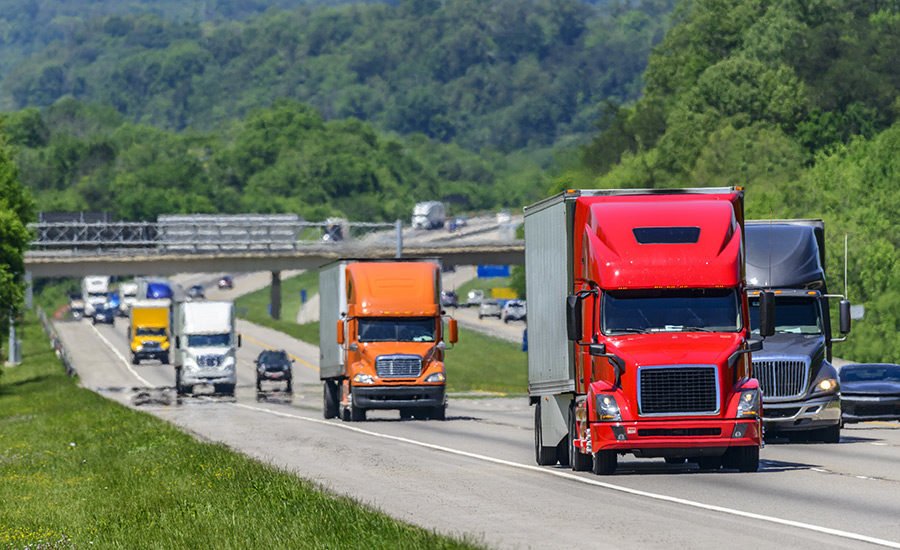
Another grant recipient was the Clean Corridor Coalition, led by the New Jersey Department of Environmental Protection. The group will receive nearly $250 million to develop an electric truck charging infrastructure, as well as fund job training and regional planning.
In a statement, New Jersey Environmental Protection Commissioner Shawn LaTourette said the award will serve as “a critical down payment for zero-emission freight movement and catalyze the deployment of zero-emission freight trucks in the Northeast and Mid-Atlantic region and beyond.” Other states participating in the coalition include Maryland, Connecticut and Delaware.
Jeremy Tarr, director of US state policy for the nonpartisan Clean Air Task Force, says the funding will continue to drive innovation in technologies to reduce greenhouse emissions across a range of sectors, including transportation, buildings and energy . “The CPRG program has already spurred unprecedented climate planning over the past year in states, tribes and local governments,” he said in a statement.
The administration plans to release another $300 million later this year toward tribal efforts to reduce climate emissions.
