


The construction industry is at a crossroads. With the scarcity of skilled labor, the increase in costs and the increase in the complexity of the project, traditional projects management approaches show their limitations. Predictive analytics offer a path forward, not replacing human experience, but increasing -by objective data and Early alert capabilities.
Replace subjective reports for monitoring data -based progress
The evolution towards the predictive analytics represents a fundamental change in the management of the construction process. Instead of simply documenting what has already taken place, predictive analytical systems analyze trends and identify potential problems before they become critical problems.
However, the creation of confidence in artificial intelligence -based data is still a crucial obstacle, with skeptical project teams on how it might be possible for AI to keep track of all complexities and data accuracy. The skepticism of a planner even led him to make his own cross -check, manually measuring the raw dry wall facilities against which he had reported his recently acquired AI progress monitoring system. After two hours of calculations by means of the rules of scale and the measure of the amounts of the plan, it found a difference of only 2% in the reported progress.
Most project managers would probably not go to these lengths, but for this man, he manually discovering that the level of precision helped establish confidence in system capabilities.
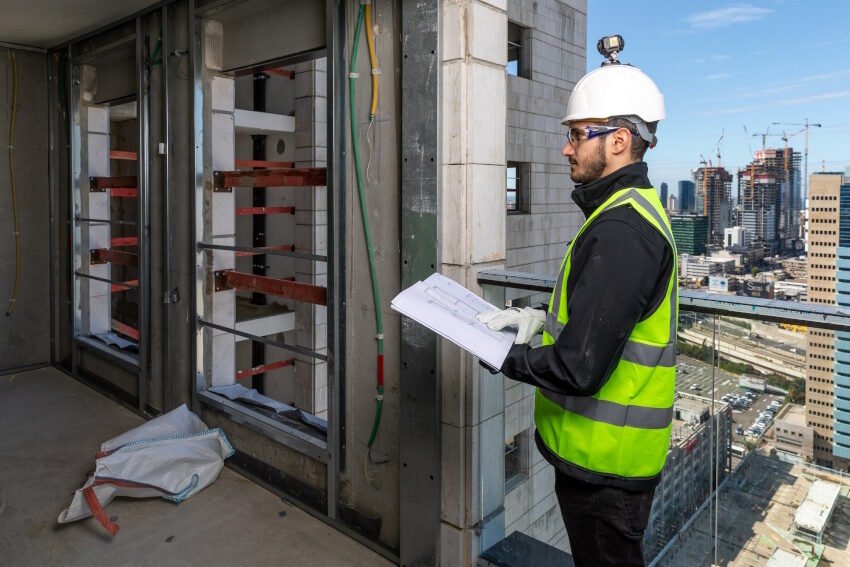
We, in Builbots, are seeing that many professionals find that their relationship with technology works best when they are actively involved in the data collection process. When performing the site walks while collecting data, the planners maintain their connection with physical space while benefiting from the analytical capabilities of AI systems.
After this type of walk, “you are more connected to him and you have more reasons to accept or challenge him,” according to Lee Howlett, a 20-year-old industry experience who is currently planning the highest construction company in the United Kingdom, Sir Robert Mcalpine.
Transform supply chain relationships
Data -based project management also modifies relationships with subcontractors and partners in the supply chain. When everyone has access to the same objective data, the conversations go from opinions and a finger point to solving collaborative problems.
“If you have a transparent objective data set, the supply chains see it, we hope that the customers will see … You have just had the truth and everyone sees exactly the same data,” said Andy Pritchard, head of Willmott Dixon interior technician. “This transparency is the key. Everyone looks at the same problem.”
This shared reality creates a foundation for more productive discussions on performance and resource allocation. Instead of relying on subjective evaluations that may vary significantly depending on who makes the reports, teams may have conversations based on facts about outputs and deadlines.
Support, not replace, human judgment
Some construction professionals have concerns about how technology, in particular AI, will affect their roles and teams, especially when it comes to skills erosion. But in successful predictive analytics implementations, technology improves human capacities instead of replacing them.
“What we really care about is: what effect will have on our short -term planning, our conversations and project managers really holding this program?” Pritchard acknowledged. “At the end of the day, we only try to manage humans. We have 1,000 builders on the site, 100 people on the place team, whatever the job. It’s about communication between them and if we only trust the system and the data we begin to lose this ability to communicate a little.”
Technology must be considered as a partner who manages data processing while leaving decision -making and human relationship management. Predictive analytics can identify potential problems and suggest solutions, but experienced professionals are needed to determine the best course of action and coordinate the resources needed to implement solutions.
This may be especially shocking during the previous stages of a project, in terms of improving deadlines and efficiency, as well as the relationships between critical interlocutors. “In construction, we often find ourselves in very stressful situations,” according to Jeremy Cortesio, an executive of the Skanska project. “As a management team, we can help people to avoid it in order to plan and keep track of things in a way that focuses on the end of the projects.”
Predictive tender
With the human touch, the benefits of predictive analytics can also extend beyond the current performance of the project. The data collected creates a valuable deposit of information on real construction exits. This information can also inform the planning and tender for pre-construction for future projects.
Planters can use data to support pre-construction teams during the tender process, doing things like checking the program’s integrity against outings and identifying possible risks of delivery before signing contracts.
This is important for an industry that has traditionally struggled to systematically implement the lessons learned from past projects. Instead of relying on the departure books of the general industry that often differ from each other, teams can now base future planning on verified and specific performance data from the project based on projects they have actually worked.
Move from reactive construction management to proactive
The future of construction management is not in the fight against reactive fires, but on proactive and data -based decision -making that allows teams to approach problems before they become crisis.
Many of the industry understand it and have shown it through the adoption of mass data -based technologies, and it is essential that people understand that as revolutionary as some construction technologies are, in themselves, not fully solve all the delays and problems of construction.
True change and improvement must be properly used, effective and creative of technology by people who are finally responsible for guaranteeing the success of their projects.
Amir Berman is Vice President of the Transformation of Industry in Buildots.
