

A federal appeals court has upheld a lower court’s decision requiring The Lane Construction Corp. pay approximately $79 million in damages, plus interest, to joint venture partners Skanska USA Civil Southeast and Granite Construction for work on the I-4 Ultimate project in Florida.
In an opinion issued April 15, the U.S. Court of Appeals for the Eleventh Circuit upheld a lower court’s findings that Lane materially breached the joint venture agreement by refusing to meet capital requests and that Skanska acted in the company’s best interests by rejecting a legally risky exit strategy.
The court rejected Lane’s claims that Skanska breached its fiduciary duties in managing the $2.3 billion public-private partnership.
“Not all companies strike gold; some sinkholes,” the court wrote in its opening lines, describing a project that went from a projected profit of $255 million to losses in excess of $500 million amid “hurricanes, inflation, labor shortages and a series of unfortunate events.”
The ruling marks the latest (and possibly final) chapter in a dispute ENR has been following since 2021, when Lane sued Skanska over management decisions linked to mounting losses on the Orlando freeway megaproject.
RELATED
Judge: Lane broke JV terms with Skanska, granite on I-4 project
The court rejects the conflict claim
At the heart of the case was Lane’s claim that Skanska, as managing partner of the Skanska-Granite-Lane joint venture, was acting under a conflict of interest because an entity affiliated with Skanska had a stake in the project’s concessionaire, I-4 Mobility Partners. Lane argued that Skanska should have pursued a “termination request” strategy to force an exit from the project and limit losses. Instead, Skanska pushed to continue construction and negotiate help with the Florida Department of Transportation.
Looking for quick answers on construction and engineering topics?
Try Ask ENR, our new intelligent AI search tool.
Ask ENR →
The appeals court upheld the trial court’s finding that Skanska’s decision was justified. The lower court had found that choosing to negotiate over termination “was a no-brainer, not a breach,” and the appeals court agreed, concluding that the record showed that Skanska “acted in the best interests” of the joint venture.
The opinion also emphasizes that overlapping roles between contractors and concessionaires are common in P3 projects and do not, by themselves, establish a breach of fiduciary duty.
RELATED
Judge: Lane owes $79 million to I-4 Ultimate Partners Skanska, Granite
Funding dispute and project collapse
The court also held that Lane’s refusal to fund its share of the project costs constituted a material breach of contract. Lane stopped making capital contributions in early 2021 while the litigation was pending, leaving Skanska and Granite Construction Co. to cover the deficit to keep the project going.
The district court ordered Lane to pay about $49 million to Skanska and $30 million to Granite, amounts the appeals court upheld, along with roughly $13.5 million in prejudgment interest and potential attorneys’ fees.
Rejecting Lane’s procedural arguments about how the capital calls were issued, the court found the contractor’s default was not justified. The appeals court said it would be “unreasonable to deny” Skanska and Granite recovery because of “some missing documents” that would not have changed Lane’s decision not to pay.
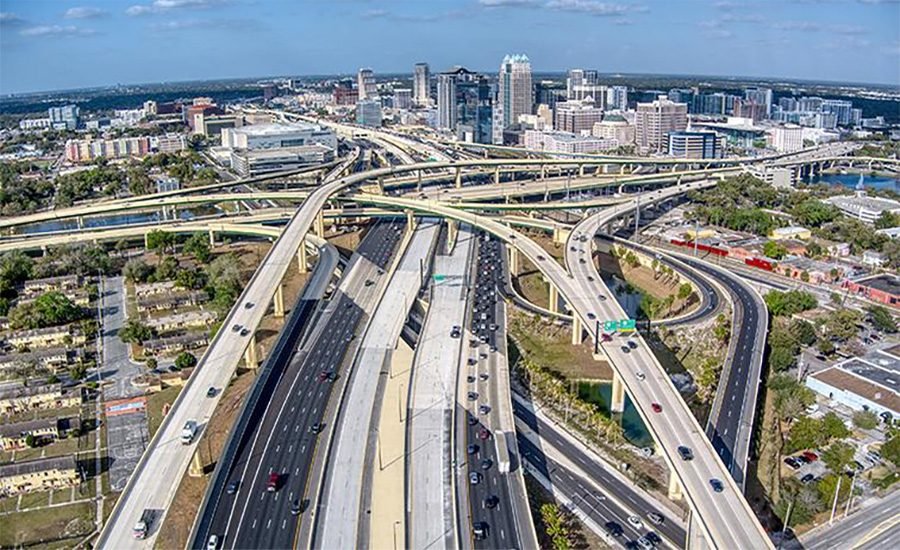
The dispute stems from the structure of the I-4 Ultimate design, build, finance, operate and maintain project, one of the largest P3 freeway projects in the US. The 21-mile reconstruction through Orlando included 15 interchanges and approximately 140 bridges, delivered under a long-term concession in which private partners financed construction and assumed significant performance risk.

Traffic moves along an elevated segment of the I-4 Ultimate Corridor in downtown Orlando during construction.
Image: Courtesy of Skanska USA
Under this structure, while the concessionaire had contractual liability to the state, the contractor joint venture had substantial exposure to cost overruns and delays, risks that increased sharply as project conditions deteriorated.
The court detailed how the company encountered major disruptions, including a massive sinkhole that added an estimated $48 million in costs and 245 days of delay, as well as wider labor and material pressures.
Legal analyzes commissioned by the joint venture warned that pursuing a termination strategy was unlikely to succeed and could expose the contractors to unlimited liability. Lawyers at Holland & Knight concluded the approach “would be reckless,” while a second outside firm, identified in the opinion only by the acronym VLP, warned it could trigger “protracted litigation” and worsen the company’s position.
Despite financial turmoil and internal disputes, the I-4 Ultimate project was completed in 2022 at a cost closer to $3 billion, with long-term maintenance continuing under the concession agreement.
In an email, Skanska representatives declined to comment, citing ongoing litigation. ENR reached out to Granite and Lane for comment, but neither company immediately responded.
