

Texas’ construction industry, one of the largest and most active in the United States, faces intensifying labor pressures as slowing immigration intersects with increased industrial and infrastructure demand.
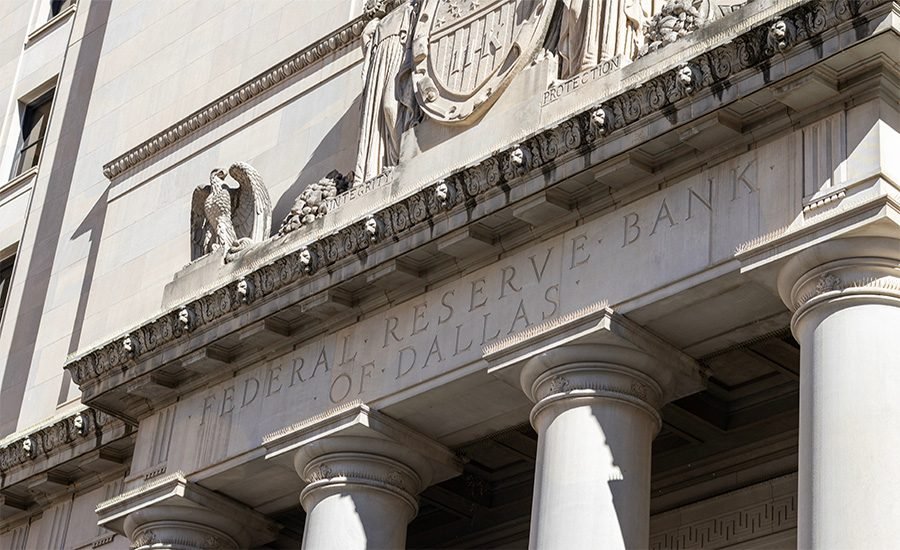
A new analysis by the Federal Reserve Bank of Dallas suggests that reduced international migration is now a measurable drag on statewide job growth for all business sectors, raising the stakes for construction already dependent on foreign-born labor.
In his October Southwest economy In the report, “Slower Immigration, Population Growth Weighs on Texas Job Gains,” the Dallas Fed attributed a substantial portion of the state’s job growth to a weaker population and immigration flows.
“Slower immigration and population growth account for about half of the decline in job growth in Texas this year,” the bank wrote.
The analysis added that companies “report greater difficulty recruiting and retaining foreign-born workers amid changing immigration policies,” a trend the authors caution may be underestimated because the survey does not directly sample construction companies.
Third party confirmation
New workforce data from the American Immigration Council underscores why the sector is under pressure. In its 2022 Texas Industry Profile of the state’s construction workforce, the organization found that immigrants made up about 40 percent of its workers statewide, significantly higher than their 17.2 percent share of the total Texas population.
The report states that “immigrants play a vital role” in Texas’ construction industry, particularly in metropolitan regions where employers rely heavily on permanent and temporary foreign-born labor to meet demand.
Federal labor statistics and demographic data reinforce the structural nature of the challenge. In the US Bureau of Labor Statistics’ 2024 summary of foreign-born workers, the agency noted that immigrants made up 19.2 percent of the US civilian workforce and were “more likely than native-born workers to be employed in natural resource, construction, and maintenance occupations.” This national pattern is amplified in Texas.

According to the American Immigration Council, immigrant workers make up nearly 39 percent of the U.S. construction workforce, the highest share of any major industry.
To understand where pressures are most acute, microdata from the U.S. Census American Community Survey provides metro-level detail: Houston, Dallas–Fort Worth, and San Antonio consistently rank among the highest U.S. concentrations of foreign-born construction workers.
These same regions underpin the largest capital programs in Texas, including major highway expansions, water and wastewater improvements, transit expansions, petrochemical construction, and utility-scale energy projects. The overlap between high project volume and heavy reliance on immigrant labor increases the industry’s vulnerability as inflows slow.
The Dallas Fed’s analysis indicates that the challenge predates recent government policy changes. International migration plummeted in 2020 and 2021 and has not recovered to pre-pandemic levels, limiting growth in the state’s working-age population despite strong economic expansion. However, the reasons are not only due to the pandemic.
“Changes in federal immigration policy have contributed to fewer newcomers arriving,” the bank wrote, noting that the traditional drivers of Texas’ population growth weakened as employer demand intensified in the construction and related sectors.
RELATED
Groups blame tariffs, immigration policies as construction sheds 7,000 jobs in August
Real world consequences
These macroeconomic changes are felt in the workplace. Contractors say maintaining stable crews has become increasingly difficult as subcontractors struggle to replace experienced workers who have left the workforce or relocated.
Companies report raising wages, relying on extended overtime and, in some cases, importing labor from neighboring states to keep up with commitments.
The result is added uncertainty for public owners moving forward on multi-year programs, an uncertainty that exacerbates existing inflationary pressures, allowing delays and material delivery deadlines.
The implications at the state level are significant. With major transportation, water, industrial and energy projects underway simultaneously, Texas contractors face a tighter labor pipeline at a time when project schedules are already compressed.
The combination of slower migration, higher turnover and high recruitment competition is starting to influence bidding strategies, risk pricing and staffing plans across the industry.
Economists warn that the imbalance could persist. The Dallas Fed expects Texas job growth to remain below historical norms unless immigration and population gains accelerate.
Similarly, BLS projections show continued national reliance on foreign-born workers in construction and maintenance occupations, suggesting that Texas, more dependent on immigrant labor than most states, may face deeper and longer-lasting constraints.
For construction companies and project owners, the workforce challenge has long been about more than abstract demographic change; is a material factor that affects the delivery of the project.
With immigration flows unlikely to return to previous levels in the near term, labor pressure is poised to become an increasingly decisive variable in how Texas develops in the coming years.
