


Credit: Courtesy of the American Nuclear Society
Officials said 100 GW of US generation could shut down by 2030, but only 22 GW of new nuclear or gas-fired capacity will replace it. “We want [nuclear]
DOE said Nov. 18 it approved a $1 billion loan to Constellation Energy, owner of the former undamaged 835-MW Three Mile Island nuclear plant unit in Pennsylvania, to continue work to restart it by 2027. The loan is the first “concurrent conditional commitment and financial close” by the administration, the agency said. Microsoft agreed last year to buy the energy produced there for 20 years. Restarting the reactor will cost $1.6 billion, Constellation has said.
But restarting that plant and others faces strong opposition based on safety concerns and federal regulations. A coalition of environmental groups filed a federal lawsuit Nov. 17 in Michigan for a permanent injunction against the restart, set to begin in January, of the state’s 800MW Palisades nuclear plant. The plaintiffs claim the new commissioning, managed by the plant’s current owner, Holtec International, violates two federal laws and NRC regulations. In a statement, the company said that “our highest priority is to ensure that the plant is ready to return to safe and reliable long-term generation.”
unfinished business
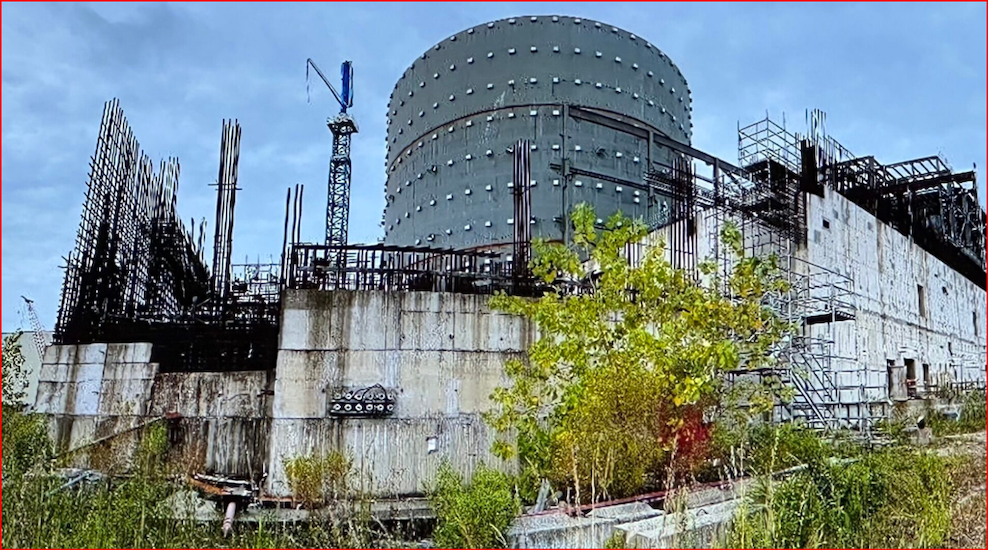
The cost of the project, the selection of a contractor and the timing of a final investment decision are not being disclosed pending a six-week feasibility study and further approval from the NRC, officials said, leaving details to speculation, including a potential $20 billion cost to complete the units. November 13 at its call for results for the third quarter. But his involvement in the sector depends on whether “adequate downside protections and risk-adjusted returns are available to us,” he said.
“Moving VC Summer is important, since it can be a starting point for nuclear resurgence by 2030,” said conference speaker Joe Klecha, chief nuclear officer of startup The Nuclear Co., which had been a competing project bidder. “It’s going to be a tough project, but we have to get it going next year.”

Credit courtesy of Oklo
Quick instructions
Four Trump orders signed in May streamlined rules for approving nuclear plant designs and licenses to quadruple US capacity by 2050. They seek advanced small reactors; use of DOE and US Department of Defense project approval authority; and expanded domestic fuel production, the size of the construction supply chain, and workforce development. The orders direct DOE to accelerate new reactor designs in a pilot program that aims to have three private-sector experimental systems at criticality by July 4, 2026, with ten initial developers and 11 projects now participating.
“We are excited about the orders to get serious about reactor deployment,” said Rian Bahran, assistant secretary of Energy for nuclear reactors. “We’re not building Batmobiles, we’re building Corollas.” While DOE’s Wright and others expected “one or two” of the new reactors to actually reach criticality by July 4, participating developers tout the program’s benefits. “We’re taking lessons learned from our ‘competitors,'” said Rita Baranwal, chief nuclear officer at Radiant, a startup that’s testing a microgrid reactor design. “We’re moving very fast.”
Funding nuclear power technology is now the “top priority” for the DOE’s Office of Loan Programs, which has $200 billion in borrowing authority, and “nuclear power is eligible for all of that,” said Julie Kozeracki, the office’s director of strategy. “We offer loans up to 30 years and [cover] up to 80% of project costs. You won’t find that from private lenders.”
But the DOE’s Wright said the “strong appeal of AI will bring in equity dollars that will be matched 4-to-1 with federal funding.” Baranwal said 96% of his company’s funding is private equity.

Credit US Department of Energy, X-energy
moving forward
NRC Chairman Wright noted that his agency had a reputation for being too slow. “We are not the same NRC today. We are a modern risk-informed regulator,” he said, stressing that the agency will maintain its autonomy despite concerns about Trump’s executive overreach. “We are an independent safety regulator. That will not change.”
James Krellenstein, CEO of nuclear project management firm Alva Energy, also pointed to potential hurdles for nuclear projects to comply with current federal environmental compliance laws. *What are the adjustments to NEPA to get us ready to build?” he said.
The industry’s underinvestment ranges as high as 1,000 percent, said Jacob DeWitte, CEO of startup Oklo, which has two pilot reactors in the program, including the 75 MW Aurora Powerhouse that Kiewit is now building at a DOE site. He noted “the opportunity that DOE has to provide … an accelerated way to think differently … It’s using a muscle that’s been unused for a long time.”
“We are working to reduce the risk of reactors and move to a more predictive process for licensing,” he said Stephen Streiffer, director of the DOE Oak Ridge National Laboratory. “Learning from the construction of these plants is the key to the future. We help companies work on their manufacturing challenges.“
When completed next year, Power Plant X will be the first new US nuclear fuel production facility in more than 50 years, says the firm, which also announced last month a second reactor to be built in Washington state with regional utilities, a US-Canada construction team and financial backing from Amazon. “We are gCutting costs in building a reactor that’s lighter, simpler and a cheaper machine,” CEO Clay Sell told conference attendees. He acknowledges the industry “is overhyped, but only a few designs and companies will emerge.”
Despite technological innovations aimed at speeding construction and power generation in the anticipated nuclear resurgence, spent fuel storage remains a persistent problem, and too few utilities now seem inclined to build large reactors that meet the current scope of projected demand and the need for AI.
“We welcome the Trump administration’s focus on revitalizing this sector,” said Drew Maloney, CEO of investor-owned utility trade group Edison Electric Institute. But utility giant Duke Energy hesitated, on an investor call this month, to commit to an earlier plan to build 1 GW of new nuclear power by 2037, E and E News reported Nov. 18. “We still have to figure out what we’re going to do with the overcharge protection,” CEO Harry Sideris said.
Nuclear participants are also concerned about the human dimension of the sector. “None of this matters if we can’t create the workforce of the future,” said developer Klecha. “The community will need hundreds of thousands of workers, from doctors to craftsmen,” he noted Streiffer of the DOE. “National Training Efforts Can’t Wait,” asaid Holtec International President Krishna Singh:
