

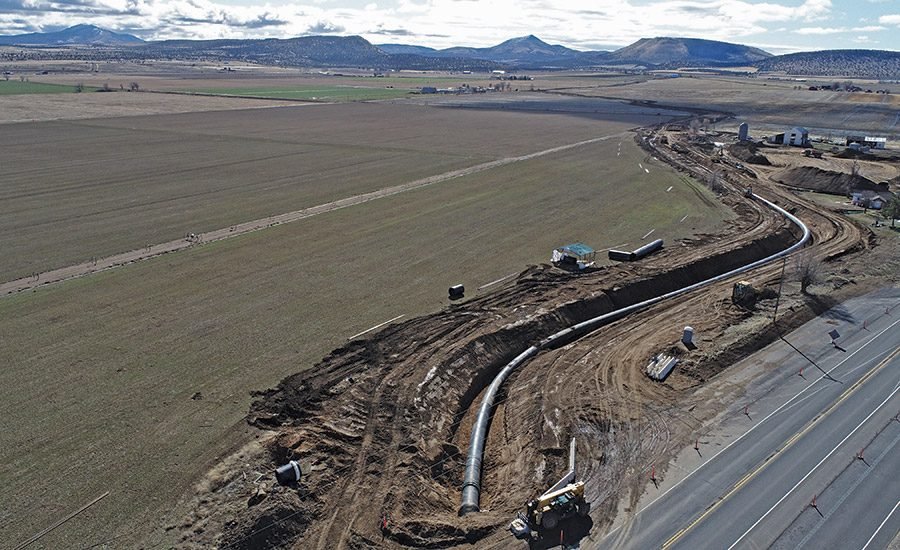
North Unit Irrigation District (NUID) 43 Lateral Segment 2 pipeline project
Madras, Ore.
BEST PROJECT
Presented by Taylor Northwest
owner North Unit Irrigation District (NUID)
Leading design company/Civil Black Rock Consulting Inc.
General Contractor Taylor Northwest
Asphalt paving Tri County Paving
striping Hicks Striping
Asphalt grinding Hatch Western
Signaling Certified Personnel Services
Fiber optic relocation Lumen
Causeway (Highway 97) Oregon Department of Transportation
As a key component of a broader infrastructure modernization initiative aimed at improving water conservation; increase the efficiency and reliability of irrigation delivery; and providing long-term environmental sustainability, this $9.8 million pipeline project supplies irrigation water to nearly 60,000 acres of farmland in the Deschutes River Basin.
Since the existing system of open and lateral channels experiences significant water loss, approximately 37% due to seepage, the scope of work included the installation of nearly 6.5 miles of 6- to 63-inch diameter high-density polyethylene (HDPE) pipe, including all trenching, earthmoving, HDPE field pipe welding, backfilling, compaction, and site restoration. By replacing aging, unlined open channels with more than 6.5 miles of HDPE pipe, this project dramatically reduced water loss through seepage.

Photo courtesy of Taylor Northwest
With the project alignment crossing Highway 97, the team had to acquire additional permits and conduct detailed planning and traffic control. To install a 78-inch device. 63-inch pull casing. HDPE pipe across it, crews installed a shoofly detour to safely maintain two-way traffic during the day and single-lane closures at night to limit disruption. At the bottom of the lineup is an energy-dissipating structure with a 48-inch frame. throttle butterfly valve, perforated HDPE pipe and brush to safely dissipate approximately 65 PSI of hydraulic energy before returning flow to the channel.
This modernization effort not only conserves a precious and limited water resource in the Deschutes River Basin, but also ensures a more reliable and efficient water supply to nearly 60,000 acres of farmland.
The project suffered several weather delays and dealt with mud up to 3 feet deep on service roads, severely hampering mobility and production. Crews were shut down for several days, putting immense pressure on the timeline to ensure preparation for spring irrigation.
A deliberate decision was made to halt all truck operations for several weeks, prioritizing safety over schedule. The crews demonstrated exceptional resilience, working extended hours in difficult conditions to make up for lost time.
