

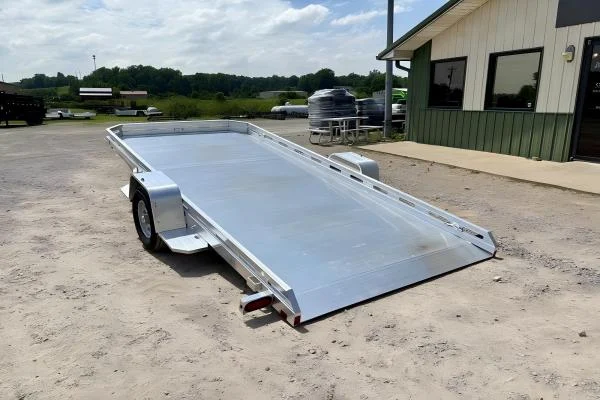
Aluminum tilt bed trailer explained for real world transportation needs
An aluminum tilt bed trailer is one of those products that people rarely think about until they load gear the hard way once and promise never again. If you regularly transport vehicles, machinery or equipment short clearance distances, choosing the right aluminum tilt bed trailer can dramatically change the speed, safety and stress of your loading process. This guide is written for buyers who want practical answers, not marketing slogans. We’ll explain how aluminum tilt bed trailers work, why aluminum construction is important, and how to choose the right configuration based on actual hauling scenarios rather than theory.

What exactly is an aluminum tilt bed trailer?
An aluminum tilt bed trailer is a flatbed trailer with a deck that pivots or tilts toward the ground, allowing vehicles or equipment to be driven or rolled without removable ramps. Instead of struggling with heavy steel ramps, use trailer balance and engineering to create a low-angle loading surface. The aluminum structure reduces the overall weight of the trailer, which directly affects trailer performance, fuel consumption and payload flexibility. This combination makes aluminum tilt bed trailers especially popular for frequent hauling where efficiency matters on every trip.
Why aluminum construction makes a real difference
Aluminum is not chosen just for looks or corrosion resistance, although these are real advantages. The biggest advantage is weight reduction. A lighter trailer allows you to haul more cargo without exceeding your vehicle’s towing limits. Aluminum also resists rust, which is critical for buyers operating in coastal regions, snowy climates or industrial environments where exposure to moisture is unavoidable. Over time, aluminum trailers tend to maintain structural integrity and resale value better than comparable steel models.
How an aluminum tilt bed trailer works in practice
Gravity tilt systems explained
An aluminum gravity tilt trailer relies on balance rather than motors or pumps. As the load moves to the rear of the deck, the trailer tilts down until the deck touches the ground. As the vehicle moves forward, the weight shifts past the balance point and the deck returns to level. This design is simple, reliable and ideal for users who want minimal maintenance and maximum reliability for years of use.
Hydraulic tilting systems explained
Hydraulic tilt bed trailers use motorized cylinders to raise and lower the deck. This system allows for precise lean angle control and is particularly useful for vehicles with extremely low ground clearance or specialized equipment. Although hydraulic systems add cost and complexity, they offer unmatched control and are often chosen by professional haulage operators or specialty vehicle owners.
Advantages of an aluminum tilt bed trailer over ramp trailers
Ramp-based trailers introduce extra steps, extra lift and extra risk. Aluminum tilt bed trailers eliminate ramp alignment issues, reduce loading time and improve safety for both operator and equipment. With no ramps, there is less chance of sliding, shifting or sudden angle changes. This is most important when loading expensive vehicles or heavy machinery where mistakes can be costly.
Common uses for aluminum tilt bed trailers
Aluminum tilt bed trailers are widely used to transport cars, SUVs, side-by-sides, compact tractors, forklifts, scissor lifts and construction equipment. Landscapers use them for zero-turn mowers. Contractors rely on them for generators and compressors. Motorsports teams prefer them for low-clearance racing cars. Versatility comes from the gentle loading angle and low trailer weight.
Aluminum Tilt Bed Trailer vs Steel Tilt Bed Trailer
Steel tilt bed trailers are strong and often less expensive upfront, but they weigh a lot more. This added weight reduces payload capacity and increases fuel consumption. Steel also requires ongoing rust prevention. Aluminum tilt bed trailers cost more up front, but often offer lower costs of ownership due to reduced maintenance, better efficiency and higher resale value.
Understand load capacity and GVWR
The GVWR refers to the maximum total weight that the trailer can safely carry, including the trailer itself and the load. Aluminum trailers tend to have a lower curb weight, which means more GVWR can be used for the payload. Buyers should always calculate actual load weights rather than estimates. Overloading causes axle damage, brake failure and unsafe handling.
Considerations on axles, suspension and braking
Single axle aluminum tilt bed trailers are lighter and easier to maneuver, making them suitable for smaller loads and urban environments. Tandem axle configurations offer better stability and higher load capacity, especially for vehicle transportation. Electric brakes are standard for most applications and improve control during downhill or emergency braking situations.
Cover design and traction characteristics
Most aluminum tilt bed trailers use extruded aluminum covers, which offer strength, drainage and durability. Traction is critical during loading, especially in wet conditions. Buyers should look for textured deck surfaces or optional traction treatments that improve grip without damaging the tires.
Trailer compatibility and vehicle requirements
Choosing an aluminum tilt bed trailer requires matching it to the towing vehicle’s capacity, hitch rating and braking system. Common hitch sizes include 2 inch and 2 and 5 sixteen inch couplers. A brake controller is often required. Suspension conditions and wheelbase length also affect trailer stability.
Maintenance Expectations for Aluminum Tilt Bed Trailers
Although aluminum does not rust, it still requires inspection and care. Owners should regularly inspect welds, pivot points, locking mechanisms, brakes and tires. Keeping moving parts lubricated ensures smooth tilting action and long-term reliability.
How to choose the right aluminum tilt bed trailer
Buyers should start by defining what they haul most often, how often they haul, and what tow vehicle they use. Trailer length, axle configuration, brake type, and tilting mechanism should align with these needs. Asking manufacturers about warranty coverage and parts availability is also critical to long-term ownership confidence.
Pricing and long-term value
Aluminum tilt-bed trailers generally cost more than steel models, but the difference is often reduced when fuel savings, reduced maintenance and resale value are considered. Buyers focused on long-term use rather than short-term price often find that aluminum trailers are a smarter investment.
Frequently asked questions about aluminum tilt bed trailers
It is an aluminum tilt bed trailer strong enough for heavy vehicles
Yes, aluminum tilt bed trailers are designed to handle heavy loads when properly graded. Strength comes from design, extrusion profiles and shaft configuration rather than material thickness. Always follow GVWR and axle limits.
Aluminum tilt bed trailers are more difficult to maintain
No, they are often easier to maintain than steel trailers. No rust treatment is required, and routine inspections focus primarily on mechanical components rather than corrosion prevention.
Which is better, gravity tilt or hydraulic tilt
Gravity tilt systems are simpler and more cost-effective for general use. Hydraulic tilting systems provide better control and are preferred for special vehicles or professional transport applications.
Can a half ton truck tow an aluminum tilt bed trailer
In many cases yes, as long as the trailer and load stay within the truck’s towing capacity. Aluminum construction often makes this possible when steel trailers push the limits.
Aluminum tilt bed trailers are worth the higher upfront cost
For frequent carriers, commercial users and buyers in harsh environments, the long-term benefits often outweigh the initial price difference. Reduced weight, corrosion resistance and resale value contribute to overall cost efficiency.
Final thoughts on aluminum tilt bed trailers
An aluminum tilt bed trailer is a practical solution for anyone who values efficiency, safety and long-term durability. It simplifies loading, reduces towing stress and holds up well in demanding environments. When chosen based on actual transportation needs rather than assumptions, it becomes a tool that saves time and money every time it’s used.
