


822B
Global air traffic, measured in passenger kilometers entered, in October.
Source: International Air Transport Association
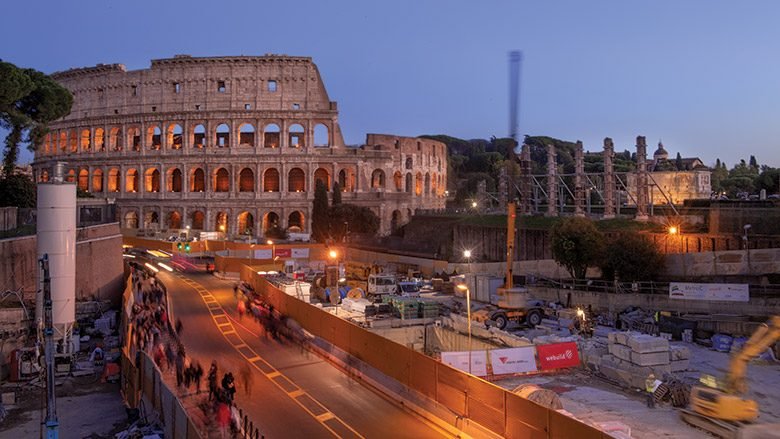
Construction of Rome’s Metro C automated transit line reached a milestone in late December, with the opening of a 2-mile underground extension from the system’s temporary terminus in San Giovanni to the city center. The expansion includes two new stations, one of which is next to the Coliseum.
Built by a consortium led by Italy’s Webuild and Vianini Lavori for Roma Metropolitane, the city’s metro authority, the project has been a literal deep dive into the history of the Eternal City. Excavations revealed layers of ancient Roman structures and artifacts, including a 2,000-year-old military barracks, a residence with rooms with frescoes and mosaics, nearly 30 ancient wells, and hundreds of artifacts.
The construction of the Piazza Venezia metro station continues. Using a 185-ton hydromill, workers are excavating an 85-foot-deep perimeter for the installation of 170 5-foot-thick diaphragm walls. The team will then coordinate the excavation of the station’s six levels of 48,400 square meters alongside archaeological work that has uncovered Roman and medieval structures, including the remains of the ancient Via Flaminia and multi-storey residential complexes. More than 1,500 instruments have been installed in churches and adjacent historic buildings to monitor construction. The station is scheduled to open in 2032.
Conceived as a 26-mile, 29-station system to improve mobility between Rome and the city’s eastern suburbs, Line C has been built in stages over the past two decades, with about 22 miles now in operation. Next year, Webuild and Vianini Lavori will begin construction on the next 2.5-mile segment.
