

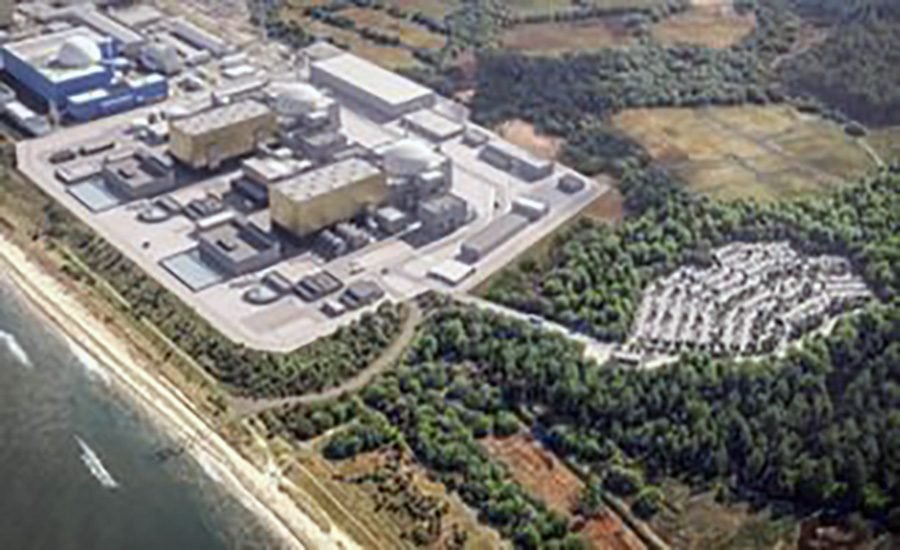

Jacobs has been selected to support the delivery of the UK’s Sizewell C nuclear power station, placing the company within the delivery, governance and assurance framework for the giant project as construction accelerates following last year’s final investment decision.
Under the appointment, Jacobs will provide program integration, delivery oversight and technical support for the 3.2 GW two-reactor nuclear plant under construction on England’s Suffolk coast, according to the company. The role extends to 2030 and coincides with the project’s transition from funding and early works to sustained construction execution.
“Sizewell C represents a critical step in securing the UK’s clean energy future,” Richard Sanderson, executive vice president for Europe at Jacobs, said in a statement. Jacobs will support the development of the delivery and governance systems needed to enable “secure, efficient and integrated delivery” of the project, he said.
The selection follows the UK government’s final investment decision in Sizewell C in July 2025, which confirmed an estimated capital cost of around $51 billion (at 2024 prices) and the authorized use of a regulated asset base funding model, according to documents released by the Department for Energy Security and Net Zero and Sizewell C Ltd.
RAB Financing raises the stakes for delivery oversight
Under the regulated asset base model, certain construction costs can be recovered from electricity consumers during the construction period, a structure intended to reduce financing costs but also subjecting the project to formal economic regulation.
RELATED
Britain agrees to spend $19 million to launch Sizewell C nuclear mega-plant
Government and regulatory submissions linked to the approval of Sizewell C and reviewed by ENR set out allowable capital expenditure limits, cost reporting requirements and intervention thresholds if overruns are anticipated during construction.
Project documentation released as part of the regulatory process shows that Sizewell C’s delivery model incorporates delivery assurance features and independent techniques designed to support government and regulatory oversight of cost, schedule and risk management.
These mechanisms were developed in response to cost growth and schedule delays at previous UK nuclear projects, including Hinkley Point C, according to government and National Audit Office statements on the nuclear new build programme.
This governance structure sits alongside the alliance-based procurement that already exists for large construction packages. Sizewell C has previously appointed a civil works alliance led by UK contractors Balfour Beatty, Laing O’Rourke and Bouygues Travaux Publics, a unit of France-based Bouygues Group, to deliver the project’s main civil engineering works, according to project announcements.
Rolls-Royce SMR adds HOCHTIEF and Amentum to strengthen build capability, delivery planning and modular execution as its SMR program moves towards site selection.
Click on the headline to read more.
The alliance’s procurement is intended to encourage collaboration and early risk sharing, but also places more emphasis on independent assurance and change control discipline as construction progresses.
Jacobs’ role, as described by the company, is separate from construction delivery responsibilities and focuses on program integration, governance and technical support rather than direct execution.
Sizewell C and Jacobs have not publicly detailed how that role liaises day-to-day with the alliance’s contractors or with Electricite de France (EDF), the country’s state-owned utility, which remains a shareholder and technical point of reference for the project.
The project is being developed as a near replica of the UK’s Hinkley Point C, the two-reactor nuclear plant under construction in England’s Somerset County, a strategy aimed at reducing delivery risk by standardizing design and construction approaches, according to Sizewell C and government project materials.
For contractors and suppliers, this governance structure has practical implications in the workplace: delivery under the regulated asset base framework places greater emphasis on documented cost forecasting, schedule justification and risk mitigation, with independent verification built into reporting cycles.
Contractors should expect tighter change control processes, as well as improved schedule control and more formal interfaces between delivery teams, technical assurance functions, and the project owner as construction progresses.
Once operational in the mid-2030s, Sizewell C is expected to generate enough low-carbon electricity to power about six million homes for at least 60 years, according to estimates by the UK government and the project company. The project is a central element of the government’s strategy to replace an aging nuclear fleet, which is expected to be retired in the early 2030s.
Construction is underway at the Suffolk site following the completion of early works. Sizewell C says the project would support around 10,000 peak construction jobs, with tens of thousands more across the supply chain and create approximately 1,500 apprenticeships. The company added that around 70% of construction spend is expected to go to UK-based suppliers.
Jacobs, who said it brings more than six decades of experience in the nuclear sector, he did not disclose the value of his contracted role or provide details of how he interacts with EDF or Sizewell C’s internal delivery team. In the UK, the company has supported projects such as Hinkley Point C and the Sellafield nuclear waste clean-up programme. ENR has previously reported that Sizewell C is the first majority-owned British nuclear power project to progress in decades.
With funding secured and construction activity ramping up, the focus now shifts to execution and delivery performance, making the effectiveness of the project’s governance and assurance structures as consequential as the reactors themselves.
