

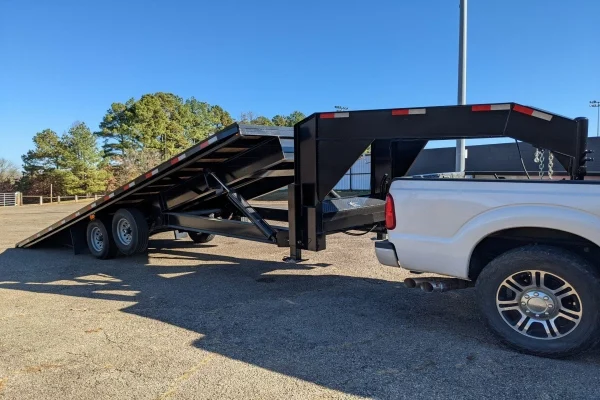
Hydraulic tilting gooseneck trailer for transporting heavy equipment
If you regularly move heavy machinery, vehicles or farm equipment, you know that loading is often the most stressful and time-consuming part of the job. A hydraulic tilting gooseneck trailer is designed to solve exactly this problem. Instead of struggling with ramps, uneven terrain, or risky loading angles, this type of trailer allows the deck to become a ramp. The result is faster loading, safer operation and much less wear and tear on both your equipment and your crew. This guide explains how hydraulic tilting gooseneck trailers work, why professionals choose them, and what you should look for before buying one.

What is a hydraulic tilt gooseneck trailer
A hydraulic tilt gooseneck trailer is a heavy-duty equipment trailer that uses a hydraulic system to tilt its deck for loading and unloading. The gooseneck hitch connects inside the bed of a pickup truck, placing the load on the rear axle. This improves stability, increases towing capacity and provides better control when transporting heavy or high-value equipment. The hydraulic tilt function replaces traditional ramps, reducing set-up time and minimizing loading risks, especially when working alone or on irregular jobsites.
How the hydraulic tilt system works in real conditions
The hydraulic tilt system uses a pump, hydraulic fluid and cylinders to smoothly raise or lower the trailer deck. With a simple control, the deck tilts until the trailing edge touches the ground at a shallow angle. As the equipment moves or moves forward, the center of gravity shifts and the deck returns to a flat position. Unlike gravity tilt trailers, hydraulic tilt systems give you full control, even when you’re loading lighter equipment that wouldn’t normally trigger a gravity-based tilt.
Why Professionals Choose Hydraulic Tilt Gooseneck Trailers
The main reason professionals choose a hydraulic tilt gooseneck trailer is efficiency. Rampless loading saves time on every job. Safety is another important factor. A shallow loading angle reduces the risk of the equipment tipping over, sliding or bottoming out. Over time, this also reduces wear and tear on tires, suspensions and commuter trains. For contractors, farmers and trucking operators who load equipment daily, these benefits quickly outweigh the higher upfront cost.
Common applications and typical users
Construction and earthmoving equipment
Hydraulic tilting gooseneck trailers are widely used for the transportation of mini excavators, skid steers and rollers. These machines are heavy, expensive and often moved between locations several times a day. A tilting platform allows quick loading without additional help, which is critical in busy construction schedules.
Agricultural Machinery and Agricultural Equipment
Farmers and agricultural contractors rely on hydraulic tilt trailers to move tractors, planters, sprayers and implements. During planting or harvesting seasons, time is critical. The ability to charge quickly and safely makes a noticeable difference in daily productivity.
Automotive, specialized and low-capacity vehicles
Classic cars, racing cars and special vehicles usually have low ground clearance. Hydraulic tilting gooseneck trailers provide a gentle loading angle that prevents scraping, frame damage or bumper contact, making them ideal for vehicle hauling.
Hydraulic Tilt Gooseneck Trailer vs Fixed Deck Gooseneck Trailer
A fixed deck gooseneck trailer relies on ramps for loading, which adds setup time and increases risk. A hydraulic tilting gooseneck trailer completely eliminates ramps. Although hydraulic models cost more initially, they reduce labor, improve safety and speed up operations. For frequent users, the long-term value is significantly higher.
Load capacity, cover size and configuration options
Most hydraulic tilt gooseneck trailers range from 14,000 to over 30,000 pounds of GVWR. Deck lengths are typically 20 to 30 feet, with standard widths around 102 inches. Choosing the right size depends on the gear you’re carrying, your axle configuration, and local road regulations. Tandem and triple axle configurations are common for higher capacities and better weight distribution.
Types of hydraulic systems and power options
Most hydraulic tilt gooseneck trailers use electric-over-hydraulic systems powered by on-board batteries. These systems are reliable, easy to operate and easy to maintain. Some models include self-contained hydraulic units that combine pump, reservoir and controls into a compact assembly, reducing installation complexity and maintenance time.
Important safety features in daily use
Key safety features include hydraulic lock valves that prevent inadvertent deck movement, non-slip deck surfaces for better traction and clearly marked control switches. Many professional users also prefer trailers with manual override options in the event of a power failure. These features are not just add-ons; they are essential for safe and reliable operation in real-world conditions.
Materials, frame design and build quality
High quality hydraulic tilting gooseneck trailers are constructed of high-strength steel frames designed to resist twisting under load. Steel decks offer durability and affordability, while aluminum decks reduce weight and improve corrosion resistance. The right choice depends on your environment, frequency of use, and maintenance preferences.
Long-term maintenance and reliability
Routine maintenance includes checking hydraulic fluid levels, inspecting hoses and seals, and keeping electrical connections clean. Seasonal maintenance is important, especially in cold climates where the viscosity of the hydraulic fluid can change. With proper care, modern hydraulic systems are highly reliable and designed for a long service life.
Purchase considerations before investing
Before purchasing a hydraulic tilting gooseneck trailer, consider your primary use cases, towing vehicle capacity, and local regulations. Make sure your truck can safely handle the trailer’s GVWR and pin weight. Also think about future needs. Buying a little more capacity than you currently need can save you money in the long run.
Frequently Asked Questions About Hydraulic Tilt Gooseneck Trailers
Is a hydraulic tilt gooseneck trailer better than a gravity tilt trailer
A hydraulic tilt gooseneck trailer offers more control than a gravity tilt trailer. Hydraulic systems work regardless of load weight, making them more versatile when carrying lighter equipment or mixed loads. This flexibility is especially useful for professional users.
Hydraulic tipper trailers require a lot of maintenance
Maintenance requirements are moderate and predictable. Regular fluid checks and inspections are usually sufficient. Compared to the labor and risk associated with ramps, many users find hydraulic maintenance a worthwhile trade-off.
A hydraulic tilting gooseneck trailer can be safely operated by one person
yes Hydraulic tilting gooseneck trailers are designed for solo operation. The controlled tilt feature allows an operator to safely load and unload equipment without assistance.
What type of truck is needed to tow a hydraulic tilt gooseneck trailer
A heavy-duty pickup truck equipped with a gooseneck hitch and adequate towing capacity is required. Always check manufacturer ratings and local regulations before towing.
It is a hydraulic tilting gooseneck trailer that is worth the higher initial cost
For frequent users, the time savings, improved safety and reduced wear and tear on equipment often justify the higher initial investment. Over the life of the trailer, many owners find that the total cost of ownership is less than expected.
Final thoughts
A hydraulic tilting gooseneck trailer isn’t just a convenience upgrade. It’s a practical solution for anyone who values efficiency, safety and long-term reliability when transporting heavy equipment. By eliminating ramps and giving operators full control over the load, this type of trailer has become a preferred choice in the construction, agricultural and vehicle hauling industries.
