

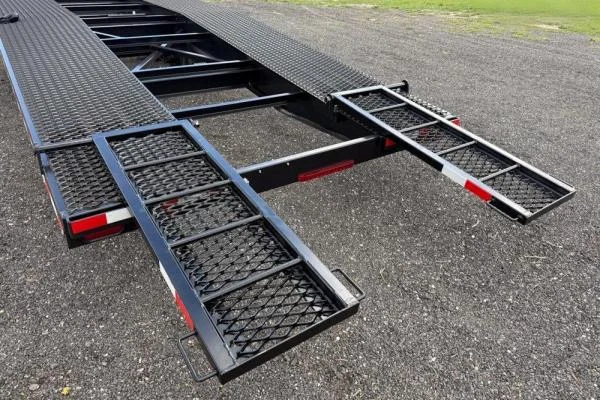
Average width of a car trailer
The average width of a car trailer is usually between 6 feet and 8.5 feet, depending on the design of the trailer, the type of vehicle and regional regulations. Understanding the average width of the car trailer is extremely important when selecting a trailer for transporting vehicles. Width affects vehicle compatibility, road safety, legal compliance and loading convenience. Many buyers focus only on trailer length or weight capacity, but the width of a car hauler trailer is just as important. If the trailer deck is too narrow, loading becomes difficult and unsafe. If it is too wide, it may exceed legal road limits in certain regions.

Whether you’re hauling sedans, SUVs, race cars, or specialty vehicles, knowing the standard car trailer width helps ensure that the trailer matches the dimensions of the vehicle. Manufacturers typically design trailers to balance legal width limits, structural strength, and loading practicality. This guide explains the average width of car trailers, common trailer width sizes, legal regulations and how to choose the right trailer width for different types of vehicles.
Why car trailer width is more important than most people think
The width of a car trailer directly influences the stability, safety and practicality of the trailer during transport. Many first-time buyers underestimate the importance of trailer width because they assume that most trailers are similar in size. In reality, trailer width determines whether a vehicle can be safely loaded, whether the trailer stays stable on the roads, and whether it meets legal hauling limits.
A properly sized trailer width provides enough room for tires, fenders and cargo space while maintaining good weight distribution. A narrow trailer can make loading stressful and increase the risk of accidents. A wider trailer provides better stability and easier positioning of the vehicle, which is especially important for professional car transport companies and racing teams.
Stability and Road Safety
A wider trailer base improves stability during transport because it creates a wider footprint on the road. This wider position helps reduce trailer sway and improves control when towing at highway speeds. Professional trucking companies tend to prefer trailers with wider decks because they distribute weight more evenly between the axles and improve overall trailer balance.
Also, wider trailers allow vehicles to sit comfortably between the fenders without the tires coming too close to the edge of the trailer. This reduces the risk of misalignment during loading and improves safety when securing the vehicle with straps or wheel nets.
Vehicle compatibility
Vehicle compatibility is another important reason why car trailer width is important. Compact cars can easily fit in narrow trailers, but modern SUVs and pickup trucks require wider decks. Many modern vehicles have wider wheel tracks than older models, which means a narrow trailer may not provide enough clearance.
Choosing the correct trailer width ensures that the vehicle’s tires stay within the confines of the trailer deck and that the vehicle’s weight is properly centered. This improves both safety and loading convenience.
The average width of a car trailer
The average width of a car trailer depends on whether you are measuring the trailer deck or the overall structure of the trailer. Most manufacturers offer two width specifications: cover width and overall width. Understanding this difference helps buyers assess whether a trailer can safely transport their vehicle.
Standard cover width
Deck width refers to the payload area the vehicle sits on. Most open car hauler trailers have a deck width of between 79 inches and 83 inches, which is about 6.5 to 7 feet wide. This size provides enough room for most passenger vehicles and keeps the trailer within legal width limits.
A wider deck allows for easier loading and provides more room to place the vehicle. This is especially useful when loading vehicles with wider tires or modified suspension setups.
Overall width of the trailer
Overall width includes trailer frame, fenders and tires. In many cases, the overall width of the trailer can reach about 102 inches, which is the maximum legal trailer width in many countries, including the United States. This measurement includes all external components of the trailer structure.
This means that while the usable deck may be about 80 inches wide, the overall width of the trailer can be significantly larger due to the fenders and frame design.
Typical car trailer width measurements
Car trailers are available in various width categories depending on the intended use. The most common trailer widths range from 6 feet to 8.5 feet. Each size category is designed for specific vehicle types and transportation needs.
6 foot wide trailers
Six-foot-wide trailers are typically used for compact cars, small utility vehicles, or light hauling applications. These trailers are easier to maneuver and may be suitable for occasional vehicle transport. However, they are generally too narrow for larger vehicles such as SUVs or trucks.
7 foot wide trailers
Seven-foot wide car trailers are one of the most common sizes used to haul standard passenger vehicles. This width offers a good balance between maneuverability and cargo space. Many single car transport trailers fall into this category because it comfortably fits most sedans and small SUVs.
Trailers 8 to 8.5 feet wide
Eight-foot to 8.5-foot trailers are considered wide car carriers and are often used to haul larger vehicles. This width provides excellent cargo clearance and allows vehicles to sit comfortably between the trailer’s fenders. Many professional transport companies prefer this width because it fits a wider range of vehicles.
Legal width limits for trailers
Legal width limits determine how wide a trailer can be on public roads without requiring special permits. These limits exist to ensure safe traffic flow and prevent oversized vehicles from creating road hazards.
United States Trailer Width Regulations
In the United States, the Federal Highway Administration generally limits trailer width to 102 inches, or approximately 8.5 feet. Trailers wider than this limit usually require special permits and are considered oversized loads.
Width limits in Europe and other regions
European regulations on trailers usually limit the width of the vehicle to about 2.55 meters, which is approximately 8.36 feet. There are similar regulations in many other countries, although the exact limits may vary by road authority.
Deck width vs overall width explained
Why bolts affect trailer width
Fenders are protective covers placed over the trailer wheels. They help prevent debris and water from being thrown into the vehicle during transport. However, the fenders extend beyond the trailer deck, which increases the overall width of the trailer.
How manufacturers measure width
Manufacturers usually measure trailer width from the outermost points of the trailer frame or fenders. This measure determines whether the trailer complies with road regulations.
Choose the right width for different vehicles
Sedans and compact cars
Most sedans and compact cars can be safely towed on trailers with deck widths between 79 and 82 inches. This width allows for comfortable clearance for standard tire sizes.
SUVs and Pickup trucks
SUVs and pickup trucks often require wider trailers due to their larger wheel tracks. Many carriers prefer trailers with deck widths closer to 83 inches or more for these vehicles.
Racing cars and special vehicles
Race cars and special vehicles usually have wider tires and lower ground clearance. For these vehicles, wide deck trailers or tilt trailers are commonly used to simplify loading and improve safety.
Open and closed car trailer width differences
Open car trailers tend to have exposed fenders and slightly narrower decks, while closed car trailers tend to offer more interior cargo space. Enclosed trailers can also allow vehicles to be loaded more easily because the inner walls provide additional space compared to external fenders.
How width affects loading and transportation
The width of the trailer plays an important role in loading comfort. A wider trailer makes it easier to align the vehicle and reduces the risk of tire misalignment during loading. This is especially useful when loading vehicles with ramps or tilting roofs.
Custom trailer width options
Some manufacturers offer custom trailer width options to suit special hauling needs. For example, racing teams or commercial transport companies may request wider roofs or reinforced frames for heavy vehicles. Custom trailers can be designed to maximize cargo space while complying with legal width limits.
conclusion
The average width of a car trailer typically ranges from 6 feet to 8.5 feet, depending on the design of the trailer and the type of vehicle intended. Understanding deck width, overall trailer width and legal limits helps buyers choose a trailer that will safely fit their vehicles. When choosing a car transporter trailer, it’s important to consider not only length and weight capacity, but also width compatibility. A properly sized trailer width improves safety, stability and load efficiency while transporting the vehicle.
