

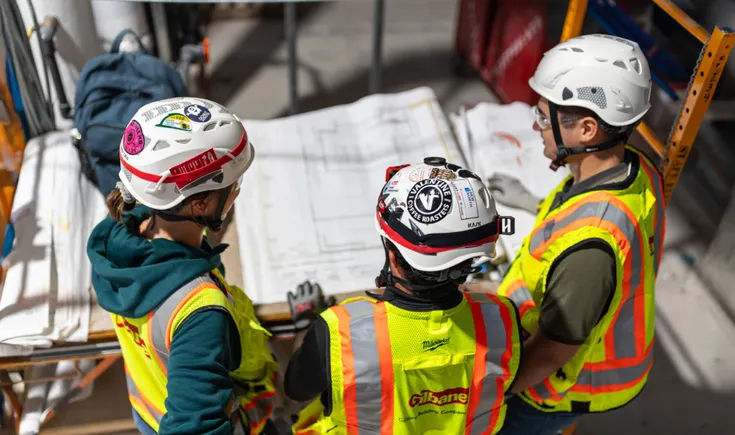
Imagine a world where health and safety is integrated into every decision and every plan of all stakeholders. Owners, architects and designers, engineers, contractors, project teams, and skilled tradespeople all come together with action throughout every phase of a project to eliminate hazards and prevent serious injury and death (SIF), creating a culture of care that supports a safe place to work for everyone involved. This vision is possible and is the driving force behind Construction Safety Week 2026.
The construction industry has made real progress on health and safety outcomes – advancing best practice, focusing on key issues such as mental health and the transition from helmets to helmets, and more. However, serious injuries and fatalities (SIFs) persist in workplaces across the country and around the world. Although recordable incident rates have seen a steady downward trend in the industry, fatality rates have remained high for over ten years. This underscores the need for a common understanding and unified approaches to hazard recognition and control. Incorporating these approaches into every phase of the project, from stakeholders to field teams, can create lasting change and save lives.
Elevate risk recognition and response as a strategic imperative
According to OSHA, 60% of all construction-related fatalities are caused by four major fatal hazards: falls, electrocution, entrapment/entanglement, and strikes. Organizations that implement risk management programs based on critical control frameworks, with a focus on high-energy, high-risk recognition, achieve performance improvements.
Early recognition of high-energy, high-risk work is vital to preventing workplace fatalities. Research by the Construction Safety Research Alliance (CRSA) indicates that during pre-job briefings, construction workers can typically identify about 45% of the hazards they face. If they are presented with tools such as the Wheel of energy model, recognition rates improve to almost 75%. This shows the importance of implementing a unified approach to risk recognition and how it can foster a culture of health and safety excellence within the construction industry.
Recognition, however, is only the first step. Responding to recognized hazards by implementing direct and effective controls is key to preventing and eliminating hazards. The CSRA research further states that “There is strong evidence that the application of direct controls during high-quality pre-task planning is a strong driver of lower incident rates and serious injury and fatality rates.” By implementing the Energy Control Hierarchy, a structured methodology for managing high energy risks, workplaces can work to prioritize direct controls such as elimination and reduction. By fully embracing the Energy Control Hierarchy during every part of the project, industry leaders can drive transformative change, strengthen safety culture, and ultimately save lives.
Respecting all hazards, each person, each life and each role in safety
For decades, many safety programs have focused primarily on regulatory compliance, relying heavily on the vigilance and expertise of skilled artisans, foremen, and superintendents to identify and mitigate hazards in the field. These types of compliance-based models are simply not enough to prevent serious injuries and fatalities.
The respect-based risk prevention model shows how safety is integrated into every phase of work, involving all stakeholders in risk prevention throughout the project. By doing so, we create an environment where everyone is empowered to identify risks, take action and maintain respect for human life. Strengthening organizational culture through respect for high energy and high hazards is key to the industry making real progress in creating a safer work environment. Proactive engagement of all stakeholders—contractors, architects, designers, engineers, and more—throughout the project lifecycle sends a powerful message: “We will not tolerate avoidable damage.” Uniting under this call to action will allow us to see a true safety culture transformed.
Working together for a safer industry
As Construction Safety Week advances its five-year vision under the title of All Togetherthe industry must recognize that meaningful progress depends on broad and sustained engagement. Our proposed solution seeks to foster a shared understanding that unites the industry. All team members, all stakeholders, play a critical role in establishing a culture of care and respect for human life. By embracing this change, we create an opportunity to build a more secure, collaborative and resilient industry.
Construction Safety Week, the annual week-long national initiative, will take place from May 4 to 8 with the theme All together: Recognize, respond and respect as a unified call to action in high-energy, high-risk work to prevent SIFs. To view and download the available planning and safety resources, visit https://www.constructionsafetyweek.com/plan-for-safety-week/resources/.
Sources:
