


Large-scale construction activity in the Midwest is accelerating, driven by a combination of investment in advanced manufacturing, expanding renewable energy and growing demand for data centers. But industry leaders warn that the industry’s growth is being tested by energy constraints, procurement challenges, labor availability and growing owner expectations for speed and cost certainty.
Across the region, investment in advanced manufacturing continues to increase, particularly in automotive, battery, semiconductor and high-tech industrial facilities, says Elizabeth Zucker, president of the Clayco St. business unit. Louis and president of LJC.
“Advanced manufacturing, data centers and industrials have been the strongest sectors,” says Zucker. “Federal reorientation and incentives are driving manufacturing growth, while AI and cloud expansion are accelerating demand for mission-critical facilities.”
Diversification of the energy sector
Automakers and their partners have been particularly active in Michigan, Indiana and Ohio, home to multibillion-dollar electrification and supply chain projects, adds Chuck Binkowski, chief operating officer of Barton Malow.
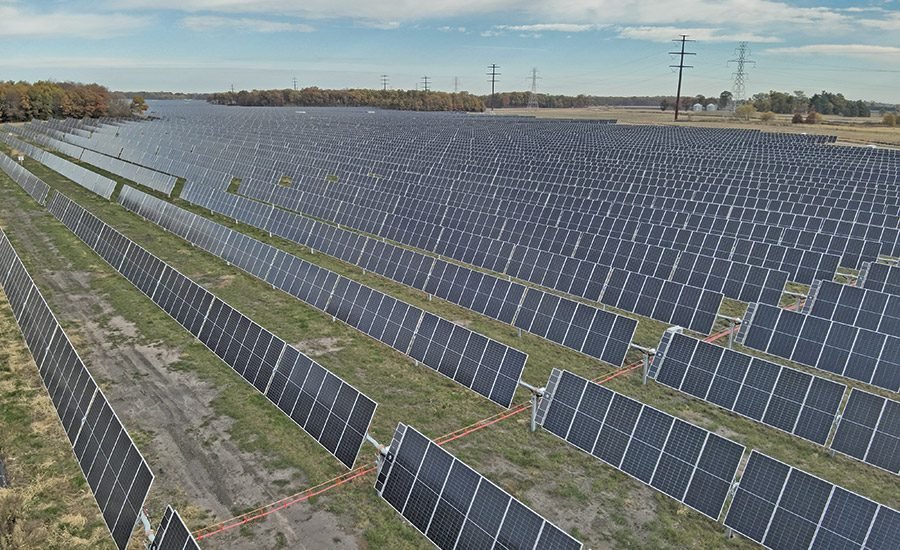
The energy is equally strong and diversified. Utility-scale solar has surged, supported by both state policy and demand for new industrial loads, notes Scott Austin, managing director of renewables and clean energy at Bechtel, adding that clean energy is now central to the region’s infrastructure boom.
A crucial issue going forward is energy availability.
“Energy availability and utility coordination will increasingly shape project viability, especially for data centers and advanced manufacturing,” says Zucker.
Demand for AI-powered data centers and electrified factories is outstripping the ability of utilities to rapidly deliver new capacity. This is pushing developers to evaluate sites based on electrical infrastructure first, and often make decisions years in advance.
At the same time, owners are demanding faster builds and more reliable pricing, which is spurring a shift in delivery models.
“Owners are demanding faster delivery and greater cost certainty, which is accelerating the shift to more integrated design and construction approaches,” says Zucker. Companies that align design, engineering and construction early on “will be better positioned to deliver in this environment.”
Unprecedented electricity demand
Owners are prioritizing well-planned, clearly funded and collaborative projects.
“This environment will place more emphasis on collaborative delivery, early contractor involvement and disciplined planning,” Binkowksi says.
Austin says the power sector will see continued urgency and complexity as utilities and developers race to meet unprecedented electricity demand.
“We expect continued growth in renewable energy construction along with accelerated momentum in gas-fired generation projects,” says Austin. “Developers are choosing partners that can deliver at scale, lean on smart technologies and manage risk in a more complex market environment.”
Despite the strong outlook, all three leaders point to familiar challenges: labor shortages, supply chain delays, market volatility and rising expectations for speed.
“Labor constraints, long-term equipment and cost volatility have been the biggest challenges,” says Zucker. Clayco has responded by locking down hiring earlier, strengthening supplier partnerships and expanding prefabrication to reduce on-site labor needs.
Barton Malow has taken similar steps. Binkowski notes that “labour availability, material escalation and long-term procurement items” continue to disrupt projects, requiring proactive intervention. His company has relied on early recruitment, self-execution capabilities and close collaboration with business partners to stay ahead of issues.
Austin says Bechtel faces many of the same obstacles, particularly in large power generation.
“Labor availability and supply chain volatility persist as challenges across the industry,” he says. Bechtel is addressing this through early workforce planning and deeper coordination with suppliers and local construction trades.
Despite the obstacles, all three are optimistic about the Midwest’s long-term competitiveness, citing its combination of skilled labor, available land and strong infrastructure. As Austin says, the region is particularly well-suited to “deliver complex, large-scale projects.”
