

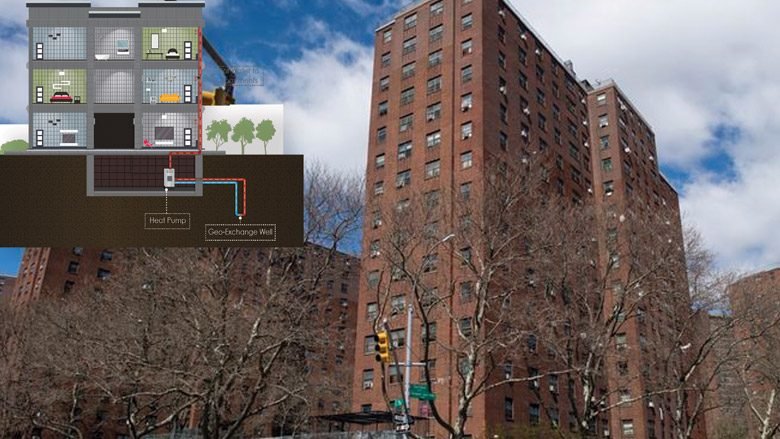
NYCHA Eastchester and Jackson homes: DHW upgrade and geothermal heating
New York City
Excellence in sustainability
Sent by: CSA group
Region: ENR Est
Construction Manager: Adams European Contracting Inc.
Owner/Developer: Housing Authority of the City of New York
Principal Design, Structural Engineer and MEP Firm: CSA group
Civil Engineer: Matrix Engineering of the New World
Design and construction of geothermal systems: Geothermal Buffalo
The decarbonization of New York City’s public housing portfolio advanced with one of the largest residential geothermal installations in the Northeast: a $64 million all-electric system serving 17 buildings. The project replaced fossil-fueled central heating and hot water systems with a closed-circuit geothermal network, using fields drilled into 500 feet of bedrock to feed high-efficiency heat pumps that provide domestic hot water year-round. The initiative supports compliance with the city’s Local Law 97, which aims for a 40% reduction in carbon emissions by 2030 and 85% by mid-century.
Richard Thomas, vice president of CSA Group’s North America region, says inefficient existing infrastructure and undocumented leaks complicated efforts to “right-size” the system. After assessing actual hot water demand and correcting inefficiencies, the team established “a reasonable and appropriate use of the buildings, which allowed the design to move forward quickly and resulted in unprecedented performance once installed,” says Thomas.

Photo courtesy of Adams European
Encountering additional hidden leaks while connecting to legacy piping prompted the team to deploy advanced leak detection tools and targeted repairs. Custom 30 ton dual compressor heat pump units were installed to provide water consistently above 140° F. Independent verification confirmed a coefficient of performance approximately twice the typical efficiency at these temperatures.
The work has been done with care to maintain access and security throughout the fully occupied complex. Borehole drilling and mechanical upgrades were sequenced to minimize noise and vibration, with real-time monitoring and ongoing resident coordination led by a dedicated community liaison.
Despite utility coordination challenges, including extensive energy upgrade reviews, the project was completed ahead of schedule and on budget, completing two years of work with zero recordable incidents.
Looking for quick answers on construction and engineering topics?
Try Ask ENR, our new intelligent AI search tool.
Ask ENR →
