

The Chicago Transit Authority said it will begin halting work on two major rail construction programs within days unless a federal court orders the release of roughly $2.1 billion in frozen funding from the U.S. Department of Transportation, according to court filings.
The funding freeze affects the Red Line extension and Red and Purple modernization programs, among the largest transit construction efforts underway in the U.S., with CTA officials saying available cash, borrowing capacity and other interim financing options have been exhausted.
In a March 20 motion for a temporary restraining order filed in the U.S. District Court for the Northern District of Illinois, the agency said it must begin notifying contractors and workers by March 27 and begin demobilization immediately thereafter if federal reimbursements are not restored.
CTA officials said the pause has moved from a funding issue to an immediate construction risk, with active work now dependent on near-term court action. Contractors in both programs now face potential work stoppages, delayed payments and re-sequencing of planned construction packages.
The dispute centers on a new federal rule, but more broadly tests whether the federal government can cut off funding for projects already under construction, an issue with implications for the delivery of transit megaprojects across the country.
The CTA is seeking an order compelling the Federal Transit Administration and the US Department of Transportation to resume disbursements under comprehensive funding grant agreements that support the two projects.
RELATED
Chicago Transit Authority Launches Red/Purple Line Modernization
Looking for quick answers on construction and engineering topics?
Try Ask ENR, our new intelligent AI search tool.
Ask ENR →
The Red Line extension, a 5.5-mile extension from 95th Street to 130th Street that includes four new stations, a rail yard and maintenance facilities, has a total project cost of about $3.75 billion, with a federal share approaching $2 billion in its grant agreement. The red and purple modernization program, a multi-year rebuild of the North Side track and stations, is nearing substantial completion, but it continues to rely on federal reimbursements for the remaining work.
CTA officials say roughly $2.1 billion in combined funding for the two projects has been put on hold, including roughly $1.8 billion tied to the Red Line extension and more than $300 million for the modernization program.
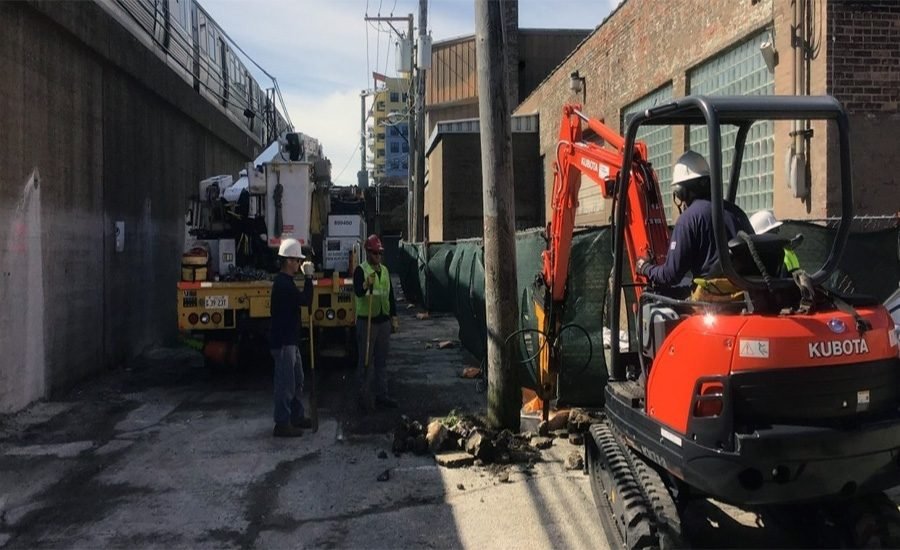
The agency said construction is already underway on the widening corridor, with crews reporting to design-build contractor Walsh-VINCI performing early-stage work such as tree clearing, demolition and relocation of utilities, and warned that a prolonged disruption in funding would force a halt to work.
Unlike typical grant disputes, both projects are being developed under executed full-funding grant agreements that rely on continuous federal reimbursement streams to support active construction, contractor payments, and procurement sequencing, making interruptions in these payments immediately consequential for project delivery.
“We are fully committed to the success of these projects and will take every step necessary to ensure they move forward,” CTA Acting President Nora Leerhsen said in a March 20 statement announcing the lawsuit.
Federal review ties funding to hiring practices
The funding freeze stems from an October 2025 administrative review initiated by the US DOT following the issuance of an interim final rule revising how the eligibility of disadvantaged business enterprises for federally funded projects is determined and applied.

The map shows the planned 5.5-mile extension of the Chicago Transit Authority’s Red Line from 95th Street to 130th Street, where initial site preparation and demolition work is underway.
Map courtesy of Chicago Transit Authority
In the Oct. 7 letters to the CTA, the DOT requested detailed information on procurement practices, including DBE goals, contractor selection methods and whether race, sex or ethnicity was considered when awarding contracts or subcontracts for the two projects.
In its Dec. 1 determinations, the DOT concluded that the CTA and its contractors “appear to have taken race and sex into account” in awarding contracts and cited the agency’s use of “Diversity Outreach Plan” requirements in hiring. The DOT stated that these plans allowed bidders to receive a score bonus of up to 25% tied to diversity commitments and required contractors to meet those commitments to meet DBE participation goals.
The US DOT ordered CTA to eliminate these practices and certify compliance before funding could resume. For the extension of the red line, the department also required the CTA to re-evaluate the certifications of disadvantaged business firms and warned that contracts or subcontracts may have to be terminated and returned if the firms do not meet the revised eligibility standards.
US DOT officials did not respond to ENR’s request for comment on the lawsuit. However, on March 21, NBC Chicago posted on social media parts of a statement from the DOT that sought to obstruct a process it describes as “discriminatory” and “unlawful.”
CTA compliance effort collides with construction risk
CTA responded on December 10, certifying that it would comply with DOT’s conditions and align its programs with the revised DBE rule.
CTA documents identify at least one major contractor already exposed to the freeze: Walsh-VINCI Transit Community Partners, the $2.9 billion design and construction team on the Red Line extension, which the agency says has already mobilized hundreds of construction workers and engineers, project offices, field facilities, specialty teams and subcontractors.
More broadly, CTA said hundreds of contracting companies for the two projects depend on these payments and warned that hundreds of workers could soon be out of a job while thousands of future jobs linked to the projects would be at risk. The agency also began a reevaluation process for companies certified under updated federal criteria, with completion expected by early 2026.
Despite that certification, CTA said the U.S. DOT has not resumed refunds or provided additional instructions, prompting the lawsuit.
In its complaint and supporting documents, the agency argues that the federal government’s actions violate administrative due process requirements and unlawfully withhold funds that were already obligated under executed grant agreements.
This dispute is now playing out against active construction timelines. The CTA’s submissions stress that the risk is not theoretical, warning of workforce layoffs, contractor disruption and escalating costs linked to demobilization and remobilization if work is halted.
CTA officials said the demobilization could result in additional costs tied to stopping and restarting work, disrupting contractor relationships and delaying the sequencing of future construction packages.
CTA said Walsh-VINCI Transit Community Partners has already mobilized hundreds of construction workers and engineers, project offices, field facilities, specialty teams and subcontractors.
More broadly, CTA said hundreds of contracting companies for the two projects depend on these payments and warned that hundreds of workers could soon be out of a job while thousands of future jobs linked to the projects would be at risk.
RELATED
Second Avenue subway lawsuit tests federal grant limits after Gateway ruling
National precedent raises broader questions of delivery
The CTA’s legal challenge follows similar disputes over other major transit megaprojects, including Phase 2 of New York’s Second Avenue subway, where officials have argued that withholding reimbursements under executed federal funding agreements disrupts active construction by affecting contractor cash flow, the sequencing of purchases and ongoing work packages.
That challenge is based on litigation over the Gateway Hudson Tunnel project, where a federal court ordered the restoration of suspended payments after finding that the DOT had failed to follow contractual procedures before halting reimbursements.
These cases collectively test whether federal agencies can disrupt reimbursement streams under executed grant agreements without destabilizing active construction programs across the country, raising broader questions about the reliability of federal funding mechanisms that support IIJA-era transit megaprojects and can do so based on agency policy such as DOT’s interpretation of the provisions of the federal DBE law.
The CTA’s lawsuit seeks emergency relief to restore funding while the broader legal challenge continues, arguing that the federal government cannot retroactively impose new compliance requirements or suspend payments without violating statutory and contractual obligations.
The agency’s motion asks the court to order the DOT and FTA to resume reimbursements before the end of March, citing the risk of immediate and irreparable damage to ongoing projects if construction activity is interrupted. ENR reached out to CTA officials for comment, but had not heard back by press time.
The CTA case joins a growing pattern of funding disputes affecting projects already under construction, where reimbursement interruptions directly disrupt contractor payments and job continuity.
With similar litigation already underway over the Second Avenue subway and Gateway Hudson tunnel projects, the issue has shifted from political debate to delivery risk in federally funded transit megaprojects.
CTA said it will begin shutting down work if funding is not restored, a step that could cause cascading impacts among contractors and project timelines.
