

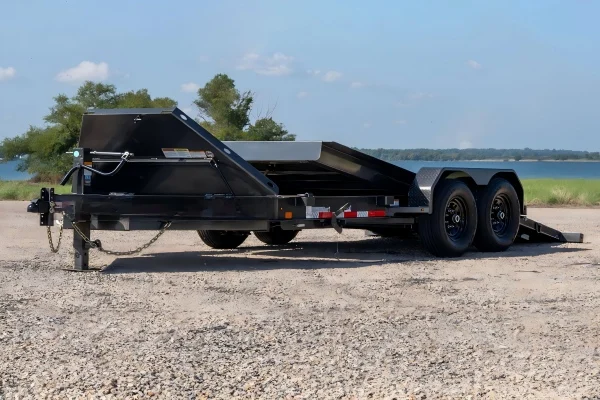
Tilt trailer with winch for easier vehicle loading and safer transport
If you’re in the business of transporting vehicles on a regular basis, the biggest challenge isn’t towing, it’s loading. A tiltable winch trailer solves this problem directly. Instead of struggling with ramps, worrying about approach angles, or risking damage to cars with little clearance, you get a smooth, controlled charging system that works in real-world situations. Whether the vehicle is running or not, whether you’re working alone or on rough terrain, this setup gives you complete control. That’s why more car dealers, tow operators and equipment users are moving to tilt trailers with winch configurations. It’s not just about convenience, it’s about reducing risk, saving time and making loading predictable every time.

What is a winch tilt trailer?
A winch tilt trailer is essentially a flatbed trailer equipped with a tilting platform and a towing system. The tilting platform replaces traditional ramps by allowing the platform itself to lower to the ground, creating a natural loading angle. This design is widely used in car towing applications because it reduces the slope and eliminates the need to handle separate ramps. When you add a winch, the system becomes even more capable, allowing for controlled pulling rather than relying on drive power.
Why the winch is more important than you think
Many people assume that just a tipper trailer is enough, but in real working conditions, the winch is what makes the difference. Vehicles break down, batteries die, engines fail, and sometimes you just can’t drive to the trailer safely. An electric winch gives you constant pulling force and control, meaning you can load damaged vehicles, classic cars or equipment without stress. It also reduces the mechanical stress on the vehicle itself, since you’re not forcing it to climb a steep angle under power. This tipper and winch combination turns a basic trailer into a practical and reliable transport solution.
How a winch tilt trailer works in real life
The principle of operation is simple, but the impact is enormous. First, the trailer deck is tilted back, either by a hydraulic system or a gravity-based design. This creates a long and smooth loading angle. The winch cable is then attached to the vehicle. Instead of driving up, the vehicle crawls smoothly onto the deck. Once in place, the cover returns to its flat transport position and the load is secured. This process allows one person to handle the entire loading operation safely without additional assistance.
Hydraulic vs gravity tilting systems
There are two main types of tilt systems, and your choice depends on how often and how hard you use your trailer. Hydraulic tilt trailers use a powered system to precisely control the angle. They are smooth, stable and ideal for frequent loading or heavier vehicles. Gravity tilt trailers rely on distributing the weight of the load itself to tilt the deck. They are simpler and more affordable, but offer less control. If you drive high-value vehicles or work daily, hydraulic tilt systems are often the best investment because they reduce effort and improve consistency.
Key benefits that make a difference in daily work
The biggest advantage of a winch tilt trailer is the ease and safety that makes loading easier. You don’t have to carry ramps, adjust angles, or worry about slipping. Everything becomes more controlled. This is especially important when dealing with vehicles with low ground clearance, where even a small mistake can cause costly damage. The tilt platform creates a smooth approach angle, while the winch ensures constant movement. Together, they significantly reduce risk and improve efficiency.
True one-man operation
If you’ve ever tried loading a vehicle alone with ramps, you know how difficult it can be. With a tilt trailer and winch, one person can manage the entire process from start to finish. Lower the deck, attach the cable, operate the winch and secure the load. No additional help is required, making it perfect for independent operators.
Choosing the right winch for your trailer
Choosing the right winch is not complicated, but it is essential. The rule of thumb is to choose a winch with a rating of at least 1.5 times the weight of the heaviest vehicle. For example, if you regularly haul a 4000 pound car, you should be looking at a 6000 to 8000 pound winch. This ensures enough pulling power without overloading the system. Choosing a slightly higher capacity gives you more flexibility in actual use.
Electric winch vs manual winch
Electric winches are the most common choice today because they are easy to use and save time. With a remote control or a switch, you can control the charging process smoothly. Manual winches are cheaper but require more effort and are not practical for frequent use. If you use your trailer often, electric is the best choice.
Important features to look for before buying
When choosing a winch tilt trailer, focus on load capacity, frame strength, and build quality. Make sure the trailer matches the intended use. A strong steel frame, stable structure and reliable winch system will determine the trailer’s performance over time.
Commonly used scenarios
Winch tilt trailers are widely used in car hauling, equipment hauling and recovery situations. They work well for dealerships, towing companies, and people who need a reliable way to move vehicles smoothly. The ability to handle both running and non-running vehicles makes them extremely versatile.
Maintenance and safety tips that really matter
Regular maintenance makes your trailer reliable. Check the winch cable, inspect the tires and make sure all components are working properly. Proper care reduces the risk of failure and helps extend the life of the trailer.
Comparison of tilt trailers and ramps
Compared to ramp trailers, tilt trailers are easier to use and faster to operate. No need to carry or adjust ramps, which saves time and effort. While ramp trailers may cost less upfront, tilt trailers offer better usability and long-term efficiency.
Conclusion
A tiltable winch trailer is a practical upgrade that improves safety, efficiency and control. It simplifies the load, reduces effort and allows you to handle more situations with confidence. For anyone serious about vehicle transportation, it’s a smart and reliable choice.
Frequently asked questions
Do I really need a winch if I already have a tipper trailer?
Yes, because the winch gives you full control during loading. It allows you to handle vehicles that do not circulate safely and avoid depending on driving power.
What size winch should I choose for a car trailer?
Choose a winch that is at least 1.5 times the weight of your vehicle. This ensures sufficient pulling force and safe operation.
A winch tipper trailer can be operated by one person
Yes, one person can complete the entire loading process using the tilt platform and winch without assistance.
Are hydraulic tilt trailers worth it?
If you trailer frequently or carry heavy loads, hydraulic systems offer better control and smoother operation.
Can I customize a winch tilt trailer?
Yes, most manufacturers offer customization options so you can choose the size, capacity, and features to suit your needs.
