


Jordan has launched formal studies on cross-border railways with Saudi Arabia and Syria, expanding the scope of a recently signed $2.3 billion freight rail project that is moving toward financial closure and positioned as the first segment of a wider regional network.
Transportation officials from the three countries agreed to form a joint technical committee to study the alignments, operations and feasibility of a cross-border rail link, according to Jordanian officials and project disclosures.
The move marks a shift from long-discussed regional ambitions towards structured coordination, although the route, delivery model and procurement remain undefined.
The push comes amid regional conflict and Jordan’s advancement of the Aqaba Port Railway, a 360-kilometer freight line designed to move phosphate and potash from inland mining centers to the port of Aqaba, the country’s only seaport.
Jordan and the United Arab Emirates on April 15 signed definitive agreements to establish the UAE-Jordan Railway Co., a 50-50 joint venture responsible for delivering, operating and maintaining the future line.
The agreement “covers the construction and operation of a 360-kilometer railway linking the main mining areas … with the port of Aqaba,” with the capacity to transport 16 million tons of phosphate and potash per year, according to the UAE’s state news agency WAM.
The joint venture will execute the project through Etihad Rail, the developer and operator of the UAE’s national rail network, linking the effort to a regional operator with recent experience of large-scale delivery.
Looking for quick answers on construction and engineering topics?
Try Ask ENR, our new intelligent AI search tool.
Ask ENR →
Jordanian Transport Minister Nidal Qatamin said the project “will mark a qualitative leap in Jordan’s mining sector”, citing its role in reducing transport costs and improving export competitiveness.
The railway will connect the Shidiya phosphate mines in southern Jordan and the potash production sites at Ghor Al Safi near the Dead Sea with the industrial terminals in Aqaba, with a planned capacity of around 16 million tonnes per year, including 13 million tonnes of phosphate and 2.6 million tonnes of potash.
Jordan Phosphate Mines Co. reported producing more than 11.5 million tons of phosphate by 2024, much of it transported by truck.
Engineering scope reflects terrain and performance requirements. According to Jordan’s official Petra news agency, the plans include “a wide range of tunnels and bridges” in the interior of southern Jordan and the Jordan Valley, part of the Great Rift system, along with new terminals to handle bulk mineral flows at mine and port interfaces.
RELATED
The United Arab Emirates signs the first contract for an $8 million high-speed rail project
Justification of the project Change to Rail Drives
Officials frame the project as a logistical reset of a sector still dominated by the trucker. Jordan’s national transport strategy identifies a large and aging truck fleet and heavy reliance on road freight as key constraints, with more than 21,000 tractor units in operation and an average age of the truck fleet exceeding 19 years.
This assessment aligns with third-party analysis. The European Bank for Reconstruction and Development said in its Jordan 2025 report that limited rail infrastructure and reliance on road freight restrict logistics efficiency and integration in regional trade corridors, and called for expanding rail links to support export competitiveness.
The report notes that freight trains produce around 9% of the carbon emissions per tonne-kilometre compared to road transport, while reducing logistics costs and improving system efficiency.
Jordan’s broader political context underscores the stakes. The Transport Ministry says the country’s lack of an integrated rail system results in “limited financial resources and high costs” that have slowed infrastructure development and limited Jordan’s ability to compete with regional logistics hubs.
Prime Minister Jafar Hassan described the Aqaba railway as part of a broader effort to “modernize Jordan’s logistics backbone and integrate its heavy industry more deeply into global supply chains,” according to Petra.
The government is positioning the line as an anchor segment of a planned national network that would extend north to Amman and eventually connect to ports in Syria, Turkey and the Mediterranean, while linking to Gulf rail systems.
RELATED
DP World moves to improve border crossings with Afghanistan as trade routes change
Global shipping disruptions increase Rail’s strategic role
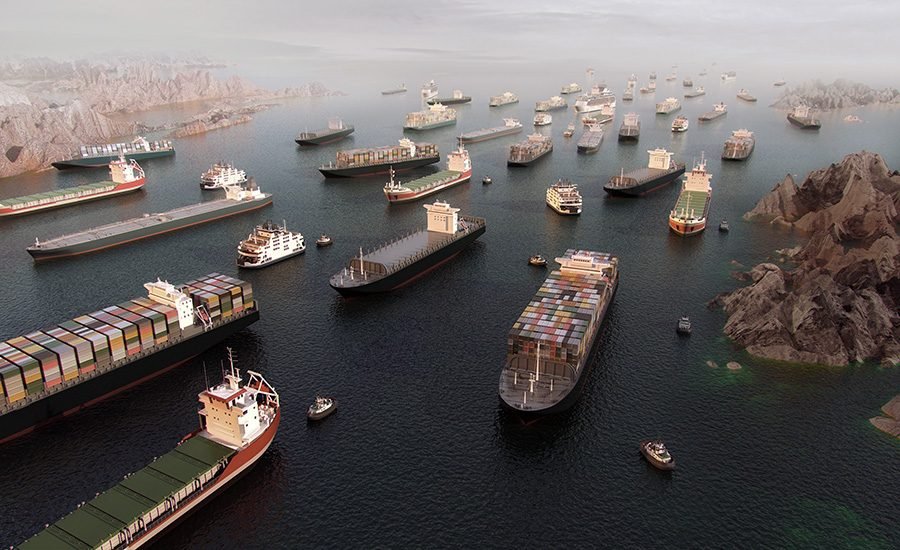
The project’s timing coincides with disruptions to global shipping lanes caused by rising tensions between the United States and Iran. Traffic through the Strait of Hormuz, a major conduit for energy and bulk goods, has all but ceased, with ships diverting or delaying transit amid security risks and rising insurance costs. The disruption is increasing interest in inland freight corridors and rail-based logistics as more predictable alternatives to maritime choke points.
Recently launched cross-border studies with Saudi Arabia suggest that long-term plans are moving into early technical development, particularly around the connections at the Jaber and Al-Omari border crossings.
However, the cross-border component remains preliminary. Key issues such as interoperability standards, border processing, security coordination and delivery frameworks must be addressed.
The immediate opportunity remains the national railway. Financial close is scheduled for early 2027, followed by a construction period of approximately five years, according to official statements.
The project delivery model reflects Jordan’s broader approach to infrastructure financing, which emphasizes public-private partnerships as essential due to limited public financing capacity, noting that “high investment costs” have historically held back large-scale transportation development.
This limitation underlines the stakes for the Aqaba railway. If delivered, the project would shift bulk freight from road to rail and test whether Jordan can run large-scale privately funded rail infrastructure and translate early-stage regional coordination into a functioning cross-border freight network.
