

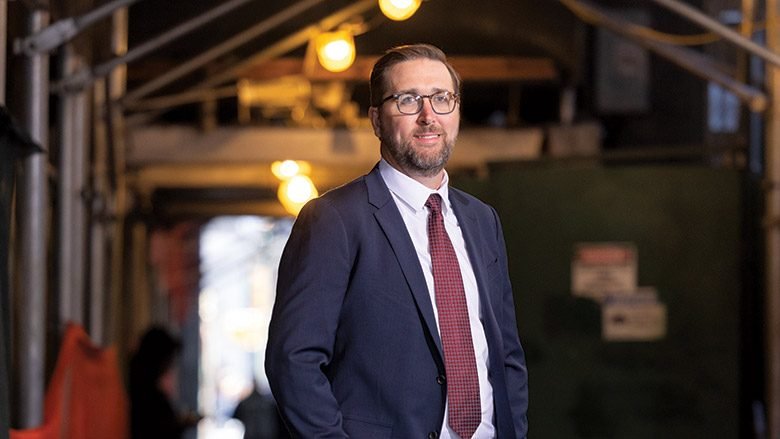

Chase Anderson
40, associate director
Thornton Tomasetti
Tampa, Florida
With 15 years in the industry and a role as an Associate Director at Thornton Tomasetti, Chase Anderson has built a career at the forefront of structural forensics and disaster response. A graduate of Texas A&M University with a bachelor’s degree in civil engineering and the University of Texas at Austin with a master’s degree in structural engineering, he is a multi-state licensed professional engineer and an FAA-certified unmanned aerial vehicle pilot. His project experience spans the residential, commercial, industrial and petrochemical sectors, including multi-million dollar installations and high profile forensic investigations.
Anderson is widely recognized for his work assessing hurricane-related damage along the Gulf and Atlantic coasts. He has led rapid assessments following major disaster events, including the 2018 FIU Pedestrian Bridge collapse, the CDMX Metro Line 12 investigation, and extensive structural assessments in Fort Myers Beach and Sanibel Island following Hurricane Ian. His expertise in emergency response, litigation support and structural analysis have made him a trusted resource for property owners, insurers and legal teams navigating complex post-loss conditions.
What is a challenge you have overcome in your career?
My main professional challenge has been aligning my expectations and skills with those of my employer. I’ve made several changes in my career since I started, because I didn’t know exactly what I wanted to do from day one. Like many junior engineers, I struggled with my expectations of the industry and what the day-to-day job actually entailed. I tried several opportunities and at each stop I gained a better perspective on my own talents and what is reasonable to expect from an employer. It was not a straight line path, but over time, my experience grew and I came to better understand the needs of my employers and their desires. This has created a sense of satisfaction and fulfillment in my profession that I didn’t have when I was 24.
What has been your favorite or most interesting project you have worked on and why?
It’s hard to pick just one project, because I’ve done so many and each one has its own challenges and learning opportunities. If I had to narrow it down, I would say it was our team’s emergency response to the Fort Myers Beach area after the devastation of Hurricane Ian. I performed structural and building envelope assessments for numerous commercial, condominium and residential properties along the coast in a very short period of time. Many of these buildings were severely compromised and access to the properties was difficult due to damaged infrastructure. I had to take fishing boats to Sanibel Island, carrying a bicycle, to access properties that were isolated because the storm surge had washed away the bridge approaches. It was very demanding to complete a large amount of work in a short time, but it was very rewarding to be a part of rebuilding the community.
What is the best career advice you have received?
The best professional advice I’ve ever received is to embrace your work, regardless of its scope. As a junior engineer, you will often not have direct access to the external customer. However, by treating your colleagues and co-workers as “internal customers,” you can develop the various skills necessary to be a successful relationship engineer. Skills include communication (the most important thing!), task prioritization and delegation, and the ability to deliver high-quality results that meet the client’s needs. By modeling this behavior at a young age, I signal to management that I can handle project manager tasks and connect directly with clients. It’s a simple tip, but it helped me change from a passive employee to an opportunity seeker.
What is your career advice for other young professionals in the industry?
The best advice is to look for new and challenging opportunities and then say yes when they come up. The best way to learn is to dive in, then figure out the details later with the help of your colleagues and mentors. What I have grown the most as an engineer was taking on challenging projects that others were hesitant to take on at first. The best reputation you can have within a company is to be known as the person who says yes to any assignment and then does an excellent job.
What is the best part of your job?
The best part of my job is that every day is a new adventure, and I have the opportunity to learn something new. Forensic assessments require you to leave the office and explore various types of structures, each with its own unique story. If you look hard and keep digging, you’ll always find a chance to uncover a mystery. Also, I love asking questions from anyone with construction and design knowledge, and sometimes the best sources of technical knowledge come from the tradesmen and maintenance staff who actually build and maintain what we design. If you keep an open mind, there is always an opportunity to learn something new in this field.
Looking for quick answers on construction and engineering topics?
Try Ask ENR, our new intelligent AI search tool.
Ask ENR →
