

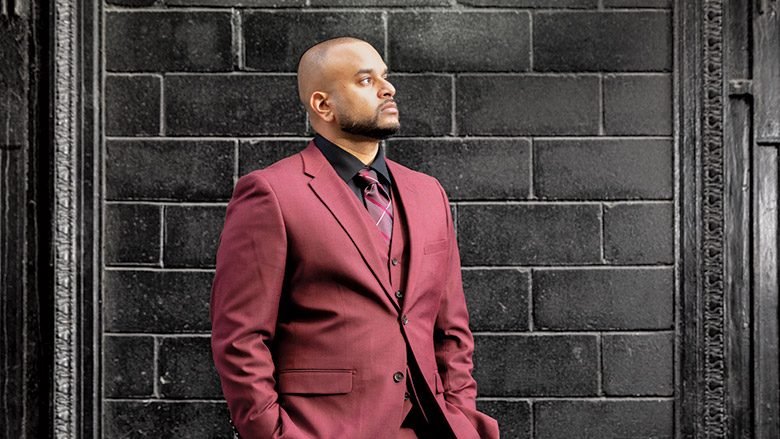

Rafiqul Chowdhury
40, President and Founder
Engineering Quadrant
Astoria, NY
A civil engineer and entrepreneur with a background in both construction and consulting, Chowdhury brings proven field experience to major transportation and energy projects in the New York region. Launching his career as a project engineer for Grace Industries in Plainview, New York, he quickly advanced to managing a $45 million project; he then moved into consulting as a resident engineer on high-profile infrastructure work before founding Quadrant Engineering in 2019.
As president, Chowdhury has built a practice serving the Port Authority of New York and New Jersey, the Metropolitan Transportation Authority and Con Edison while completing competitive accelerator programs with Hofstra University and the New York Power Authority.
Past President of the American Society of Civil Engineers Metropolitan Section in Greater New York City and current Regional Governor, he has led more than 100 professional development programs and created inclusion and mentoring initiatives. Chowdhury also created a scholarship for civil and construction engineering students at his alma mater, the University of Central Florida, and started a philanthropic program that links with community groups to support students and seniors in New York City.
How did you get into the industry?
I didn’t so much “break into” the industry as stumble into it.
When I entered college, I didn’t have a clear vision of what I wanted to do. At first I thought architecture, but I quickly realized two things. 1. My university didn’t offer it and 2. I didn’t quite have the artistic instinct that the profession demands.
The closest program available was civil engineering, so I enrolled in some courses. What started as a practical decision gradually became intentional. The structure, problem solving, and tangible impact on communities began to resonate with me.
Looking for quick answers on construction and engineering topics?
Try Ask ENR, our new intelligent AI search tool.
Ask ENR →
The real turning point wasn’t just the courses; he was getting involved with the student chapter of the American Society of Civil Engineers. This exhibition went beyond the textbooks. I met professionals, attended events and began to understand what the industry was really like in practice.
What is a challenge you have overcome in your career? How did you overcome it?
One of the biggest challenges I’ve faced in my career is identity insecurity in high-performance environments…basically imposter syndrome.
I moved from South Florida to New York City. One of the most competitive and intellectually dense environments in the world. Engineering, like many industries, is full of brilliant minds. There were times when I wondered if I really belonged in the room. Whether he had enough experience. Whether it was “New York” enough. Whether he was ready.
This feeling intensified when I started my business in my thirties. Entrepreneurship has a way of amplifying every insecurity you didn’t know you had. When you build something from the ground up, there’s nowhere to hide. Doubts grow stronger before they are silenced. What helped me overcome this was learning to simplify.
When doubt appears, complexity tends to follow. You start to overanalyze. overcompensate Try to prove yourself. I had to constantly remind myself of two things: 1. Keep it simple and 2. Why not you?
Be great at the basics. Communicate clearly. Do what you promise. Treat people well. There is real beauty and real power in simplicity.
I also leaned heavily on something that isn’t always emphasized in technical industries: emotional intelligence. Be extremely good with intangibles. Listen carefully, understand customer concerns, manage expectations, read a room. All of this creates an impact that mere raw intellect cannot.
I realized that dignity is not about being the smartest person in the room. It’s about being valuable in the room.
Over time, results replace insecurity. But even now, growth still requires entering rooms that stretch me. The difference is that I no longer interpret discomfort as inadequacy. I see it as an expansion and that mindset has made all the difference.
What is your favorite project and what challenges have you overcome?
I can’t single out just one project as my favorite, especially as my role has evolved.
Earlier in my career, I might have singled out a specific infrastructure job. Today, as the head of the business, I oversee all projects. What excites me now is not an individual job, but the orchestration of many moving parts at once. Entrepreneurship changes the lens.
The challenge is no longer just technical execution. It’s strategic oversight that ensures quality across multiple contracts, aligns schedules, manages risk, maintains customer relationships, and protects the company’s reputation, all at the same time. The real obstacle has been the transition from operator to architect of the organization.
Engineers are trained to solve problems themselves. Entrepreneurs must build systems and people to solve them. This change requires intentional leadership and, most importantly, trust. Trust the team we’ve cultivated, the standards we’ve implemented and the culture we’ve built.
Staying informed without micromanaging and understanding the nuances without getting into every detail has been one of the most important leadership disciplines I’ve developed. When you empower strong professionals, set clear expectations, and create accountability, the organization begins to perform beyond your individual capacity.
What is the best part of your job?
The best part of my job is the uncertainty. As an entrepreneur or leader at any level, uncertainty can be paralyzing if you let it. There are days when you wake up not knowing how a conversation will play out, how a project will change, or what challenge will land on your desk before noon. At first, that unpredictability felt heavy. Over time, I learned to accept it.
Uncertainty is where growth lives. It forces you to think clearly. It forces you to lead. It forces you to take action instead of overanalyzing. I’ve found that the key is to put your head down, focus on what you can control, and get to work creating the outcome you envision.
How do you balance work and family life?
I don’t believe in perfect balance; certainly not in the way it is often marketed. I don’t think life is a 50/50 scale where everything is distributed evenly every day. If you’re striving for excellence, whether it’s in business, leadership, family, or personal growth, there will be seasons when you’re intentionally unbalanced. There are times in life when you simply have to live in chaos.
Building something meaningful requires intensity. It requires sacrifice. It requires long hours and deep focus. And I’m still learning not to feel guilty about it when the mission calls for it. Excellence is rarely convenient.
But that’s what I believe in, alignment over balance.
I regularly ask myself, “Is chaos related to purpose?” If the long hours are building something that will create opportunity for my family, my team, and/or my community, then that imbalance is temporary and intentional.
The key is to understand that life moves in seasons. Some seasons require you to be more professional. Others require you to step back and be fully present at home. Wisdom is knowing when to change.
For me, work-life balance is not the same hours. It’s about being fully present wherever you are. When I lead my company, I lead with focus. When I’m with my family, I try to be there completely.
What is your career advice for other young professionals in the industry?
My advice is simple. Be authentic and relentlessly curious. Trying to be someone else is exhausting. It might work temporarily, but it’s not sustainable. In the long run, people can sense when you’re acting instead of actually growing. The most successful professionals I have seen are not the strongest. They are the most authentic and the most curious.
Curiosity is what separates the average from the exceptional. ask questions Understand why something works, not just how. Study beyond what is required. Volunteer for the meeting you feel a little unprepared for. We hear it all the time, but it’s so valuable to learn about growing lives outside of comfort.
