

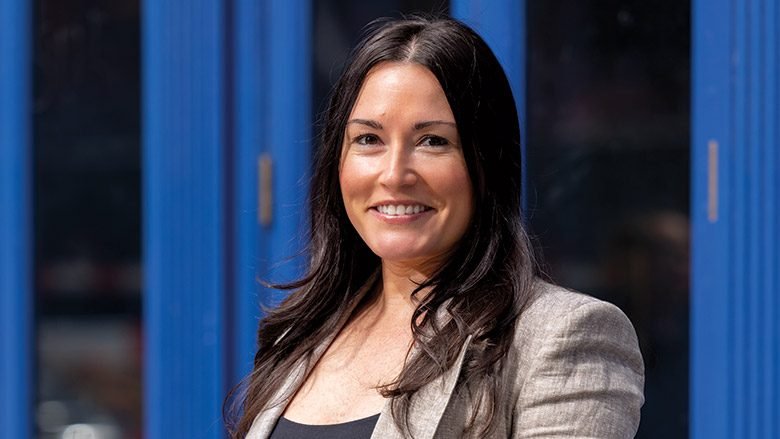

Lauren Simone
38, Director of Learning and Development and Lean Construction
WM Jordan Co.
Newport News, Va.
Simone’s role at WM Jordan, a construction management and real estate development company, allows her to lead company-wide training programs and Lean implementation in Virginia, North Carolina and South Carolina offices.
Since joining the company in 2015, she has progressed from a project engineer to a senior corporate leadership role. Simone brings field-proven experience to her work from complex projects such as NASA Langley’s Measurement Research Laboratory and the Children’s Behavioral Health Pavilion at the King’s Daughters Children’s Hospital in Norfolk, improving collaboration, predictability and workflow efficiency. Helped migrate WM Jordan’s planning process from sticky note sessions to a digital platform, accelerating adoption among project teams and business partners.
Simone is also a statewide industry educator on lean building principles. Its impact on the community is equally important. He co-founded Club Blue in Hampton Roads, Va., raising $300,000 for Boys & Girls Clubs, and served on the boards of EdMarc Children’s Hospice and Norfolk Academy.
How did you get into the industry?
I started college in civil engineering because I knew I wanted a solid technical foundation, but I also knew I wanted more than paper calculations. I was drawn to the built environment and the energy of making something real. Building construction ticked all the boxes for me. I still describe it as if engineering and architecture had a baby. You get the technical rigor, but you’re also immersed in the planning, coordination and human side of construction. This balance is what hooked me and ultimately set the direction of my career.
After graduating from Virginia Tech, I made a decision that gave me perspective early on. I moved to New Zealand for a year and later backpacked through Southeast Asia, thinking it was the only time in my life I could do it. I had already committed to work for a contractor, Homeland Contracting, and instead of closing the door, the owner encouraged me to go and promised that the job would be there when I was ready. Almost a year later, he called me while I was in New Zealand to say that the company had landed a big project with WM Jordan and that if I wanted it, the job was mine. I hung up, bought a one-way ticket to Southeast Asia, traveled for a few more months, came home and went straight to work. This experience reinforced exactly why construction was the right industry for me. It’s based on trust, relationships and time, and it rewards people who are willing to build something meaningful together.
What is a challenge you have overcome in your career? How did you overcome it?
One of the biggest challenges in my career has been learning how to lead and influence before having a degree or years of experience to fall back on. In the beginning, I was often the youngest person in the room and often the only woman, working with experienced field leaders and business partners who had been in the industry for decades. I quickly learned that credibility is not given, it is built. I focused on preparation: listening first, understanding the work at a deep level, and consistently introducing myself to my teams. Over time, confidence grew not because I had the loudest voice, but because I followed and helped teams solve real problems.
Looking for quick answers on construction and engineering topics?
Try Ask ENR, our new intelligent AI search tool.
Ask ENR →
As my career evolved, that challenge shifted from proving myself to leading change. Moving to lean building and then learning and development required influencing without direct authority and helping people rethink how they plan and work together. The biggest lesson for me was realizing that change is only sustained when people feel respected and included in the process. I leaned toward relationships, transparency, and teaching rather than explaining. This approach not only helped me grow as a leader, but also reinforced why I love this industry. Construction rewards those who are willing to learn, adapt and invest in people, and this challenge continues to drive me in the best way.
What is your favorite project and what challenges have you overcome?
One of my favorite projects was the Measurement Systems Laboratory at NASA Langley Research Center. It was complex in every way, from clean rooms and advanced instrumentation to extremely high expectations for quality, coordination and precision. There was very little room for error and success depended on aligning lots of smart people around a shared plan. Towards the end of the project, COVID-19 arrived, which added a whole new layer of complexity. Overnight, we navigated security protocols, supply chain disruptions and uncertainty, all while trying to maintain momentum in a highly technical installation.
That project was where lean construction really came to life for me. Using pull planning, reliable commitments, and open communication helped the team solve problems early and adapt quickly as conditions changed. COVID-19 reinforced a lesson that has stayed with me ever since. Even the most technically advanced projects succeed or fail based on people’s ability to plan, communicate and work together when things don’t go as expected. This experience shaped how I lead today and ultimately influenced my passion for developing systems, processes and people that help construction teams perform at their best.
What is the best part of your job?
The best part of my job is developing people and watching them grow. I love helping people and teams build confidence, gain new skills and see possibilities in their careers that they may not have seen before. Whether it’s a superintendent refining how they plan work, a young professional finding their voice, or a project team learning to collaborate more effectively, seeing these moments of growth is incredibly rewarding.
Construction is a people-driven industry, and work only gets better when we invest in the people who make it work. Leading learning and development and lean construction allow me to connect continuous improvement with real human impact. I help create environments where people feel supported, challenged and equipped to do their best work, and that’s what motivates me every day.
How do you maintain work-life balance?
I don’t believe in a perfect version of work-life balance, especially in construction. For me, it’s more about awareness and timing. One thing that really helps is that my husband is also in construction, so we lead very similar lives at work. We understand the long days, the pressure, and the seasons when things step up. This shared perspective makes it easier to remind each other when it’s time to slow down and when it’s okay to unplug.
Sometimes you’re so busy you don’t realize you’re empty, and my husband is good at checking in on me when that happens. As I’ve grown in my career, I’ve also learned the importance of stepping back, trusting others, and not feeling like you have to be everywhere all the time. Construction is demanding, but it’s also a long game, and keeping me grounded outside of work makes me better for my teams and the work we’re building together.
What is your career advice for other young professionals in the industry?
Be curious, be reliable, and don’t be afraid to raise your hand before you feel completely ready. One thing I tell all the interns and young professionals I work with is this: it’s your job to ask questions. You don’t know what you don’t know, you don’t have to know what you don’t know, and if you don’t ask, you’ll never know. The two most important things early in your career are to not pretend you know something you don’t and to constantly ask questions. People respect honesty and effort much more than guessing your way around.
I would also encourage young professionals to remain open to different paths. Your career doesn’t have to be linear to be successful. Some of my best opportunities came from saying yes to something unknown and trusting that I would figure it out along the way. Invest in relationships, listen to people with experience, and remember that how you work with others matters as much as what you know.
Where do you see yourself in 10 years and what goals have you set yourself to get there?
In 10 years, I want to help drive the construction industry forward in a real and tangible way. I see myself leading at the intersection of construction, learning, and people, making construction a place where teams are better prepared, more adaptable, and truly excited about the work they do. I’m passionate about shaping how we develop talent, how we lead teams and how we rethink the way work is planned and executed. The industry is changing rapidly and I want to be part of the group driving that change, not reacting to it.
To get there, I’ve wanted to say yes to the opportunities that pull at me and refuse to stay in one lane for too long. I’ve built my career by staying close to the field, being curious, and surrounding myself with people who challenge my thinking. My goal is to keep learning, keep experimenting, and keep investing in people and systems that improve construction.
Ultimately, I want to leave the industry stronger than I found it, with teams that work smarter, lead better, and are proud of what they build together.
