

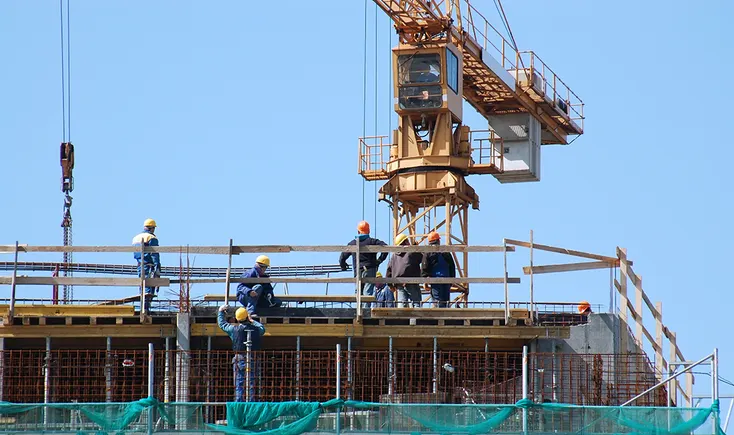
In 1996, Nextel launched the Direct Connect iDEN network in a move that changed how construction jobs operated. A foreman could reach the entire crew in less than a second via voice and text without dialing or waiting for a touch. Motorola iDEN network-enabled phones were designed specifically for industrial and construction environments, ruggedized to withstand drops, dust and moisture, rather than being reused from consumer products. For construction crews, it was the closest thing to a dedicated communications infrastructure the industry had ever seen.
At its peak, Nextel had more than 20 million subscribers, especially in workplaces where reaching the right person at the right time is not just a convenience, but a security requirement. But when Sprint acquired Nextel in 2005, because the two networks were incompatible, they both bled billions of dollars and it wasn’t sustainable. On June 30, 2013, Sprint shut down the iDEN network, choosing its own network to drive its future.
With nothing better, construction crews were forced to improvise with consumer cell phones or fall back on two-way radios. They filled some of the void, but each had limitations, such as limited range without repeater infrastructure, voice-only support, and poor signal quality. In particular, mobile phones were not always durable, were difficult to use with gloves, and many workplaces banned them to avoid worker distractions. The breach led to real operational costs, manifesting in delayed security responses, coordination failures across large sites, and teams working without a real-time record of who said what and when, a problem that only the next generation of networks could solve.
The same infrastructure that killed Nextel in 2013 is what makes their vision viable now, as 4G and now 5G is exactly the foundation that Nextel’s vision requires. One such solution is offered by weavix, based in Wichita, Kansas. Your Walt Smart Radio works on modern networks and can be deployed on a job site quickly without the infrastructure overhead required iDEN. The current network matches the demands of the environment Nextel was trying to serve.
The capabilities of the devices have also grown far beyond what Nextel could have imagined. Real-time AI translation now supports multilingual teams in more than 40 languages or dialects, removing a communication barrier that has existed in workplaces for decades. Sharing photos and videos through the same push-to-talk interface allows teams to document and resolve issues without sending someone through the site first.
The security and operational layer is equally significant. Traditional two-way radios operating on licensed frequencies require an FCC authorization for each frequency assignment, a process that involves coordination, application fees, and ongoing renewals, as described in the FCC’s Industrial/Business License Requirements. Walt works with LTE and Wi-Fi, so no FCC license is required, meaning unlimited, customizable, permission-based channels configured with no regulatory overhead and deployed the same day the units arrive on site. Time-stamped AI transcription creates a searchable breadcrumb of each communication, giving supervisors the accountability and documentation that voice-only radio never could.
For today’s technology and decision-making construction leaders, the case for modernizing workplace communication spans safety compliance, operational efficiency and workforce retention. These are three areas where the gap between teams using purpose-built tools and those still improvising will only widen. First-mover companies will have a clear understanding of every conversation, every security event, and every coordination decision made across their sites, providing the operational visibility that keeps work running efficiently.
Nextel proved that instinct right. The infrastructure has finally arrived to honor it, and the construction leaders who recognize it first will have the clearest advantage.
