

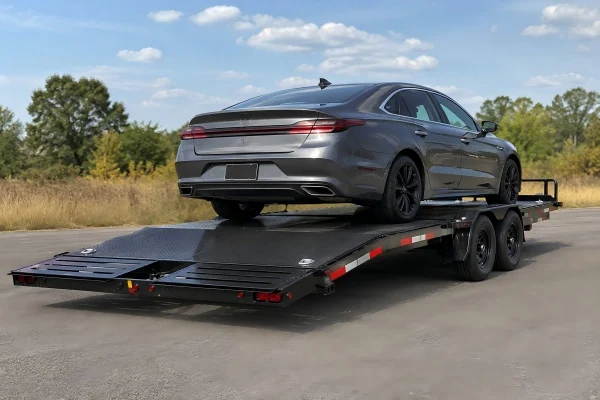
Before any inspection or purchase discussion makes sense, it pays to have a clear understanding of these basic terms:
A mistake in equipment selection continues to appear: buyers choose a trailer based only on the size of the deck. The cover size tells you what physically fits. GVWR, payload capacity and brake type tell you what can be safely carried. Both questions need answers before ordering.
Trailer regulations vary significantly by country and operating environment. Never assume that a legal trailer in one market is automatically compliant in another.
In all markets, shared requirements include brake lights, turn signals, taillights, side markers, reflective tape, rated safety chains and a breakaway system that operates above minimum weight thresholds. Get the specs right before you start manufacturing. Retrofitting of compliance components after delivery is always more expensive and sometimes structurally compromised. Three Horses designs and tests its trailers to meet or exceed applicable standards for target markets.
A pre-trip trailer safety checklist takes less than fifteen minutes. The most experienced operators develop a fixed routine with the same starting point and order every time, so that nothing is missed when schedules are tight. Work on them before each trip.
Safe loading is one of the most consistently underrated aspects of trailer hitch safety. The practical goal is about 60% of the load weight in the front half of the trailer, with the load balanced evenly from side to side. This keeps the tongue weight in the proper range, typically 10-15% of the total loaded trailer weight, which keeps the tow vehicle’s rear axle planted and the trailer tracking predictably.
The trailer changes the way a vehicle accelerates, stops and turns. Acceleration should be gradual to avoid straining the hitch, coupling and securing of the load. Braking should start sooner than instinct suggests. The eight-second rule means maintaining at least eight seconds of following distance at highway speeds, and this gap must increase even more in rain, on slopes or with heavy loads.
A handy trailer maintenance checklist breaks down tasks by frequency. Before each trip, check the tires, lighting, coupling, safety chains, breakaway cable and cargo security. Every 5,000 to 8,000 km or seasonally, inspect the wheel bearings, brake wear, suspension hardware and frame for rust or cracked welds. Annually or every 12,000 km, perform a full bearing service, brake lining inspection and wiring check.
Safe towing comes down to four things: a thorough pre-trip inspection, proper loading, safe hitching, and disciplined driving. None of them are complicated. They all jump when schedules are tight and the last twenty trips have gone smoothly, and that’s exactly where most incidents originate. For commercial operations, the quality of the trailer itself is important. Equipment built to the correct specifications, with reliable brakes, sealed wiring, reinforced frames and proper surface treatment, reduce both the frequency and severity of field failures. Three Horses Trailer supports buyers with trailer options designed for real commercial working conditions. If you’re evaluating trailers for your fleet or need help matching specifications to local compliance requirements, their support team is a handy resource before and after purchase.
