

From the plains of Texas to the bayous of Louisiana to the coasts of the Carolinas, the ENR Texas & Southeast Top Design Firms 2026 ranking captures a vast and high-growth market. Kimley-Horn led the combined regional list with $1.81 billion in design revenue, followed by WSP USA at $1.18 billion and Burns & McDonnell at $1.084 billion. Texas was the strongest state for many companies, while Florida, the Carolinas, Georgia and Louisiana contributed significantly to the overall total.
“Our performance in the Texas and Southeast region was driven by a combination of sustained regional growth, long-standing client relationships and a multidisciplinary model,” says Craig West, senior vice president of Kimley-Horn. “The strong performance we are seeing is the combined effect of a multi-year strategy. We have deliberately invested in diversifying both the services we offer to clients and the markets we serve, and these two things are mutually reinforcing.”
Kimley-Horn’s Texas revenue reached $690.34 million by 2025, making it the company’s strongest individual geography, with Florida close at $535.58 million. North Carolina added $192.62 million and Georgia $154.37 million to Kimley-Horn’s regional total. San Antonio-based Pape-Dawson, which ranks 11th with $511.32 million in regional revenue, took most of that number from Texas at $367.71 million, but also saw growth in Florida, Georgia, Tennessee and other Southeast states.
“Pape-Dawson’s performance was driven by continued demand in core civil engineering markets, particularly in the fast-growing communities of Texas and the Southeast,” says Trey Dawson, president of Pape-Dawson. “This broader and more integrated platform allows us to support customers with deeper expertise and coordinated delivery while maintaining local relationships.”

Sectors and Highlights
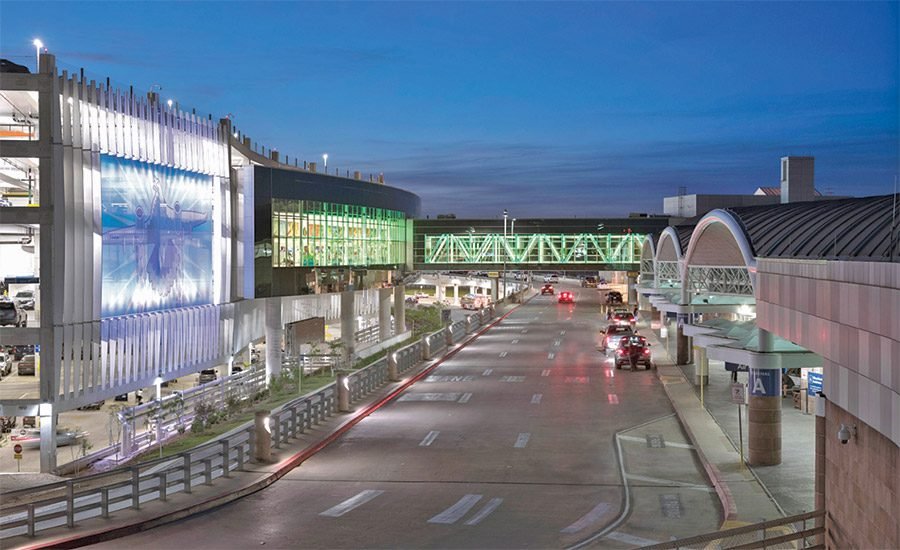
Transportation, water and wastewater, aviation and land development were among the most active sectors in both subregions in 2025. In Texas, Kimley-Horn’s work at San Antonio International Airport, part of a terminal development program that more than doubles its footprint while keeping it fully operational, is one of the most complex active programs in the region, requiring phased delivery and early construction to preserve the work package in phase 2/47. operation The company is also offering the Denton Pecan Creek Water Reclamation Plant Expansion, a five-year construction principal risk program that will increase treatment capacity to 30 million gallons per day.
In the Southeast, investment in aviation, healthcare and infrastructure resilience drove sustained activity. Louisiana remained an active market, with Burns & McDonnell posting $149.97 million in state revenue.
Pape-Dawson saw strong activity in land, transportation and water development, with projects increasingly involving complex utility planning, permitting, stormwater management and due diligence. “Clients increasingly need partners who can help simplify coordination, reduce risk and move projects efficiently from planning to delivery,” says Dawson.

Pape-Dawson is among the companies selected to work on the Project Marvel sports complex in San Antonio.
Representation courtesy of Populous
Push Power Data Centers
The data center market continued to reshape the way companies approach site selection and early-stage planning, driven by AI-related demand in both subregions. The importance of the sector in 2025 was less about the direct volume of the project and more about its compound effect on the availability of land and energy.
“We invested deliberately [to diversify the] services we provide to customers and the markets we serve, and these two things are mutually reinforcing.”
—Craig West, Senior Vice President, Kimley-Horn
“Increasing data center demand has made land and power capacity increasingly competitive, which means customers need partners who can move quickly and bring real experience to the table,” says Dawson. Pape-Dawson says it has developed capabilities in site selection and due diligence on power availability, fiber access and infrastructure readiness, allowing customers to identify constraints earlier in the process.
Kimley-Horn points to the energy sector as one of the market-defining forces in the current cycle. “Increasing demand for reliable infrastructure is reshaping the market and creating a sustained need for improvements in grid distribution and resiliency,” says West. “These are exactly the types of complex, multidisciplinary challenges that Kimley-Horn is built to lead on.”

Challenges ahead
Despite the strong performance, companies in both sub-regions are monitoring headwinds. Tariffs and interest rates have introduced uncertainty into the land development sector, where the combined effect on material costs and financing has slowed residential and commercial projects.
“The cost of materials combined with the current interest rate has had an impact on the appetite for residential and commercial development,” says Dawson. Manpower and technology have long-term limitations. “The ultimate challenge for design firms in Texas and the Southeast will be building and maintaining the workforce needed to meet demand while integrating AI in a way that strengthens both productivity and quality,” says Emily Meador, senior vice president at Kimley-Horn.
The short-term outlook remains positive. Water and wastewater infrastructure, power supply, aviation, and continued densification in major metropolitan areas are expected to drive the strongest growth in Texas, Louisiana, and the southeastern states. “The biggest opportunity is continued investment in infrastructure” in the region, Dawson says. “Design firms that can combine technical depth with local knowledge and speed to market will be better positioned.”
