

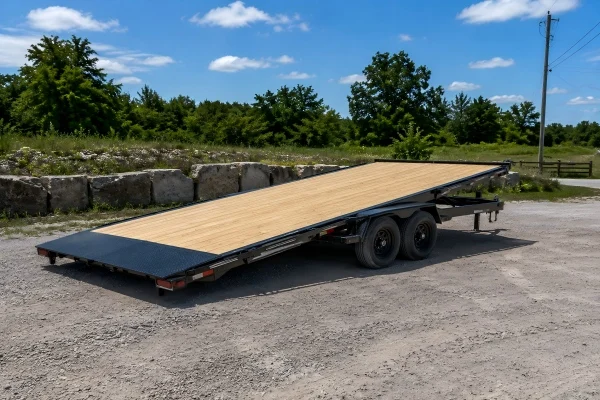
As a double-axle tilting trailer facilitates the transport of vehicles and equipment
Dual axle tilt trailers are an essential tool for anyone who regularly hauls heavy vehicles, machinery or recreational equipment. Unlike single-axle trailers, these trailers are built with two axles that distribute weight evenly, providing greater stability on rough roads and terrain. The tilting deck allows for effortless loading and unloading without the need for external ramps or winches, making them ideal for construction professionals, landscapers and off-road enthusiasts. Investing in a dual axle tilt trailer ensures safer transportation, reduces strain on the towing vehicle and saves time during every hauling task. Understanding how these trailers work, their components, and their benefits can help you make the best choice for your transportation needs.

How tilt trailers work
The core of a tilt trailer is its pivoting deck system. This design allows the rear of the trailer to drop to the ground, creating a natural ramp onto which equipment can be rolled without lifting or additional tools. Many models use hydraulic mechanisms or manual levers to control the tilt, ensuring a smooth and controlled slope. This intuitive system dramatically reduces the effort and risk associated with loading heavy machinery or vehicles. By allowing the deck to act as its own ramp, tilt trailers eliminate common loading issues, making it safer and more efficient to move heavy or awkward items across different terrains.
The anatomy of a double axle trailer
Explanation of the two axes
The two-axle configuration is one of the defining characteristics of these trailers. Each axle carries a portion of the trailer’s load, which not only increases the maximum weight the trailer can carry, but also improves stability and road performance. With four wheels in contact with the road instead of two, a dual-axle trailer can carry larger and heavier loads without compromising safety. This configuration is especially valuable when transporting vehicles or machinery that require consistent weight distribution and safe handling, especially at higher speeds or on uneven surfaces.
Suspension and equalizer systems
Suspension systems on twin-axle tilt trailers often incorporate equalizers, which balance the weight between the two axles. This ensures that when one wheel encounters uneven ground, some of the load is transferred to the other axle, keeping more wheels in contact with the road. The result is better traction, smoother handling and less wear and tear on the tires and trailer frame. A well-designed suspension system improves towing comfort and reduces the risk of accidents caused by trailer sway or instability, especially when carrying heavy loads.
Tilt trailer versus standard trailer
Unlike standard trailers that require separate ramps for loading, tilt trailers streamline the process by incorporating the deck tilt mechanism. This makes them faster and safer to load, especially when dealing with heavy equipment. Standard trailers can be cumbersome and require careful placement of ramps and winches for large machinery. Tilt trailers eliminate these complications and allow you to drive, roll or push equipment directly onto the deck. This time-saving feature is especially useful for professionals who need to load and unload equipment frequently during a workday, or for recreational users who prefer a simpler setup for their vehicles or equipment.
Key advantages of twin axle tilt trailers
Increased load capacity
Dual axle tilt trailers can handle significantly heavier loads compared to single axle models. The two-axle weight distribution reduces stress on each wheel and trailer frame, allowing for safer transport of larger vehicles, machinery or multiple items at once. This makes them ideal for contractors, landscapers and equipment rental companies who need to move heavier equipment efficiently. The extra capacity also ensures that the trailer will operate reliably under fully loaded conditions without compromising trailer stability or safety.
Improved stability and road control
Stability is one of the biggest advantages of twin axle trailers. With more points of contact with the road, these trailers are less prone to rocking, fishtailing or uneven weight distribution. This results in safer towing on highways, hilly terrain or in windy conditions. Drivers can maintain better control of the trailer, reducing fatigue and the risk of accidents during long journeys or difficult conditions. This improved stability is especially valuable when transporting valuable or delicate equipment that cannot tolerate excessive movement.
Safety and efficient braking
Many twin axle tilt trailers come equipped with braking systems on both axles, which provide superior stopping power. This feature is essential when transporting heavy equipment or vehicles, as it ensures that the trailer can decelerate evenly and safely. Braking redundancy adds another layer of safety, preventing potential accidents should a set of brakes underperform. Combined with proper load distribution and tire maintenance, this makes dual axle tilt trailers an exceptionally safe choice for professional and recreational towing.
Applications and uses
Dual axle tilt trailers are incredibly versatile and are used in a wide range of industries and activities. In construction, they make transporting heavy machinery such as skid steers, skid steers and skid steers fast and safe. Landscapers use them to move large equipment or multiple mowers in one trip, saving time and labor costs. Recreational users find them perfect for loading ATVs, motorcycles, snowmobiles or small boats without the hassle of ramps. The tilt function ensures smooth operation for both wheeled vehicles and wheeled equipment, making them suitable for virtually any scenario where heavy cargo needs to be transported efficiently.
Materials and build quality
Steel and aluminum frames
Trailer frames are commonly constructed of steel or aluminum. Steel frames provide exceptional strength and durability, allowing the trailer to carry very heavy loads without bending or flexing. Aluminum frames, while lighter, offer corrosion resistance and can improve fuel efficiency due to reduced weight. The choice between steel and aluminum depends on the trailer’s intended use, load requirements and environmental exposure. The high-quality construction ensures that the trailer remains safe, reliable and durable, even with heavy and frequent use.
Protective coatings
Coatings such as powder coating or galvanizing are essential to prevent rust and extend the life of a trailer. Trailers exposed to wet, salty or harsh environments benefit greatly from these protective finishes. Regular maintenance and protective coatings ensure that the trailer remains functional and safe for many years, even with constant exposure to harsh conditions.
Selecting the correct size and rating
Choosing the correct trailer size and weight is critical to safe towing. The gross vehicle weight rating (GVWR) indicates the maximum load that the trailer can carry, including its own weight. It’s important to select a trailer with a GVWR that will comfortably handle the heaviest loads you plan to haul. In addition, it is essential to ensure that the towing vehicle is rated for the weight of the trailer to prevent strain, wear and tear and potential accidents. Matching trailer and tow vehicle specifications ensures safety and optimal performance on the road.
Maintenance and Inspection
Proper maintenance is vital to keeping a dual axle tipper trailer in excellent working condition. Regular inspections should include checking the tires for wear, making sure the brakes are working properly, and lubricating the pivot points on the tilt platform and suspension. Electrical components such as lights and brake wiring should be inspected frequently to avoid failure. By following a consistent maintenance routine, you can extend the life of your trailer, improve safety, and ensure smooth operation whenever needed.
Frequently asked questions
1. How is a tilt trailer different from a standard flatbed trailer?
Tilt trailers feature a deck that pivots on the ground, allowing direct loading without ramps or winches. Standard flatbed trailers require separate ramps and often more manual effort to load equipment.
2. What is the typical load capacity of a double axle tipper trailer?
Depending on construction and axle ratings, dual axle tilt trailers typically carry 5,000 to 10,000 pounds or more, providing ample capacity for heavy vehicles, machinery, and multiple items at once.
3. Are dual axle tilt trailers difficult to tow?
Although longer and heavier than single-axle trailers, dual axles provide better stability and weight distribution, making the trailer safer and more controlled when the trailer is properly loaded.
4. What maintenance is required for these trailers?
Regular maintenance includes tire checks, brake inspections, pivot point lubrication, and making sure electrical systems like lights and brake wiring are working properly. Ongoing care extends trailer life and maintains safety.
5. Which material is better for a tipper trailer frame, steel or aluminum?
Steel is ideal for maximum strength and heavy transport, while aluminum provides lighter weight and corrosion resistance. The choice depends on load requirements, frequency of use and environmental conditions.
