

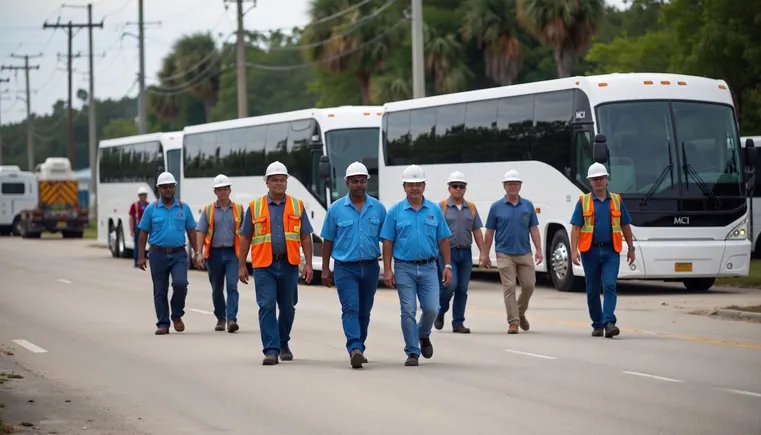
CharterUP is a technology-focused bus transportation company that drives long-term construction and infrastructure projects across the country.
Labor shortages in material sourcing and permit delays are some of the first risks that arise during construction project planning. But in many large projects another operational issue is affecting productivity every day: Bring workers to the workplace.
Large, complex construction projects such as data center campuses often span hundreds of acres, require multiple shifts to keep construction running efficiently, and require travel to remote locations, all of which require workers to travel long distances at all hours of the day.
The result is a growing disconnect between job availability and job accessibility.
“You can have the crew engaged and ready to work, but if transportation isn’t properly planned, productivity starts to break down before the day even starts,” said Bobby Taylor, business account executive at technology-focused transportation company CharterUP. This is where efficient and reliable transport comes into play. CharterUP is leading the way to make construction projects of all sizes run better and cost less.
When the transport becomes an operational deadlock
In many projects, transportation planning is still treated as a temporary logistical concern rather than a core operational function.
Workers are often left to manage their own commutes, navigate traffic congestion, find parking, or coordinate informal carpooling systems with co-workers. As projects scale, these challenges multiply and the impact can extend far beyond worker inconvenience.
Late arrivals disrupt shift transfers. Traffic congestion near workplaces can create friction with surrounding communities. Lack of parking can force workers to walk long distances or rely on unreliable transportation systems. Over time, productivity losses add up.
CharterUP’s expertise allows them to help project managers predict these disruptions long before they happen, helping to avoid financial disruptions and other delays mid-project.
Labor mobility is becoming a competitive advantage
A tight labor market gives workers and subcontractors more power over where they choose to work. Providing easy and reliable commuting to your workplace can make the difference between recruiting top talent and missing out on the best of the best in your workforce.
“Workers want to know how they get to the site what the commute is like and if parking is going to be a daily issue,” Taylor said. CharterUP solves these problems early to make big projects more attractive places to work.
Technology is expanding visibility into transportation operations
Technology is also playing a larger role in how workforce transportation programs are managed. CharterUP’s platform provides technology-based insights such as GPS tracking and real-time project management to help project teams better understand workforce movement patterns and respond to changing site conditions.
This visibility can help teams identify route bottlenecks, improve scheduling, adjust capacity, and monitor on-time performance across multiple shifts. For projects that work around the clock, these ideas can be especially valuable.
A growing consideration for large projects
As data center construction projects continue to scale, scale transportation planning is becoming an essential part of staffing and operational planning.
For contractors already navigating labor shortages, tight schedules and increased project complexity, workforce mobility can increasingly dictate how effectively crews can do once they arrive on site.
And for many companies the question is whether transport deserves attention, to what extent it should be planned.
