

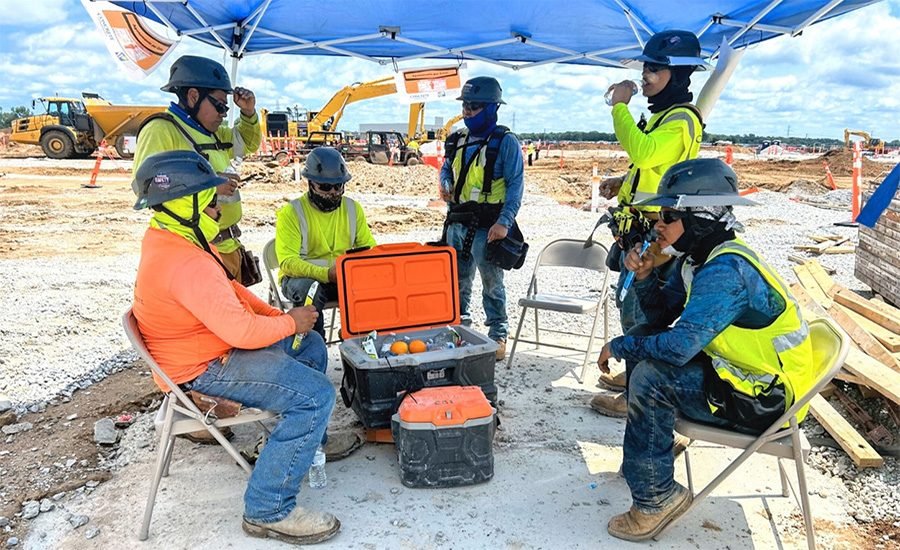
As a heat wave pushes heat index values near 100°F in parts of the Northeast and Mid-Atlantic on Friday, contractors are adjusting schedules, increasing breaks and emphasizing worker acclimatization as one of the first widespread heat events of the season hits the eastern United States.
“The predicted heat wave requires extra precautions for some areas of the country, however, because the wave is coming earlier in the year than normal, and such significant and abrupt temperature changes do not allow for ‘natural’ acclimatization,” said Brad Sant, senior vice president of safety and education for the American Association of Highway and Transportation Builders.
Workers gradually increase their tolerance to heat exposure over time, but sudden temperature spikes early in the season can increase risks for employees who have not yet adapted to summer conditions.
“The real challenge comes when a heat wave hits suddenly and the workers are not properly acclimatized,” he said. “This requires additional steps to enable work crews to be mentally and physically prepared to work in high temperatures.”
According to CPWR-The Center for Construction Research and Training, construction workers accounted for half of all occupational heat-related fatalities in 2024, even though they represented a much smaller share of the total US workforce.
OSHA, citing data from the Bureau of Labor Statistics, has reported 33,890 heat-related occupational injuries and illnesses that involved days off the job between 2011 and 2020, averaging nearly 3,400 serious cases annually.
According to Sant, transportation contractors can respond by moving work to the morning, evening or night hours when project conditions allow, while increasing rest breaks, holding additional safety meetings and implementing buddy systems that encourage workers to monitor each other for symptoms of heat stress.
Looking for quick answers on construction and engineering topics?
Try Ask ENR, our new intelligent AI search tool.
Ask ENR →
These conditions are driving increased attention to heat risk management in the construction industry as employers incorporate weather forecasting, worker monitoring and thermal safety planning into routine project operations.
RELATED
OSHA’s proposed heat rule gets comments from contractors and unions
Contractors adjust schedules and safety protocols
At Skanska, project crews can start work earlier to avoid peak temperatures and schedule more physically demanding activities during the cooler morning hours, according to Joe Mannino, vice president of environmental health and safety. Crews can also be reassigned to more controlled work environments during the hottest parts of the day.
The company also emphasizes hydration, monitoring for signs of heat illness, and access to shaded or cooled recovery areas.
READ MORE: OSHA Heat-Related Illnesses and First Aid

Heat illness can quickly escalate from cramps and exhaustion to life-threatening heat stroke. OSHA provides guidance on recognizing symptoms, responding to emergencies, and protecting workers during hot weather.
Graphic: Adobe
“There has been a marked increase in attention to heat planning and worker protection in recent years compared to past summers,” Mannino said, noting growing industry awareness and OSHA’s National Emphasis Program on heat-related hazards.
Jacobs reported similar measures. “During periods of extreme heat, this may include shifting schedules to cooler hours, prioritizing more physically demanding tasks earlier in the day and increasing rest breaks to reduce exposure,” said Brian Morel, director of health, safety and environment at Jacobs.
Morel said project teams are increasingly using forecasting tools and thermal safety applications to guide operational decisions as conditions change throughout the day. He added that heat risk management is becoming more integrated into project planning, worker education and supervision rather than being treated as a seasonal response.
ARTBA and the National Asphalt Pavement Association recently developed a heat illness prevention plan template for highway contractors that recommends extra precautions when heat index forecasts reach 80°F or higher. The guidance asks employers to provide access to fresh drinking water, shade or cooling areas, and heat illness prevention training.
The guidance notes that acclimation can take four to 14 days and recommends additional monitoring for new workers and employees returning after extended absences.
Forecasters predict the Northeast heat wave will taper off this weekend, but significant heat is expected to persist in the West and Southwest next week, with temperatures topping 100°F in the Desert Southwest and an elevated heat risk across the region, according to the Weather Prediction Center’s medium-term forecast.
