

The Metropolitan Water Reclamation District of Greater Chicago is unveiling a proposed roadmap for the next five years that aims to strengthen the region’s wastewater and stormwater systems, improve climate resilience, modernize operations and prepare the agency for future environmental and financial challenges.
The MWRD, which provides wastewater treatment and stormwater management services for approximately 5.19 million people in 128 communities in Cook County, Illinois, is accepting public comments on the proposed 2026-2030 Strategic Plan through July 24.
A major focus of the plan is to address flooding, an issue that is becoming increasingly important as heavy rain events become more frequent. Stormwater management and climate resiliency were noted as common concerns by nearly every stakeholder the MWRD surveyed to prepare the plan, including its board of commissioners, department heads, employees, non-governmental organizations, aid agencies, industrial users, municipal governments, emergency management partners, tenants and the public through social media and other outreach efforts.
“Our new five-year mission is defined by goals and initiatives that can be tracked through measurable progress,” the district states in the draft plan. “This important roadmap incorporates both public survey results and MWRD’s mission to protect public health and the area’s water environment.”
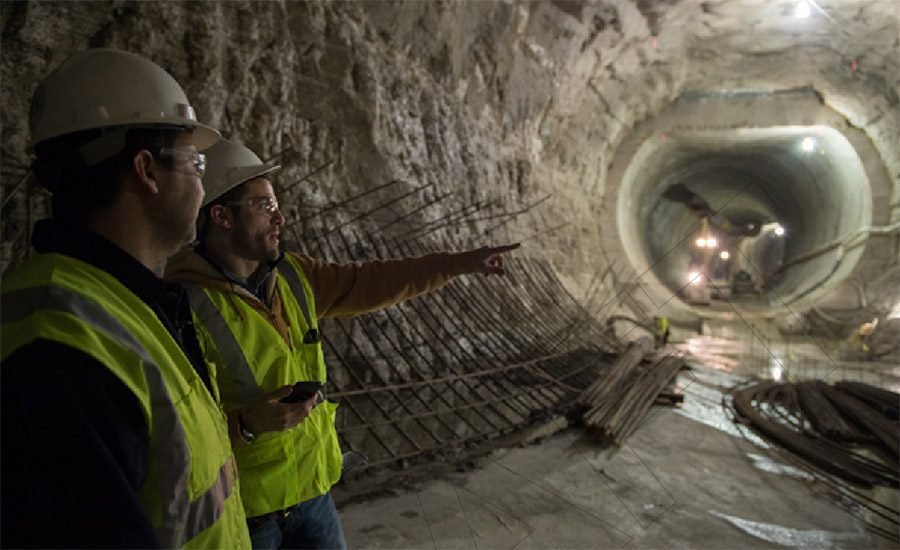
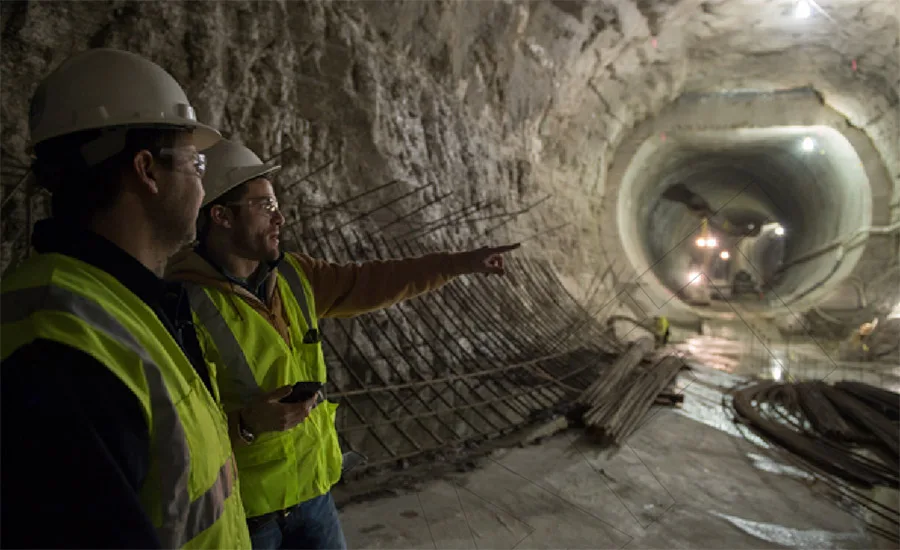
One of his main projects in recent years, the 3.8 billion dollars The Tunnel and Reservoir Plan (TARP), also known as the Deep Tunnel, is substantially complete and operating as planned, but is still being improved, the MWRD reports.
The $3.8 billion, 110-mile-long system uses tunnels and deep, large-diameter reservoirs to reduce flooding. The MWRD continues to build certain aspects such as mining and dredging McCook Reservoir to increase storage, a project expected to be completed in 2032.
MWRD spokeswoman Allison Fore noted that in early July, which received heavy rainfall, the tunnel collected more than 13 billion gallons of water, including a record amount in its Thornton reservoir. Also, the McCook reservoir was completely full for the sixth time this year.
“For context, the reservoir only filled five times cumulatively in the previous five years,” he said. “Without TARP, those 13 billion gallons of contaminated water would have flowed directly into waterways, or worse, collected in the basements of homes and businesses.”
But even with TARP, he said, some areas still experience street and home-level flooding, which is attributed to a variety of causes, including seepage through foundations, overland flow, river flooding and local sewer systems that were not designed to convey the intense storms seen today.
“This demonstrates a continued need for investment in green and gray stormwater infrastructure, given the unpredictable nature and higher frequency of these heavy rains,” he said.
The draft plans call for exploring innovative approaches that improve flood resilience. As an example of this commitment and gray infrastructure, the MWRD and Chicago are investing $15 million in two underground stormwater storage facilities to help mitigate flooding for hard-hit residents on the city’s west side.
These projects, called wing storage after how jets store engine fuel, are different from tanks that hold water because they are connected to the sewer system and are expected to capture and temporarily store stormwater during heavy rains. It is planned to reduce street and basement flooding of more than 2,900 homes and businesses, he said.
“Projects like these are innovative because they focus outside the box on engineering to build more capacity in communities that lack the space and infrastructure to capture excess rainfall,” Fore said.
During periods of heavy rainfall, underground storage chambers temporarily collect excess rainwater before gradually releasing it into the sewer. Both facilities are expected to do so they provide nearly 1.7 million gallons of stormwater storage capacity.
In addition to addressing flooding, district officials say the draft five-year plan is designed to build on the agency’s core mission of protecting public health and the region’s water environment while positioning it to address other emerging challenges, including aging infrastructure, climate change, labor shortages and evolving environmental regulations.
The draft specifies four pillars that the agency plans to address: wastewater and stormwater management, business resilience, resource development and management, and proactive evolution. Together, the pillars represent the district’s priorities and set goals for each until 2030.
“Through this review and input process that took more than a year to navigate, we have built a consensus that core infrastructure and core service reliability will require continued investment and attention, and as a result, that has become a central focus of this plan,” says Kari Steele, board chairwoman, in a letter introducing the plan.
Survey participants also named water quality, polution control and pollutant reduction
as some of the region’s most pressing concerns. In response, the district says it will continue to strengthen wastewater treatment practices, improve service reliability, focus on controlling pollutant sources and increase efforts to recover phosphorus and other valuable resources from wastewater treatment processes.
The plan also reinforces MWRD’s commitment to protecting Lake Michigan, the region’s primary source of drinking water, by maintaining compliance with environmental regulations and preventing pollution before it enters waterways.
Other objectives include the reduction of energy consumption and the application of a “polluter pays” principle, which aims to recover the costs of the entities responsible for the introduction of pollutants into the waste water system.
The MWRD also aims to strengthen its financial position and operational resilience, even as operational costs continue to rise. The plan calls for making business operations more efficient, preparing for future financial demands and ensuring the agency can continue to provide uninterrupted services during emergencies or extreme weather events.
Fore said the agency seeks to optimize all of its operations wherever possible by deploying technology that promotes efficiency and sustainability.
“We are experimenting with artificial intelligence and machine learning in our treatment processes and collection systems and will build on the lessons learned to expand use to improve our operations,” he said.
The plan includes a component focused on expanding collaboration with local communities and seeking greater public participation in infrastructure planning and decision-making, which will contribute to MWRD’s successful implementation of the agency’s Climate Action Plan, Fore said.
